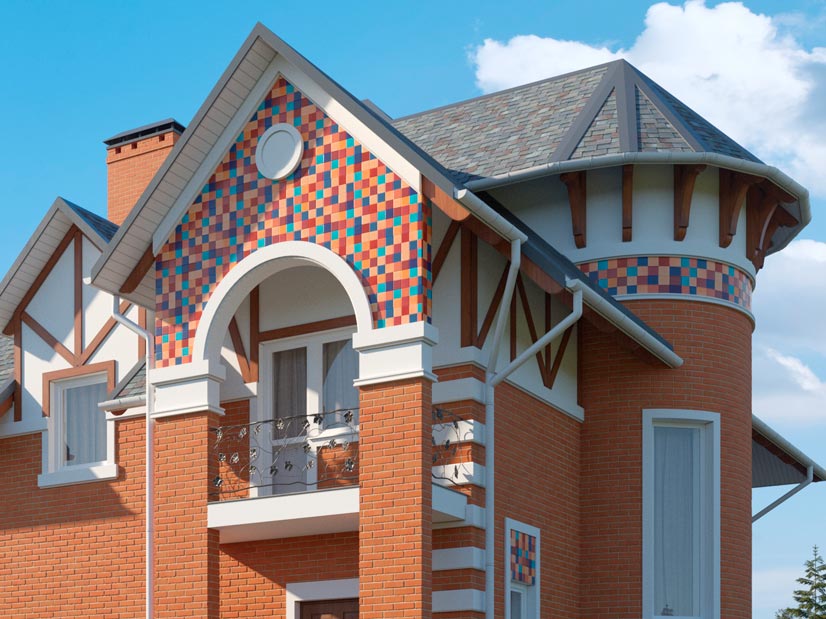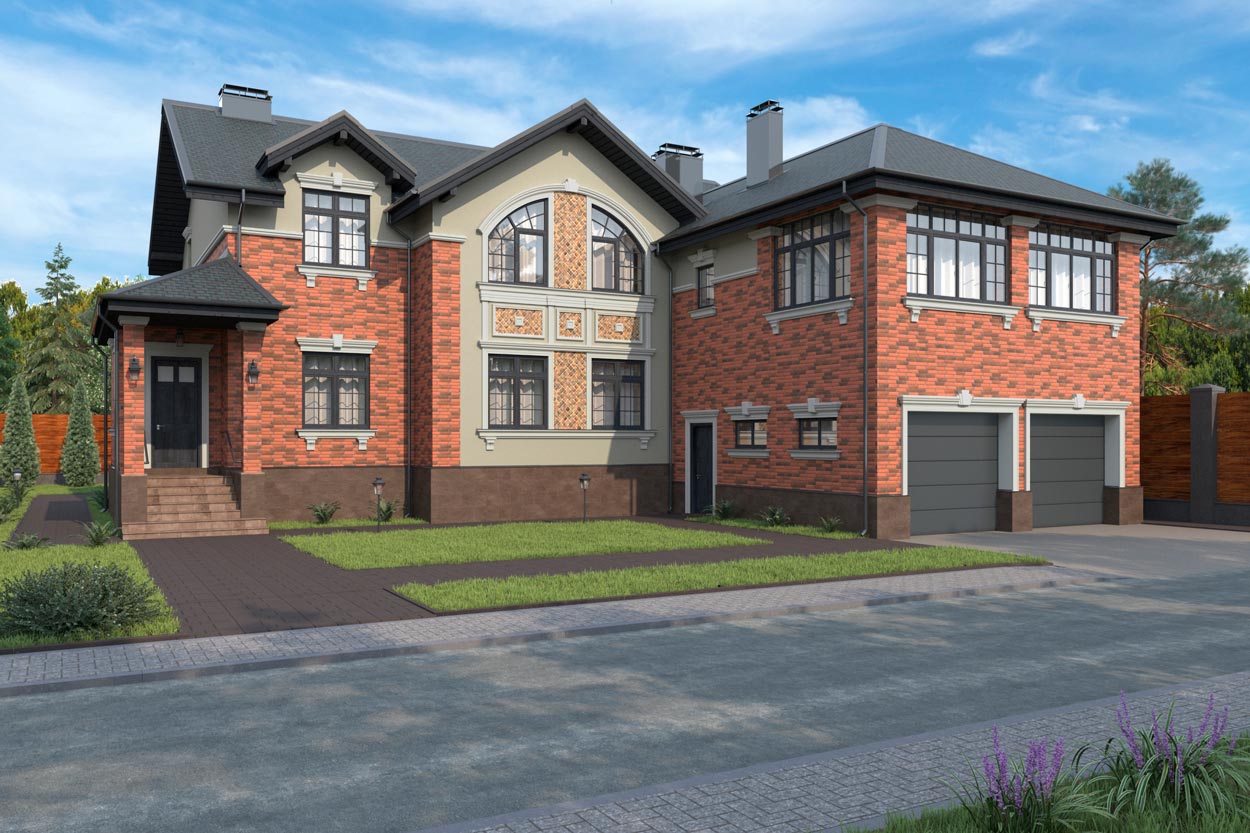
So what exactly is majolica?
In the broad sense, the term is used for all glazed ceramics. Strictly speaking, true majolica should be glazed twice: first a background layer for the pattern, then a transparent glaze on top, after which it's fired at a high temperature. Usually the tiles are patterned, but they can also be a solid single color.
I often use majolica mosaics in the projects I work on.
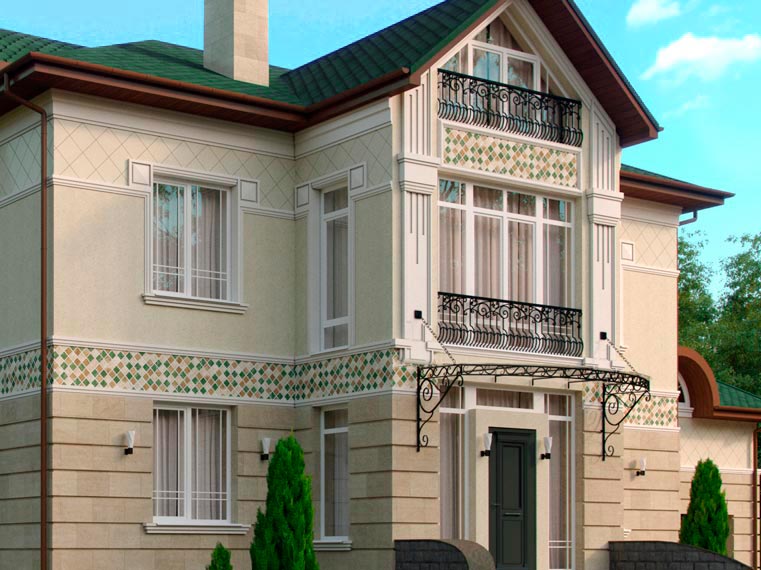
Majolica has an uneven surface, so it scatters light in different directions and catches the eye. That makes it great for accents on a facade—a small amount is all you need.
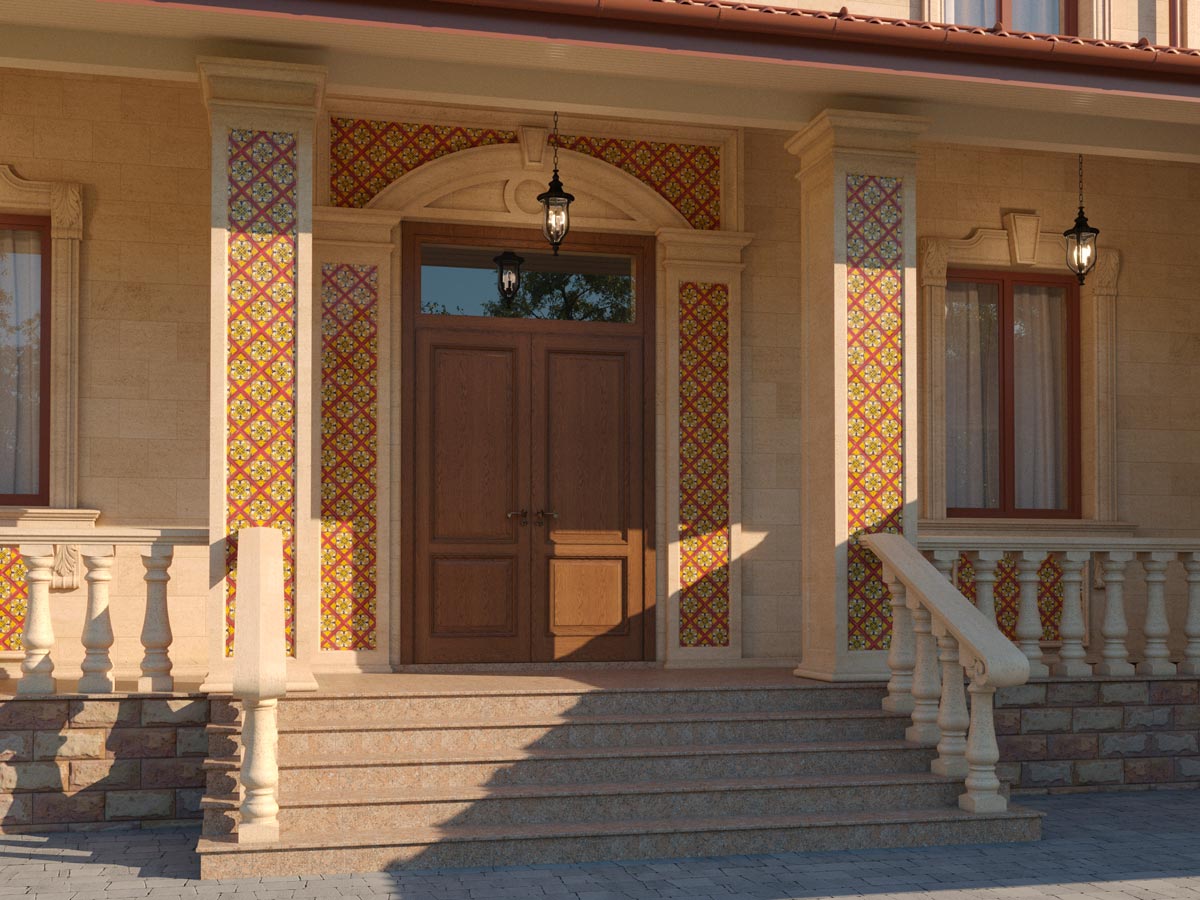
Which areas of a facade can be accented?
- — entrances
- — window frames
- — individual panels
- — the cornice
- — flights of stairs
- — column inserts
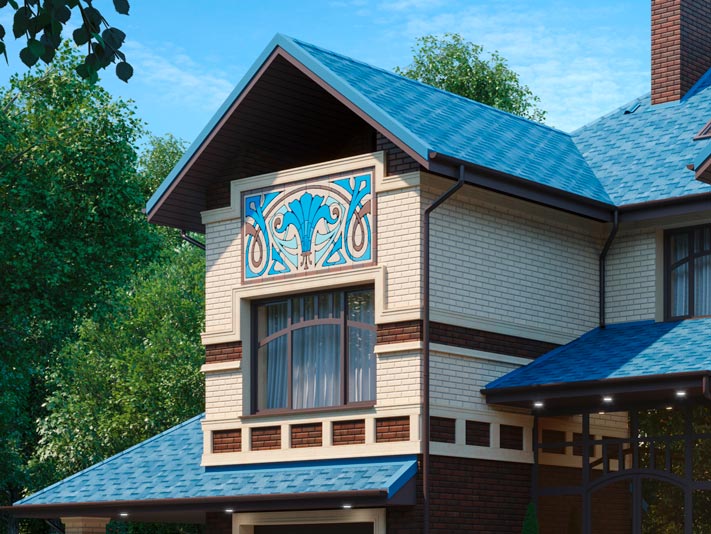
Majolica pairs well with matte materials—wood, plaster, and brick.
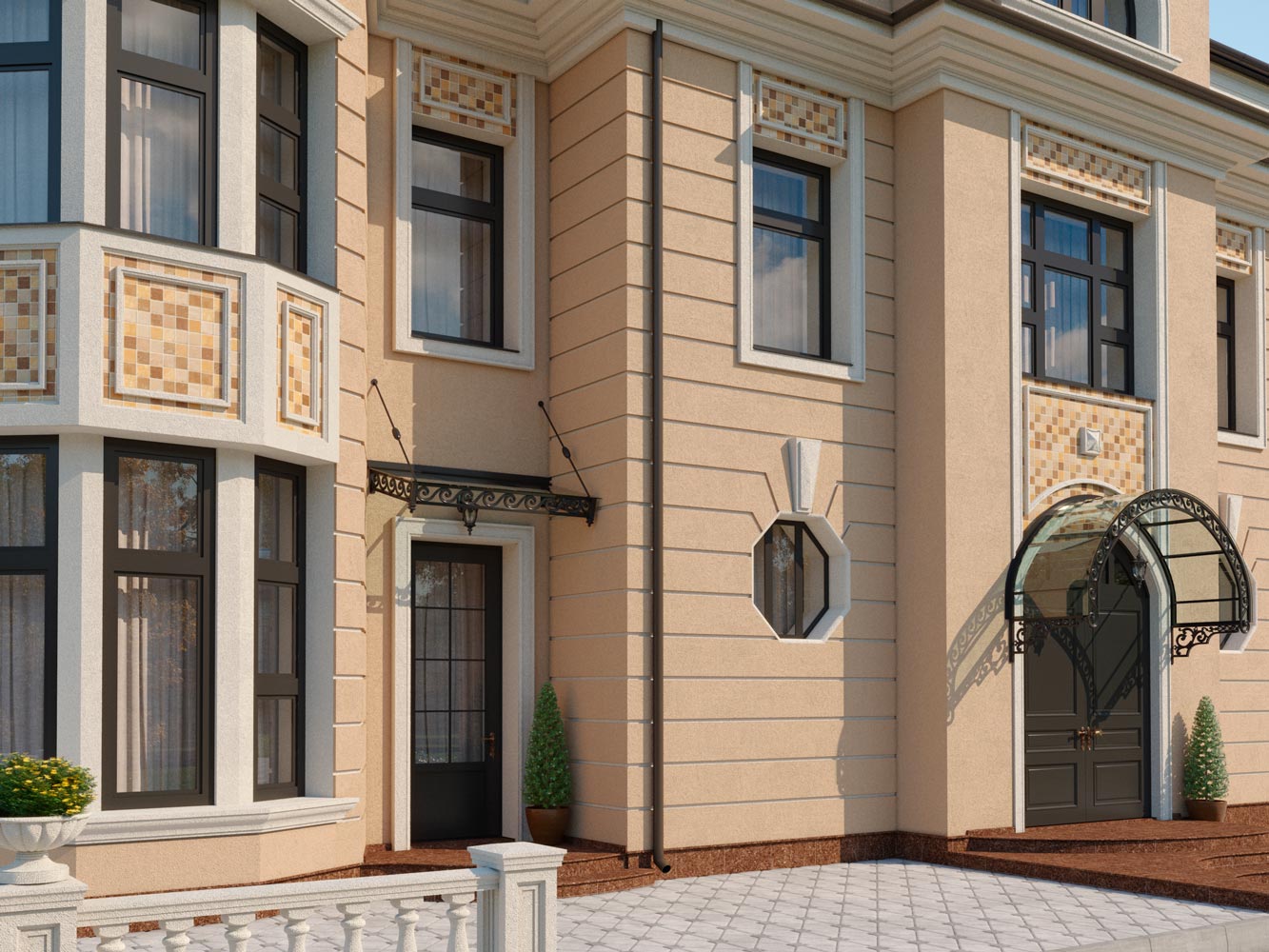
Important! Since it already contrasts so strongly in texture with these materials, the color contrast should be kept low—it works well when the majolica picks up the shades of the other facade finishes.
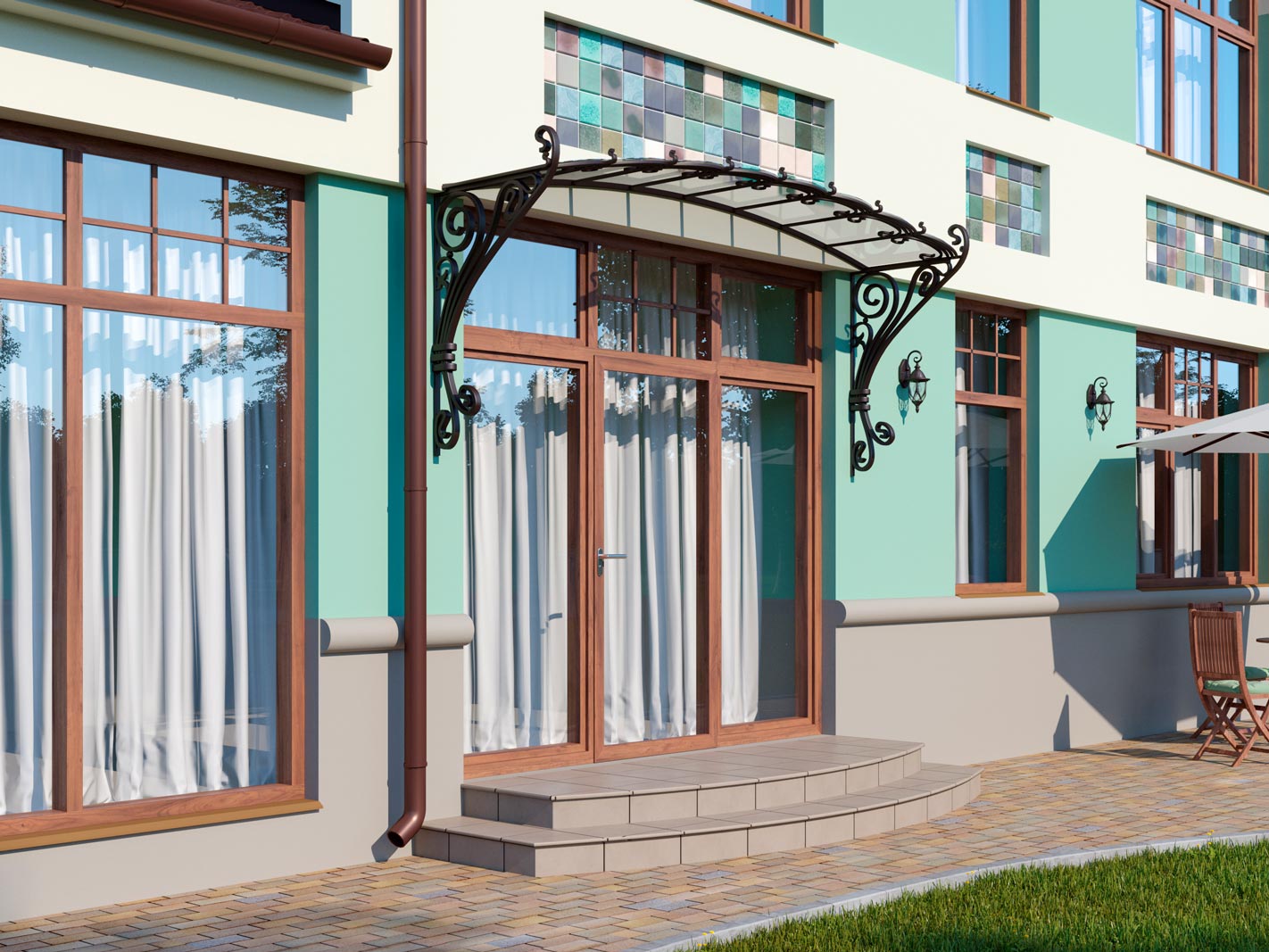
You also have to keep proportions in mind. More isn't always better. A good example is the main accent piece above the entryway with supporting elements above the windows. Or a string course paired with a panel crowning the main gable.