
Before you limewash the brick, read what the Park Service says about coatings
Search for limewash brick exterior before and after and you will find hundreds of photos, almost all taken the week the painters left. The National Park Service published a Preservation Brief on coating and cleaning masonry that looks at what happens years later.

Ask why the brick was painted
Robert C. Mack and Anne Grimmer wrote Brief 1, "Assessing Cleaning and Water-Repellent Treatments for Historic Masonry Buildings," starting with a blunt claim: inappropriate cleaning and coating treatments are a major cause of damage to historic masonry. The authors note that people often equate cleaning with improvement, and without a conservator's guidance, the result can be irrevocable damage.
Find out why a building was painted. It may have covered bad repointing. Perhaps it protected soft brick or painted masonry was simply the fashion of the day, and even when bare masonry is historically correct, keeping the paint can be more practical for long-term preservation than stripping it.
Water-repellent is not waterproof
Vocabulary matters. A water-repellent coating keeps liquid water out but lets vapor pass. A waterproof coating seals both. Bituminous coatings and some elastomeric paints are grouped into that second category in the Brief. Even a high-quality water repellent slightly reduces vapor permeability, making it harder for water already inside the wall to escape, and one photo in the Brief shows an elastomeric coat on a saturated limestone cornice. It replaced roof drainage repairs and popped off, taking stone with it.
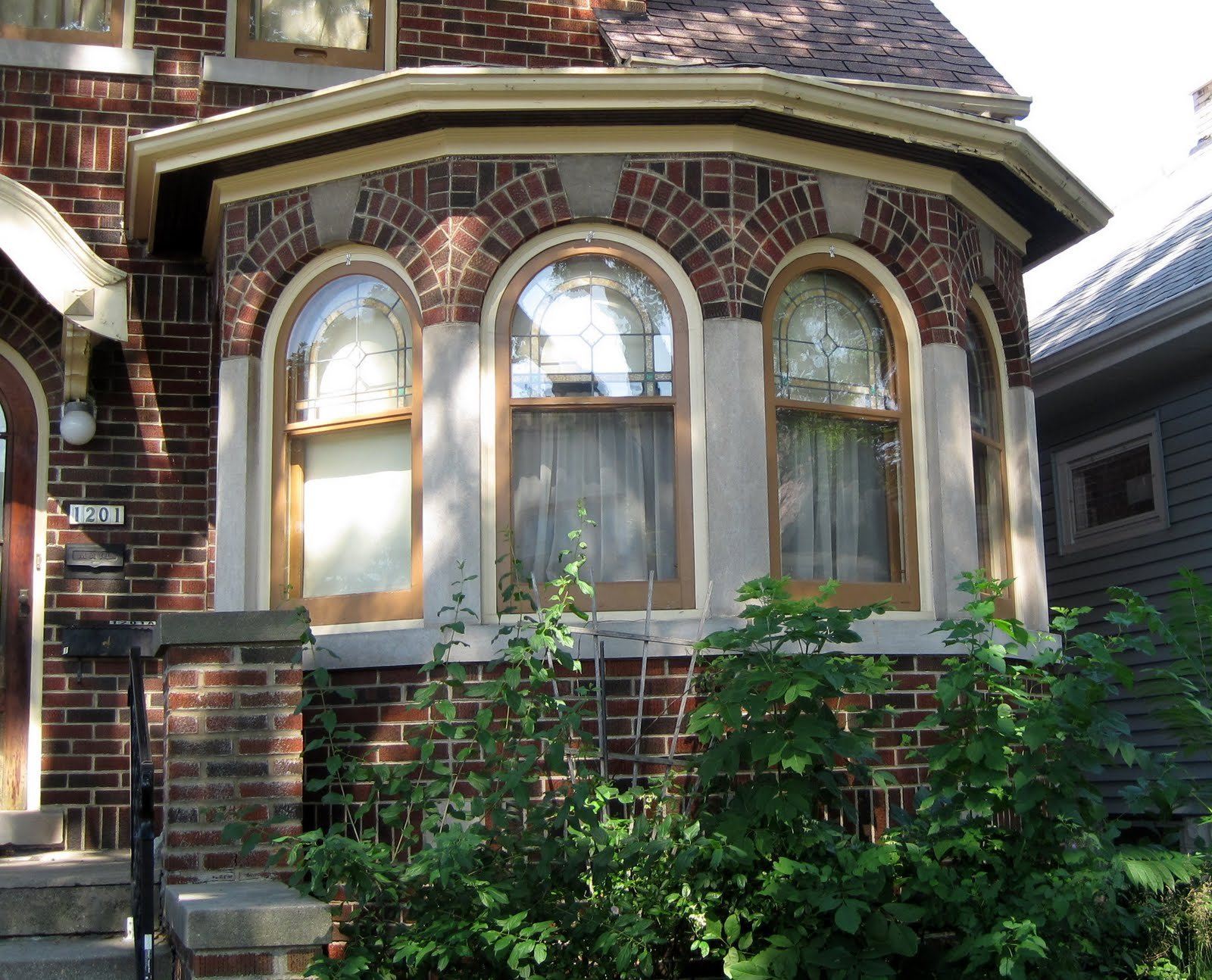
The Brief does not discuss limewash. However, its test applies to any brick finish: what does it do to vapor, and who will redo it in ten years? A conservator's opinion before the first coat costs far less than finding the answer afterward.
We tell clients: sound brick that was never painted should stay unpainted. Choosing a finish based on a photo gallery is a weak reason to change that. If the real problem is a flat, builder-grade front, the fix usually lies in the trim, openings and colors around the brick. That is the work we do in exterior design. For unpainted references, browse the brick facade library we collect from the web. Since the Brief covers historic buildings, it won't show how a specific paint ages on a new house. We have not seen hard numbers on that, and we would not trust anyone who quotes them without a long record behind them.