
Black windows need a warmer white than you think
Black window frames on a light facade are the safest-looking choice a homeowner can make right now, and the one I see go wrong most often. Not because the frames are wrong. Because nobody decides what the white next to them is doing.
A frame reads as a line drawn on the wall. The darker it is, the more the wall behind it has to be a clean, quiet field, or the drawing turns into noise.
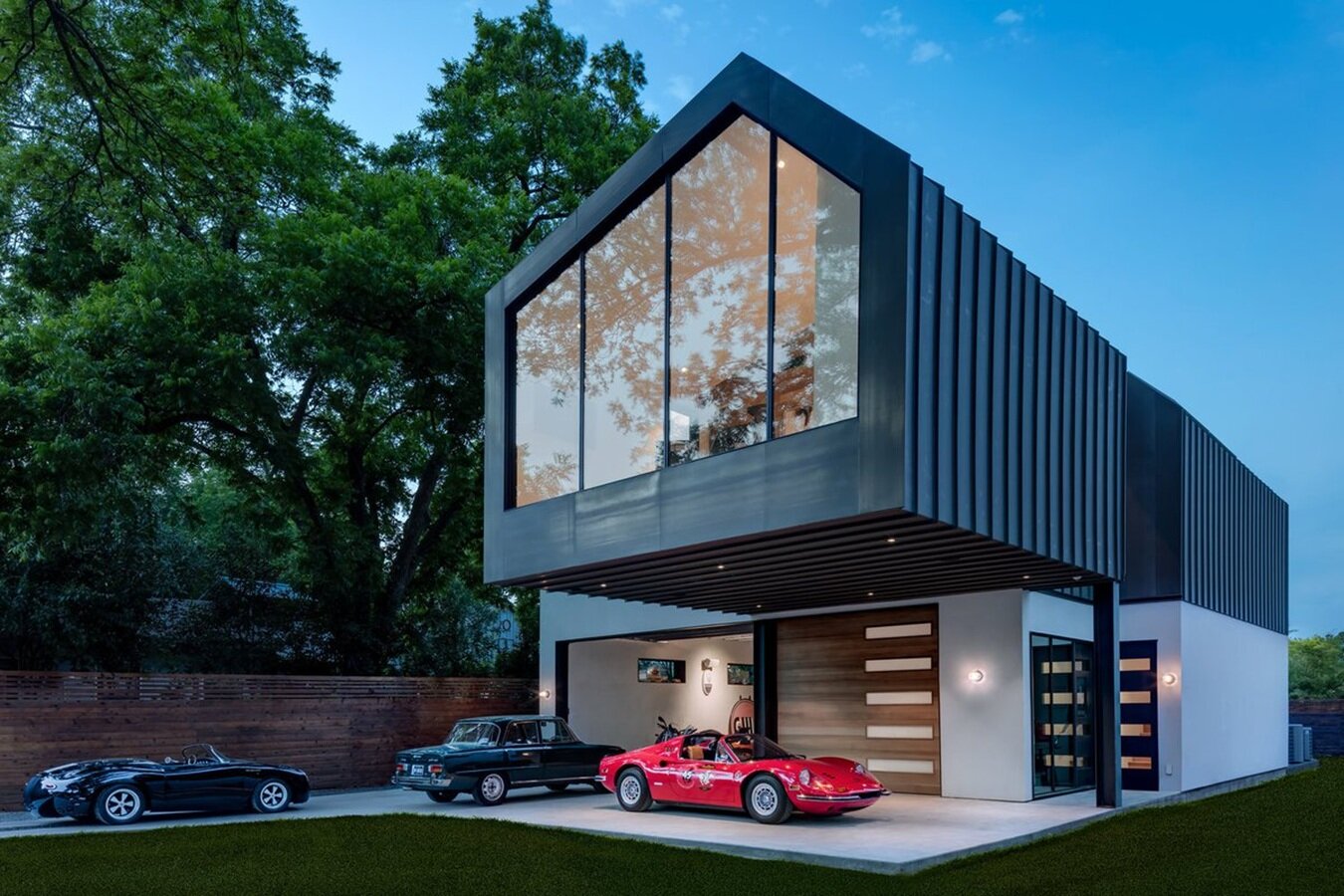
The white matters more than the black
Pure cool white plus black frames gives you a photograph, not a house. In daylight the contrast is so hard that the windows stop being openings and start being holes. What works better on a real wall is an off-white with some warmth or gray in it, so the frames sit as the darkest element instead of the only element. When clients ask about fiber cement siding colors for modern farmhouse elevations, this is the whole conversation: pick the siding color against the frame color, not from a swatch fan on the kitchen table.
Look at the light on the wall at three in the afternoon before you commit. That is when a white with no pigment in it goes flat and blue.
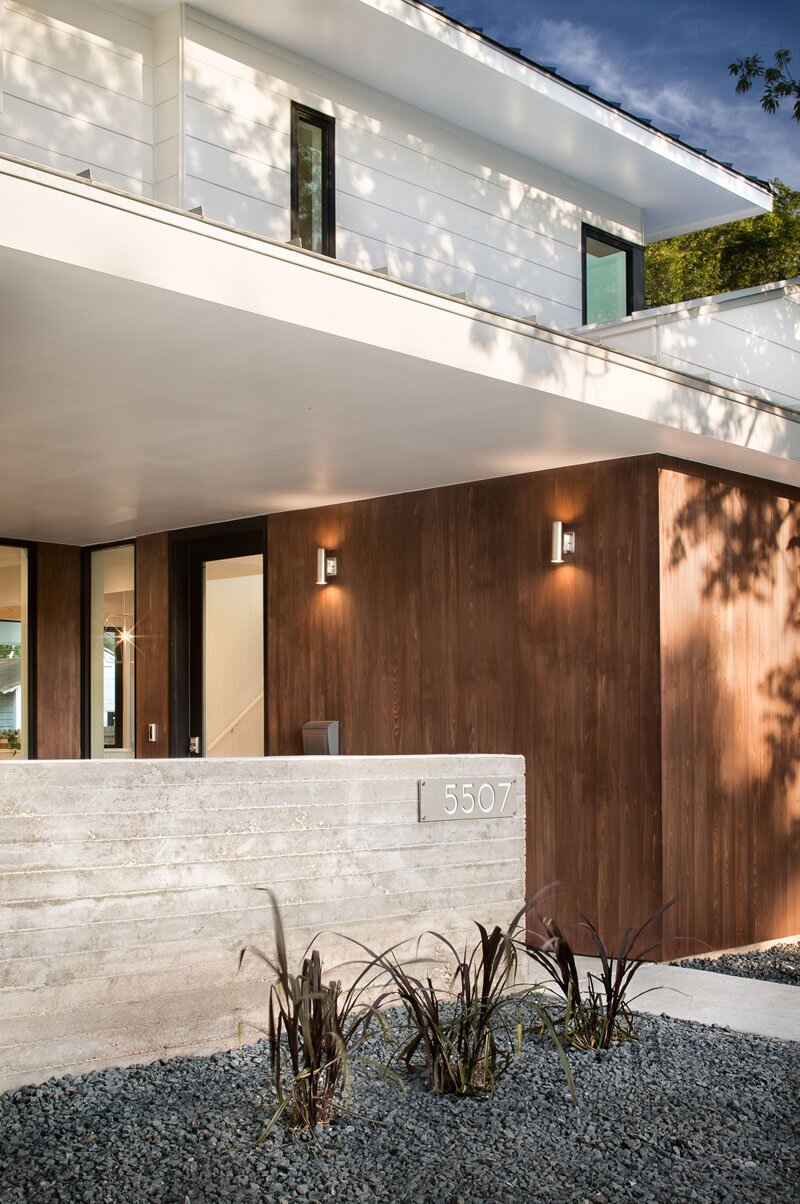
Trim is the part people forget
Frame, trim board, and sash can be three different colors, and usually two of them should not be. My default: trim matches the wall, frame goes dark. It keeps the opening compact and lets the proportion of the window do the work. The opposite — white trim ringing a black frame — draws a bright halo around every hole in the wall, and on a two story elevation that halo multiplies by twelve.
That is also the cheapest way to increase curb appeal on a two story house that already has decent windows. You are not replacing anything. You are removing one of the three colors.
Dark frames get hot
Practical part, and it is the one that gets skipped. Dark cladding on a frame runs hotter in the sun than the white version of the same unit; on south and west elevations that means more thermal movement in the sealant joints and, on some cheaper vinyl, visible distortion after a few summers. Ask the supplier what the exterior finish is rated for on a west wall, and if the answer is vague, that is the answer.
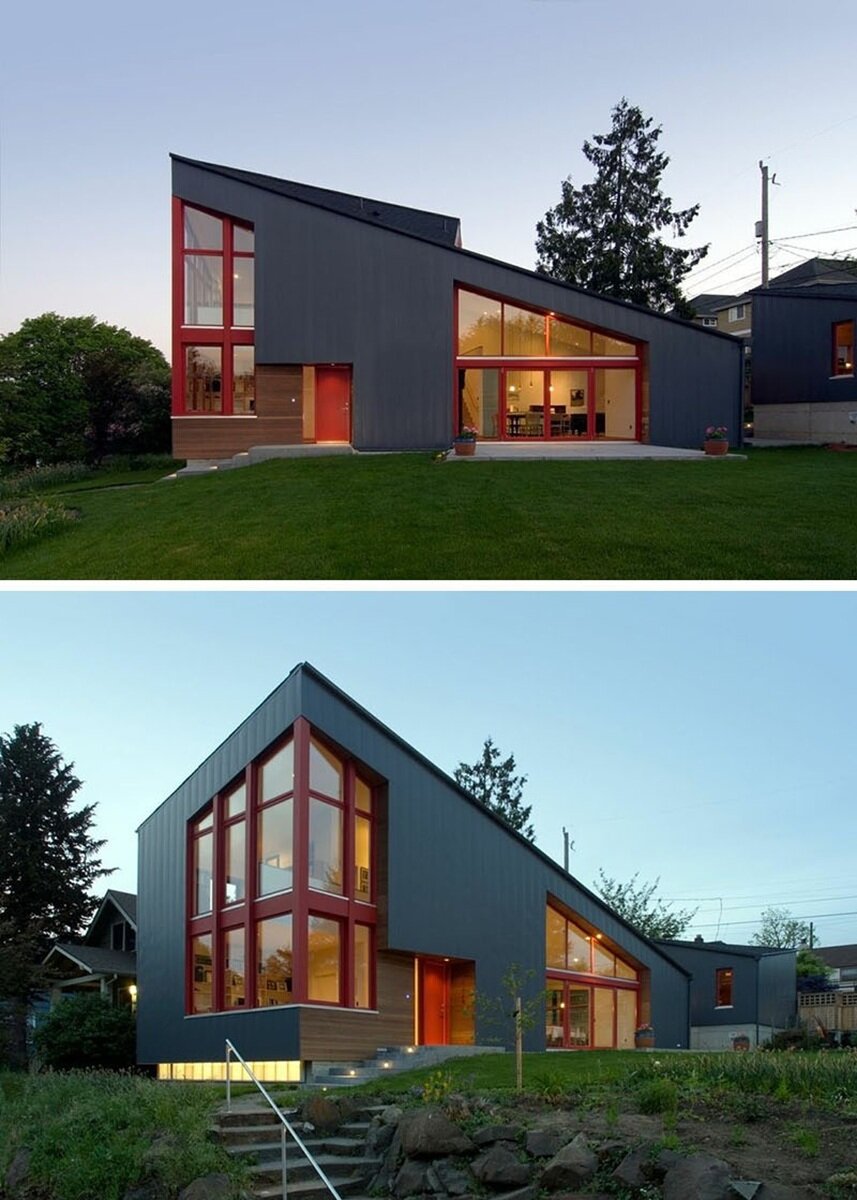
Black is not the only line that works, either. The last house here uses red frames on a gray wall for the same reason, and it holds together because the wall stays quiet.
If you are working out an elevation and cannot picture how the frames will land on it, that is exactly what we do in facade design. More light-walled examples are in white facades, and the contrast-driven ones in contrasting facades.