Windows of Unusual Shapes
House design today draws on motifs from every era. Most of it, of course, is stylization, since the architectural functionalism that emerged in the 20th century seems to have taken hold for the long haul. Yet such stylization rarely extends to a cottage's windows, even though window openings can be made in almost any shape. This is especially true of traditional house styles.
In our experience, windows stay rectangular even with the boldest wall treatments. So we have decided to take a brief tour of the windows we don't see every day: the "non-rectangular" ones.
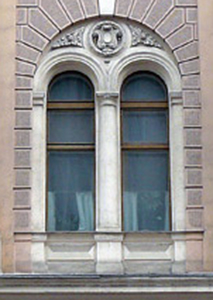
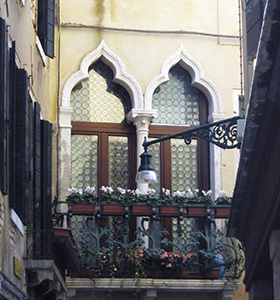
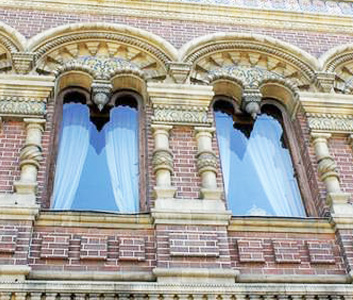
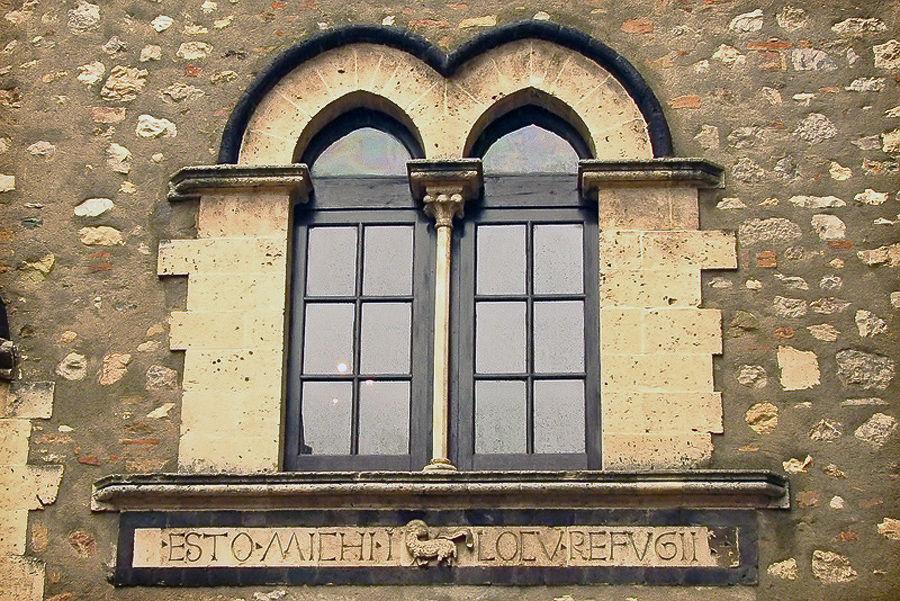
The Venetian window, or biforium
A double arched window with a column in the middle. It often has an opulent, decorative appearance.
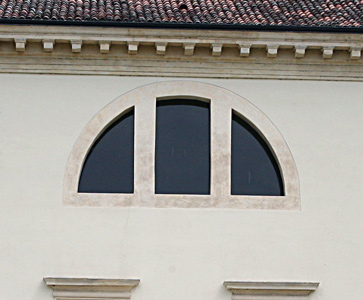
The Italian window
An arched window made up of three parts, with a single arch spanning all of the segments. These windows descended from "thermal" windows, which were set high up at the base of the arches, and those, in turn, came from the Roman baths.
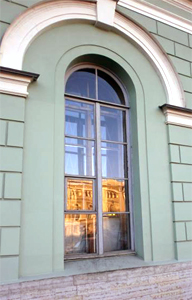
The French window
A narrow, elongated opening with an arched top. Its characteristic feature is the shallow glazing. On the interior side, such a window usually runs from floor to ceiling.
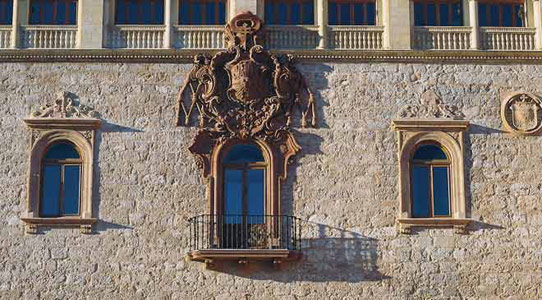
The Bramante window
This style went out of fashion about 200 years ago. It is a semicircular window set within a rectangular frame, usually flanked by pilasters that support the arch, with a frieze above it in the spandrel. Even in St. Petersburg there are almost none of these left. The window is striking for its contrast between semicircular and straight lines. Various takes on the motif survive today in the Neo-Renaissance style.
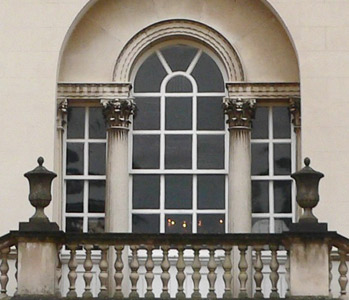
The Serliana
A three-part window whose middle segment is topped by a semicircular arch.
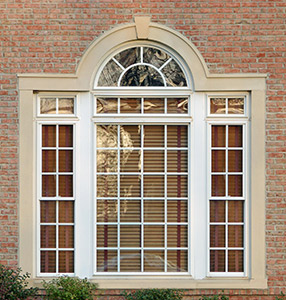
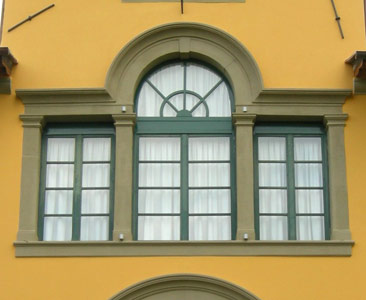
The Palladian window
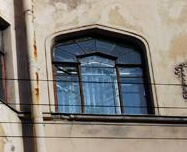
It is like one window set within another. The opening is usually arched, and inside are two small columns or wide mullions that create two more vertical openings flanking the central window. The name comes from the 16th-century architect Andrea Palladio.
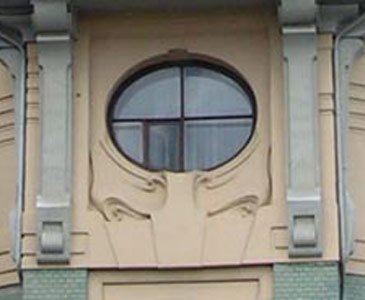
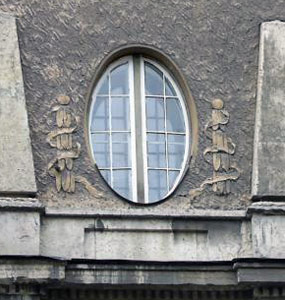
The "bull's-eye" window
An oval window placed above a doorway.
The fan window
A window whose top is made up of fan-shaped sections. It, too, comes from Romanesque culture.
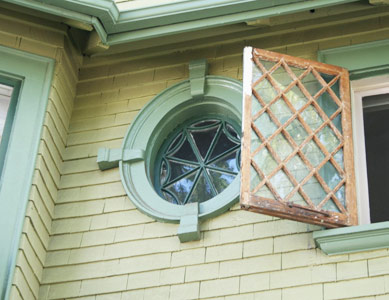
The mezzanine window
If you have high ceilings, you can add a second row of short windows up top: these are mezzanine windows, used for better lighting. And they don't have to be merely rectangular. Here is an example of unusual rose-shaped mezzanine windows.
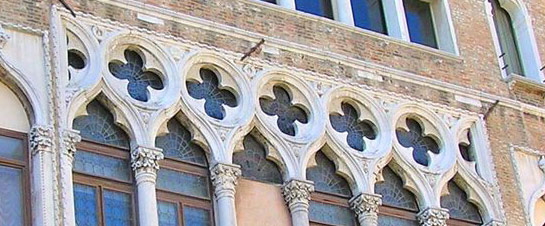
The Florentine window
Made up of several arches joined under one large arch.
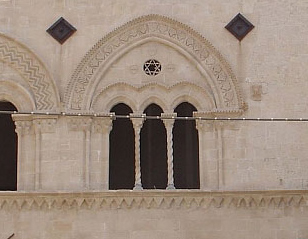
Art Nouveau windows
These can feature languid curves, asymmetry, and other unconventional flourishes.
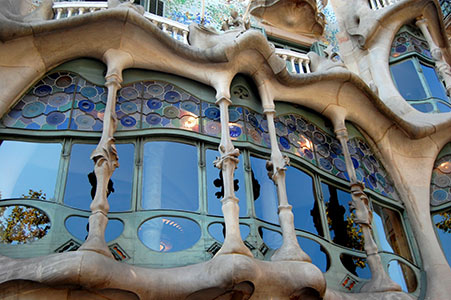
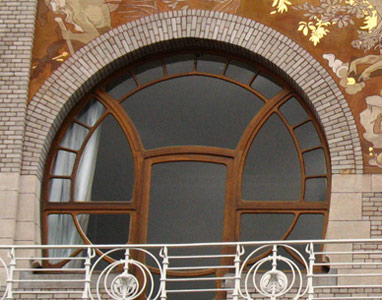
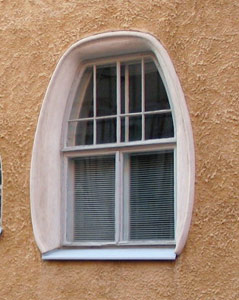
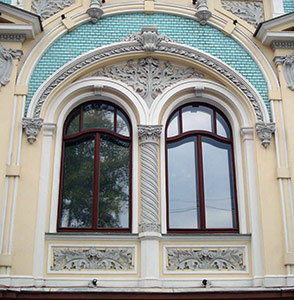
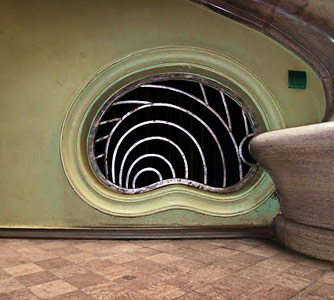
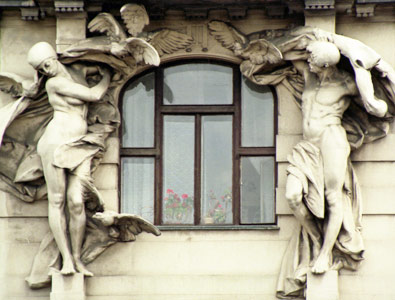
Many of the architectural window styles listed here call for large expanses of facade. Art Nouveau is the one that remains current and organic in classic country-home design, but it is also the most labor-intensive to produce.