How to Outfit an Attic in a Private House
When you need to expand the usable area of a house, an attic may be the answer. But which room, by code, actually counts as an attic, and how do you properly outfit and use it?
According to building and sanitary codes, an attic is a space in which the height from the floor to the line where the facade of the house meets the plane of the roof is at least one and a half meters. The ceiling height in an attic should be no less than 2.5 m and no more than 3 meters. A room that meets all of these requirements is called an attic.
The type of attic depends on the type of roof structure, because the upper part of the attic is formed by the elements of the roof. The most common types of attics are the following:
- single-level extensions on cantilevers;
- single-level with a broken or gable roof;
- two-level with a complex roof and support configuration.
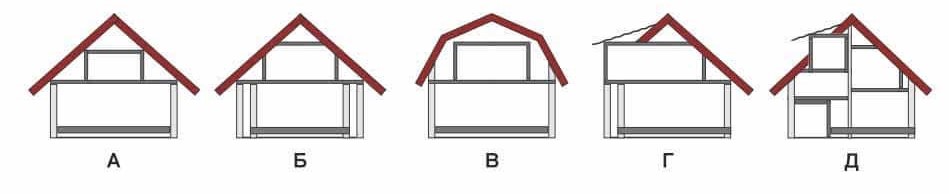
The smallest usable area is found in an attic under a gable roof. It is more practical to create an attic floor under a broken roof with four pitched planes set at different angles. An attic on cantilevers is difficult to design and build, but it offers a lot of space and lets you install ordinary vertical windows. As a rule, a multilevel attic can only be built together with the house, that is, from scratch, since it is a structurally complex room that requires careful calculation.
PROS AND CONS OF THE ATTIC
Builders have plenty of questions about attics. The disadvantages of an attic are often said to be:
- expensive — cheaper to build a standard floor plus a loft;
- noisy when it rains;
- an attic makes the house warmer;
- cannot be repaired;
- sloped ceilings are unattractive; a full floor is more impressive;
- not enough space, the roof "presses down."
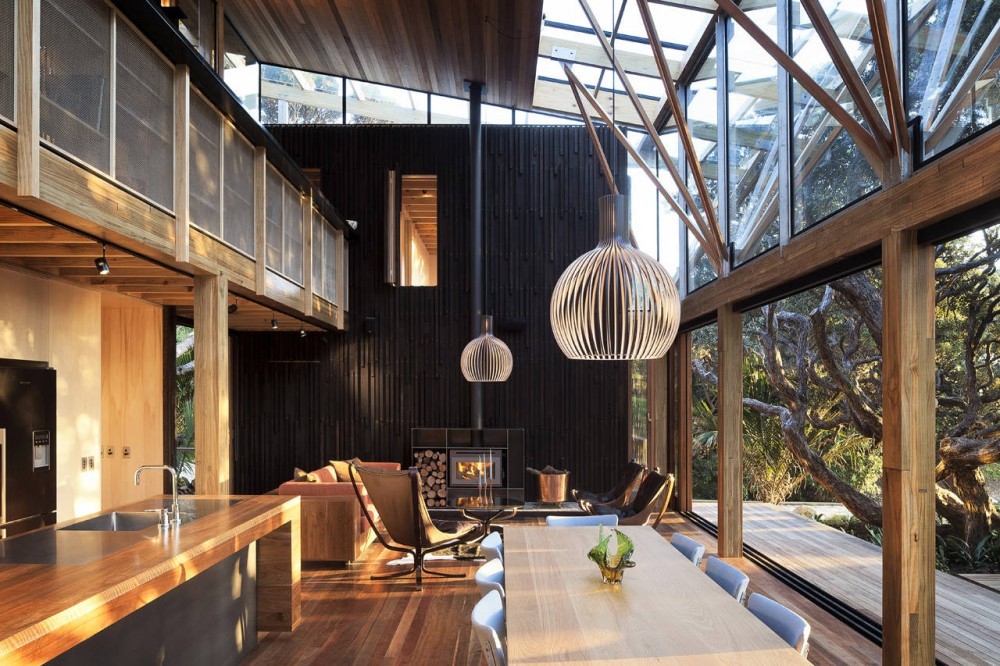
It is true that building an attic costs more than building an unfinished loft plus a full floor. But the difference is more often small. The catch is that an attic needs good ventilation, since in summer it can get hot because of the heat from the roof and the small volume of the room. That will require extra money.
As for the cold, the problem is solved by insulating every plane: floor, roof, and gables. The most convenient option is considered to be batt insulation. It is laid over the waterproofing and then enclosed on the inside by a vapor barrier membrane and finishing materials. If the floor structure allows, it is covered with a floating screed. But keep in mind that the service life of modern insulation is 20-40 years, after which it must be replaced, which means the entire "pie" of layers has to be redone. That is why an attic is considered impossible to repair.
Insulation will not protect against street noise. In this case, the only solution is to install sound-absorbing roofing materials — flexible or composite shingles or other similar materials. That said, many people actually enjoy falling asleep to the sound of raindrops on the roof.
And even despite all the technical features of an attic, its supposed lack of beauty, comfort, or prestige is debatable. The worst part is that people often, with no understanding of construction technology, proportions, or design, take on building and outfitting an attic. And yet an attic can be not just comfortable to live in but also stylish and functional.
How to use the attic efficiently?
The usable area of an attic depends directly on the pitch of the roof slopes. A pitch of 30-40° is considered optimal. The hip roof leads in usable area — up to 90%. At the same time, such attics have the problem of providing good lighting and installing windows. With a single-slope or steep gable roof, the challenge of "making the most of the space" can come from a low wall, sometimes only half a meter high.
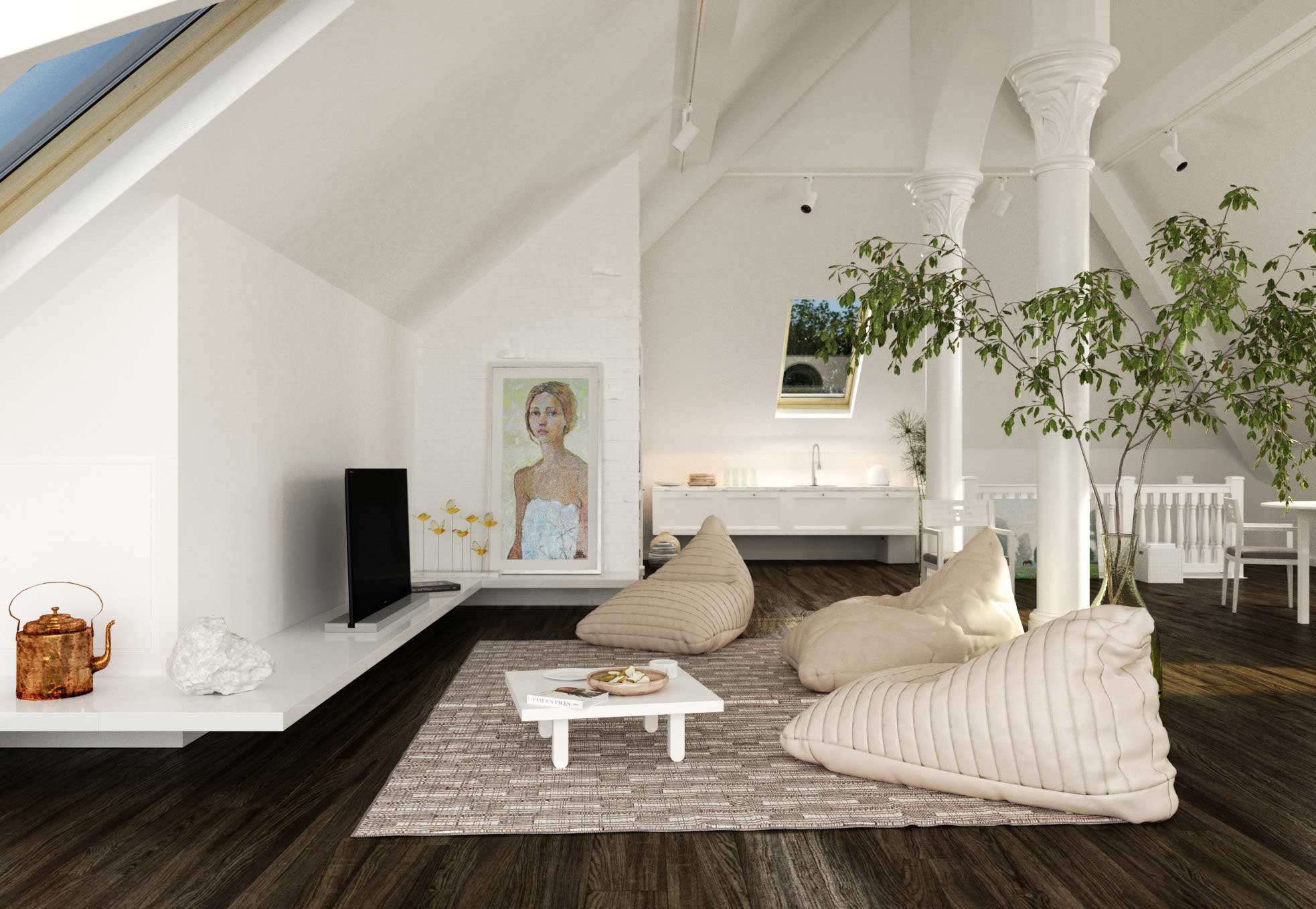
What rooms can be placed in an attic? There are no restrictions. It can be a bedroom, a children's room, a study, or a billiard room. The catch is that for bedrooms or children's rooms the question of effective ventilation is especially important. So if the ceilings in the attic are very low and there is no forced exhaust system or ventilation, such a room is not worth setting up.
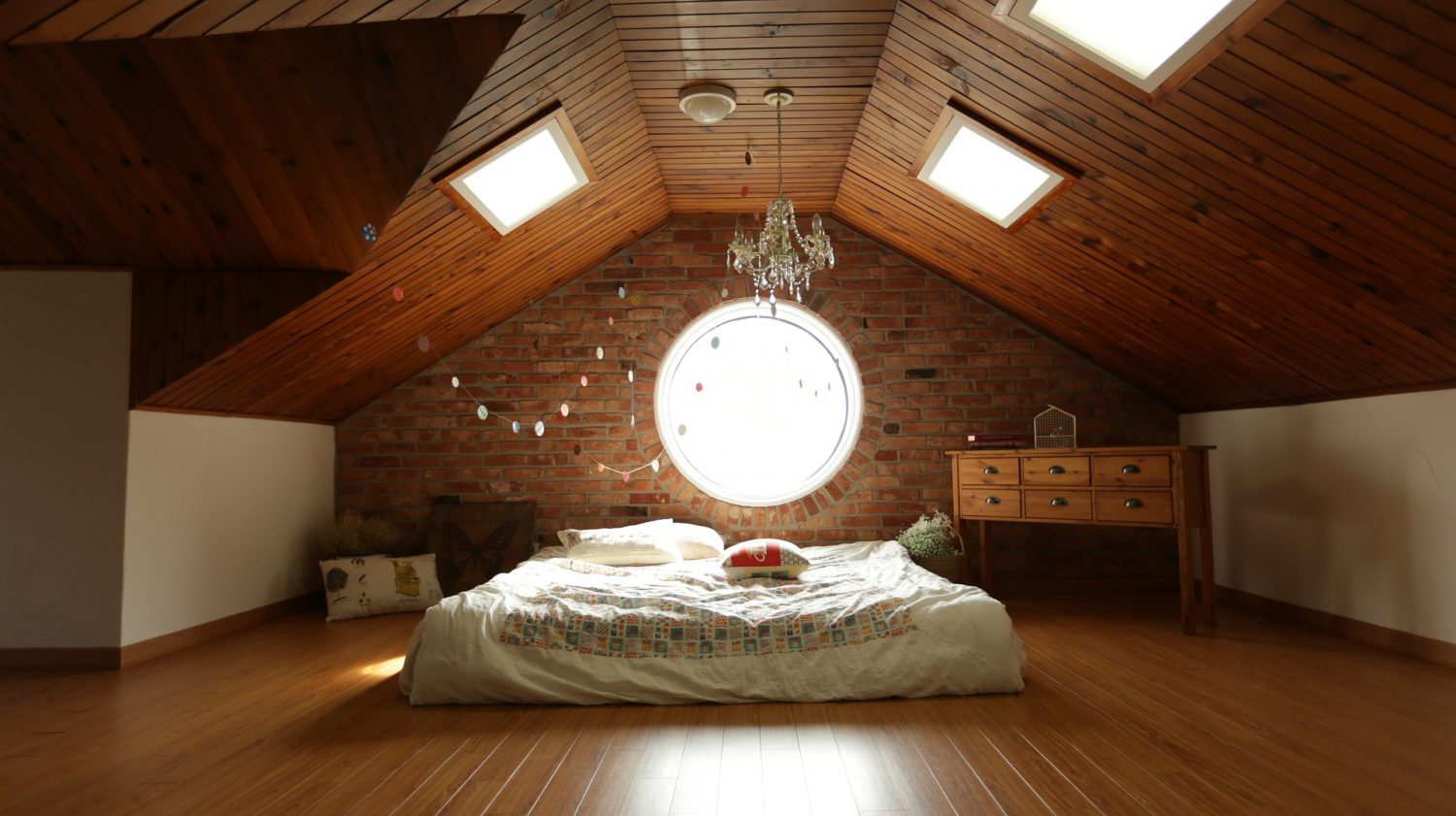
- A bedroom in the attic is shielded from noise in the house and from the sound of footsteps passing by the room. The sloped ceiling does not interfere with placing the bed; only the most essential furniture is set out, and the rest of the space is filled with other interior details.
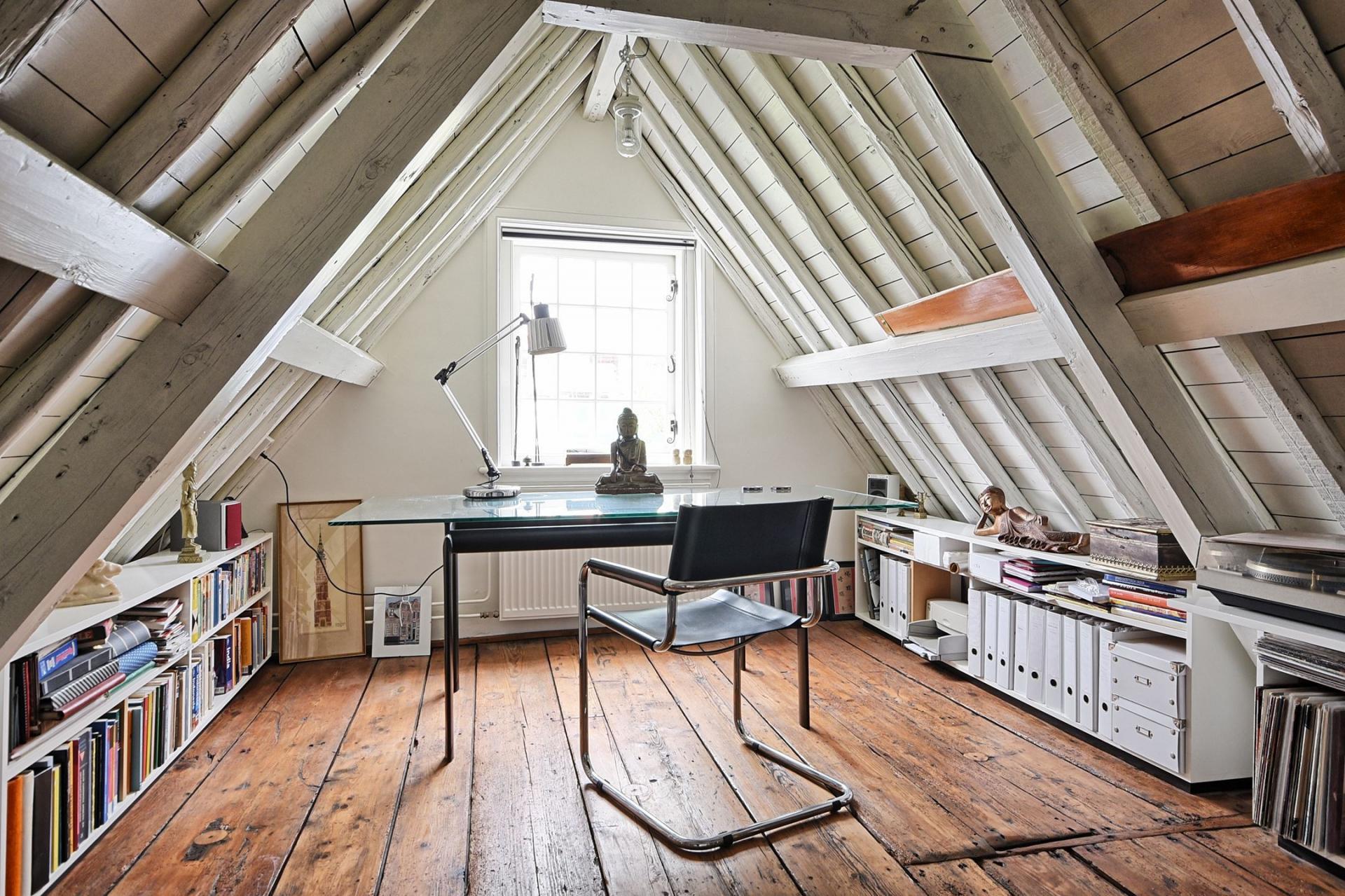
- A study, library, or workshop in the attic offers privacy. Even in a small area you can fit bookshelves, a small sofa, and a desk.
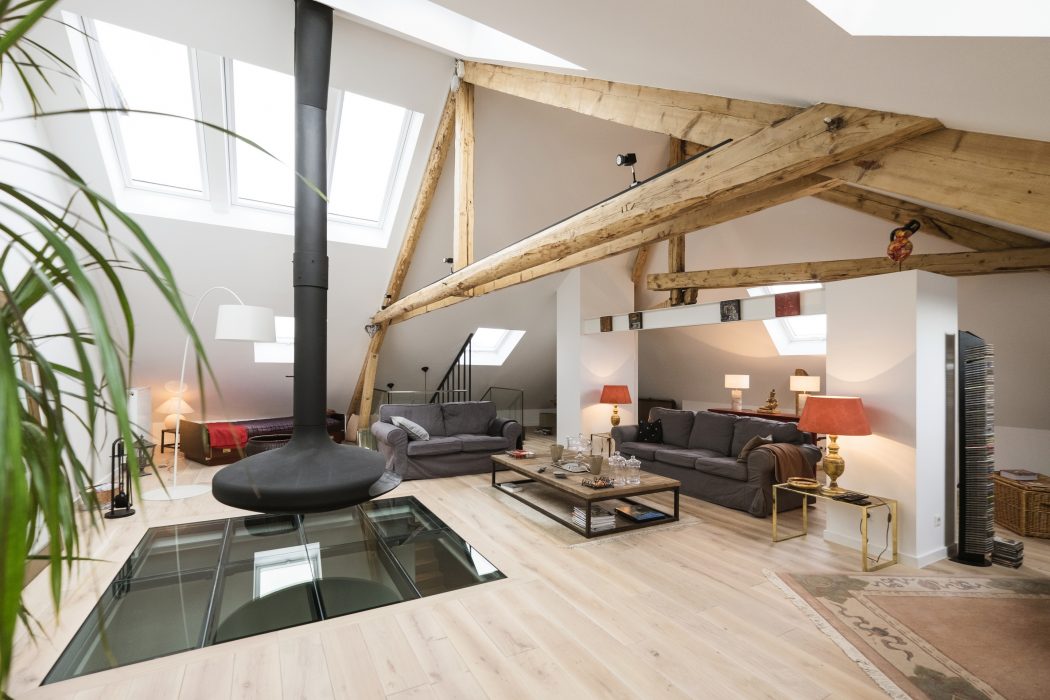
- A living room in the attic must be furnished with non-standard pieces — most ordinary modern items will not fit here. However, if the space allows and there are many corners, you can manage even without custom furniture.
- A game room can be designed specifically for children, or it can become a gathering place for the whole family. It is easy to make a playroom in the attic if you divide it into several zones: an area for active games, board games, video games, and a billiard area.
- With good soundproofing of the floor, a small gym can be set up in the attic.
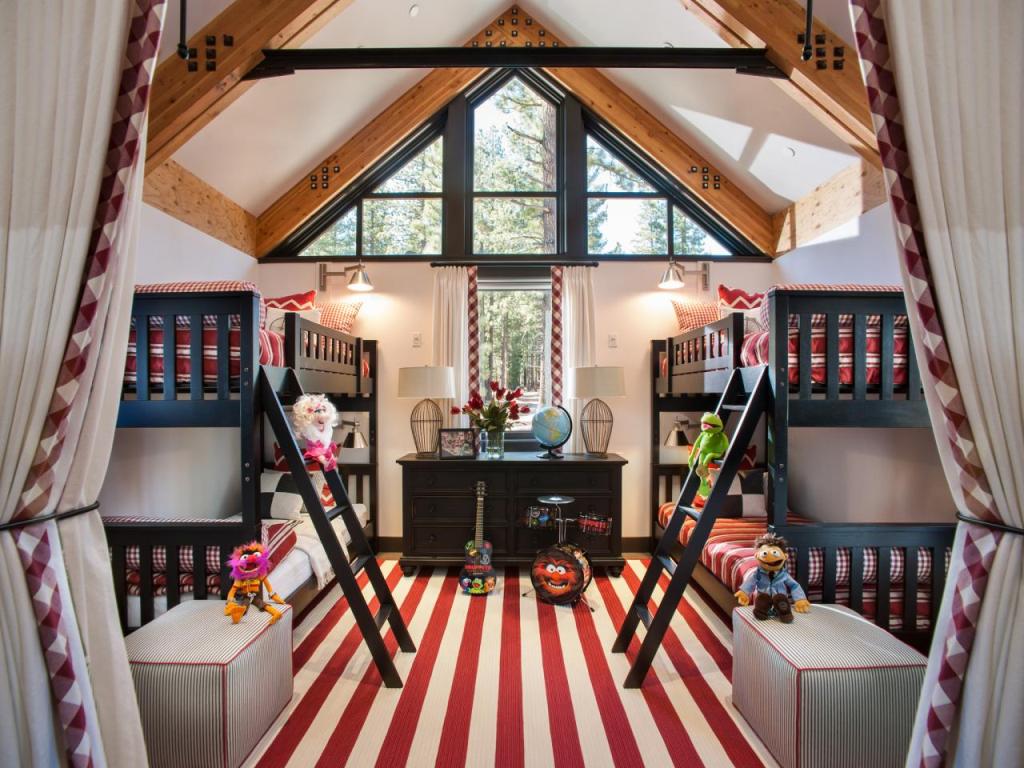
- A children's room in a country-style attic. Arranging the beds on two tiers frees up space for play. The approach to outfitting a nursery should be thorough. It is important to provide a safe staircase and windows.
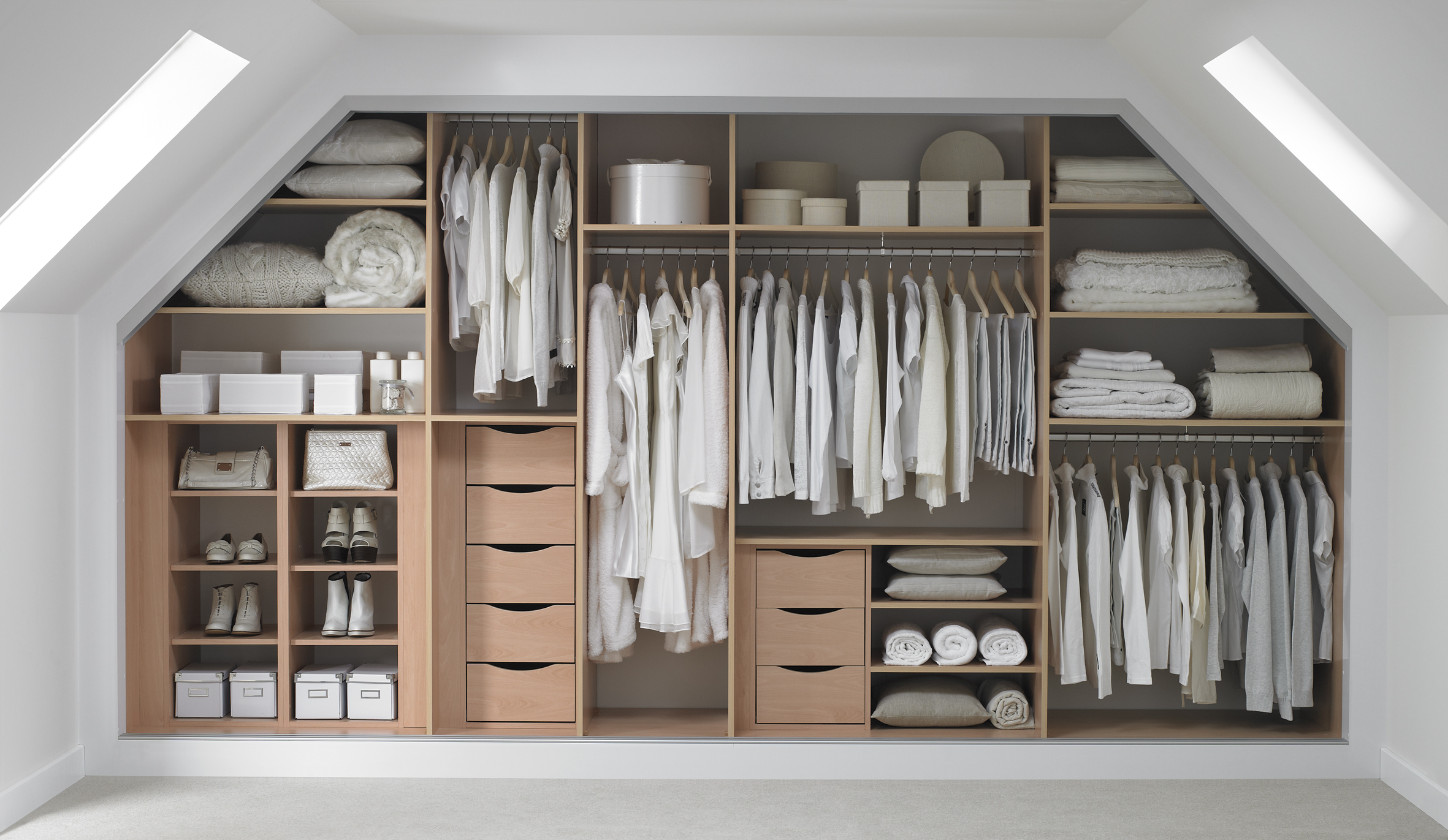
- A dressing room is the most common use for an attic. Storage options abound, including open shelving and shelves, drawers, and sliding systems.
WHAT WINDOWS TO INSTALL IN THE ATTIC?
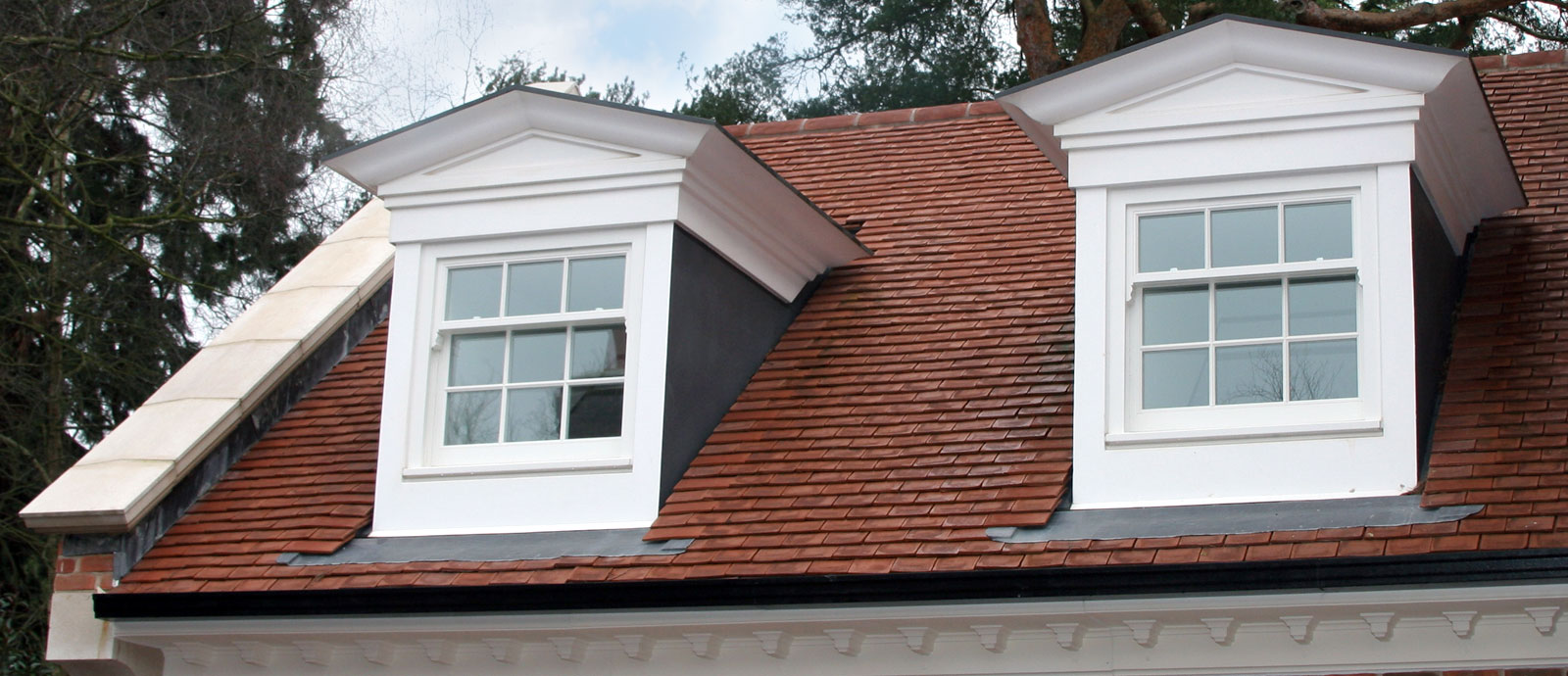
Two types of windows are used in attics: sloped and vertical. Vertical windows are often placed in a special projection in the roof — a so-called dormer with a vertical wall. They can be small in size and no different from ordinary windows. Vertical windows give little light, even when set in the gable.
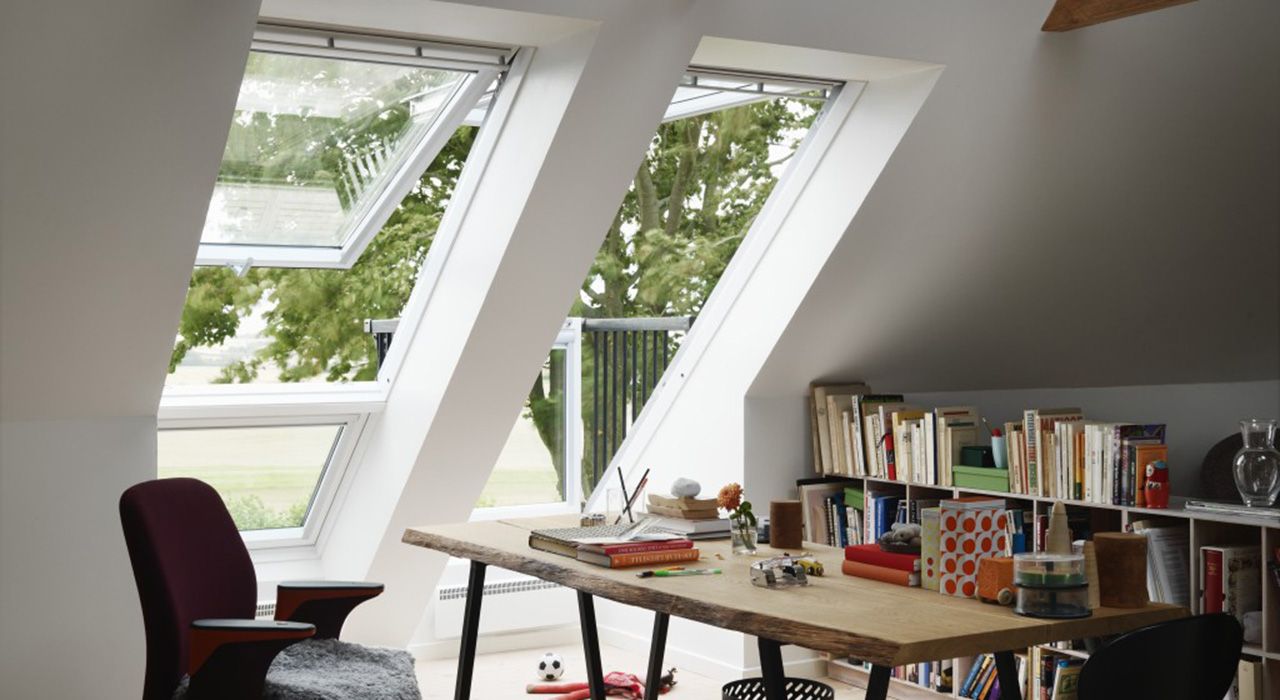
Sloped windows are considered optimal for letting in light, but they have their quirks. Since these windows are set in the slopes of the roof, the glass area should not exceed 1.4 square meters in order to withstand snow loads. Because of the likelihood of heat loss, it is better to choose energy-saving windows (tempered glass filled with argon).
Aluminum frames lose a lot of heat, so they are not used in the house. Choose wooden frames (with a waterproof polyurethane coating) or vinyl. Vinyl windows are cheaper. With today's selection of colors, you can find a window to suit any style of room.
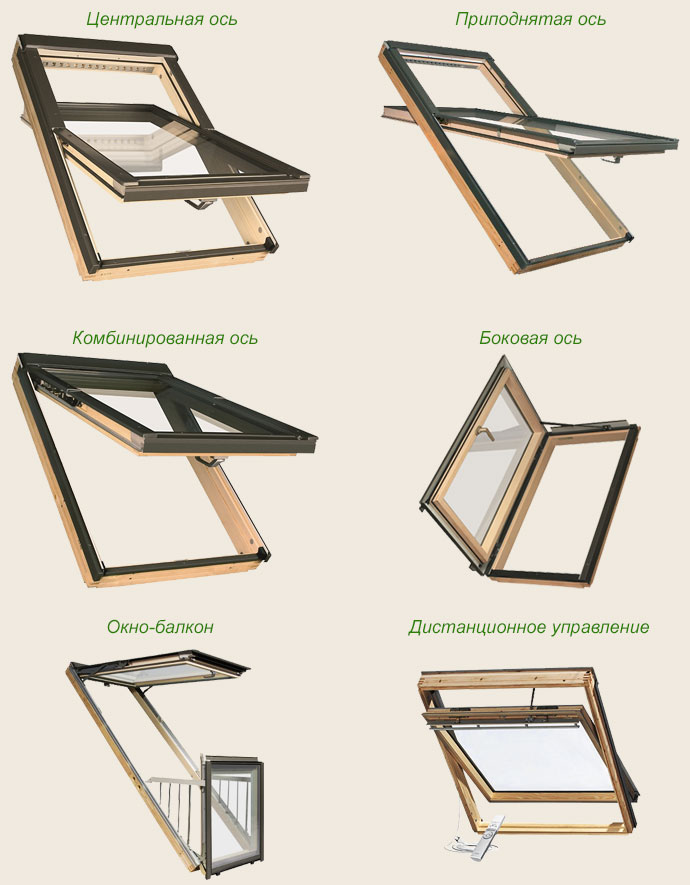
The number of insulating glass units depends on the region. The fewer there are, the colder the window, but the lighter the load on it. As for the opening mechanism, the sashes in roof windows pivot on hinges with a friction brake to lock in several positions. If you install a swing window, it must be fitted with a pneumatic damper to keep the wind from slamming the sash.
WHAT TO FINISH THE CEILING WITH?
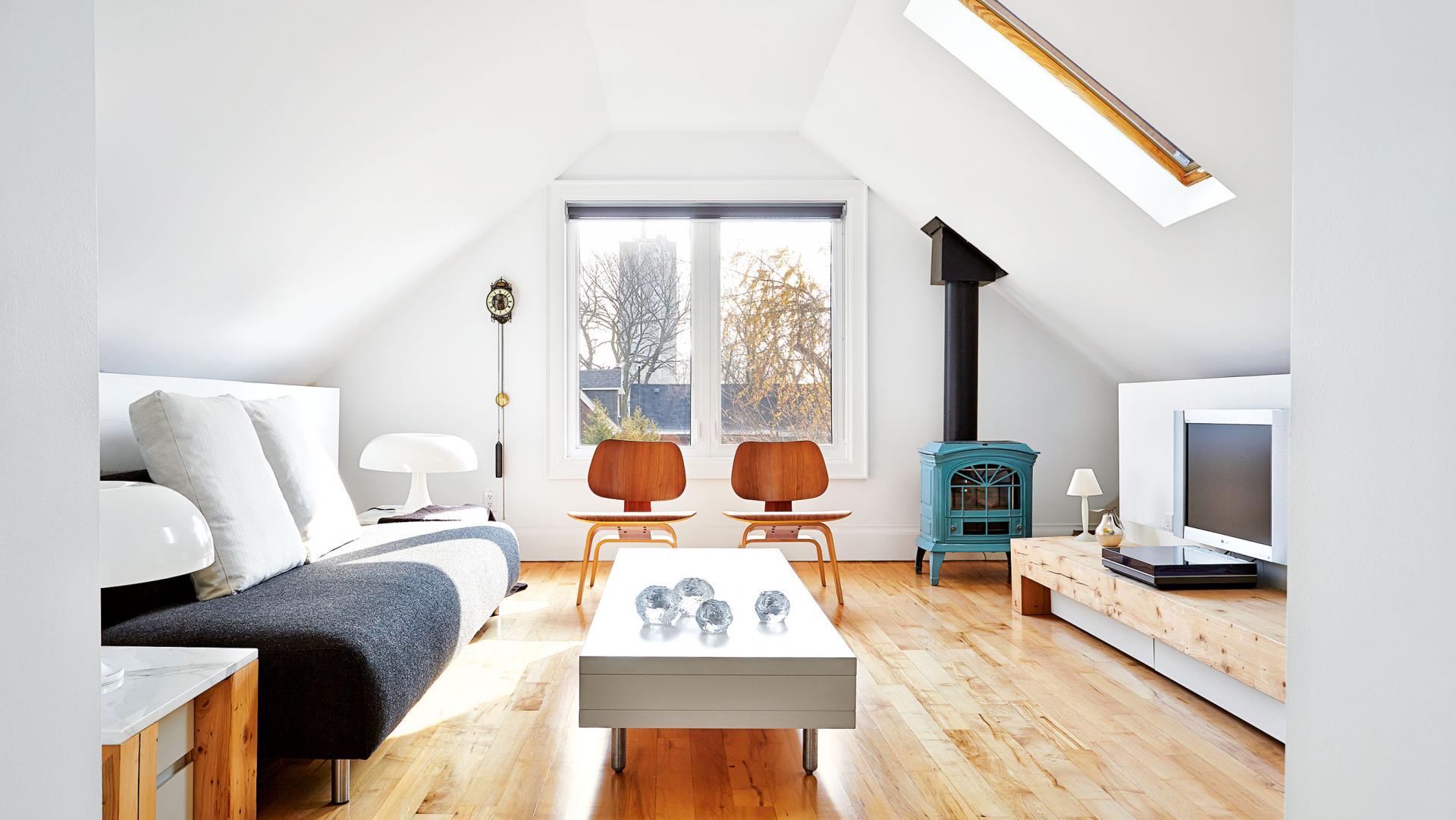
Drywall is the most budget-friendly and practical finishing option. The material can be mounted at any angle, weighs little, has a smooth surface, and can be covered with any finishing material — wallpaper, paint, or tile. The sheets are easy to cut, and you do not have to lower the ceiling much to create striking designs. Lighting, spotlights, and pendant chandeliers are set into trapezoidal and semicircular recesses. It is better to use moisture-resistant and fire-resistant drywall.
Wood boards have their own advantages:
- environmental friendliness;
- an attractive appearance;
- durability.
But they can only be used when the walls of the room are also finished in wood. They fit perfectly into country, eco, and Mediterranean styles, as well as shabby chic (when painted a light tone).
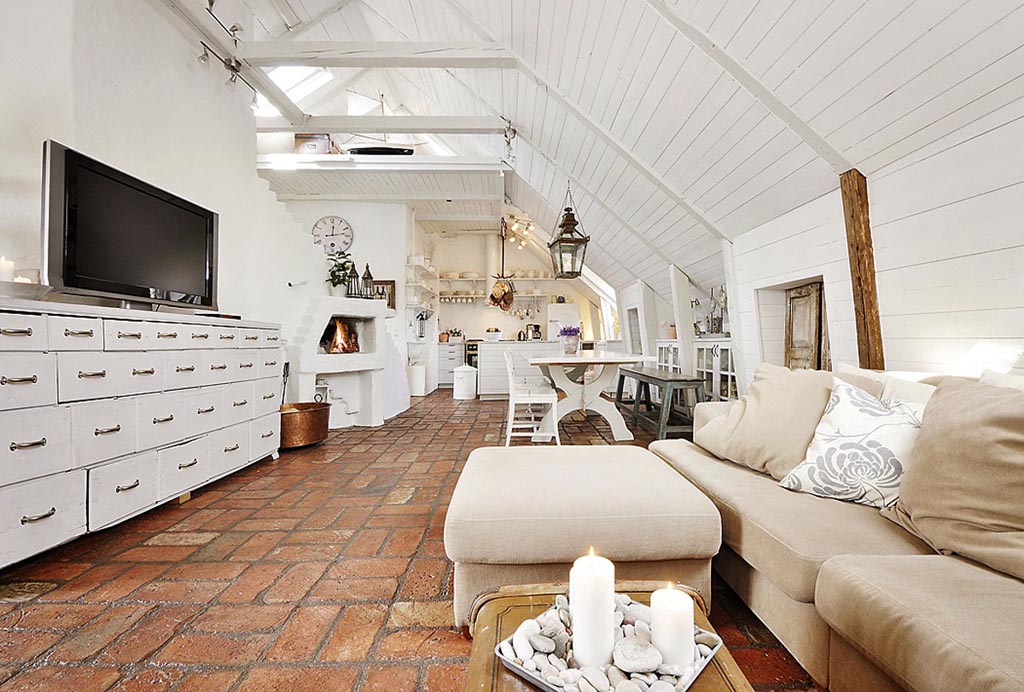
Tongue-and-groove paneling and imitation beams cost a little more, but need no additional treatment.
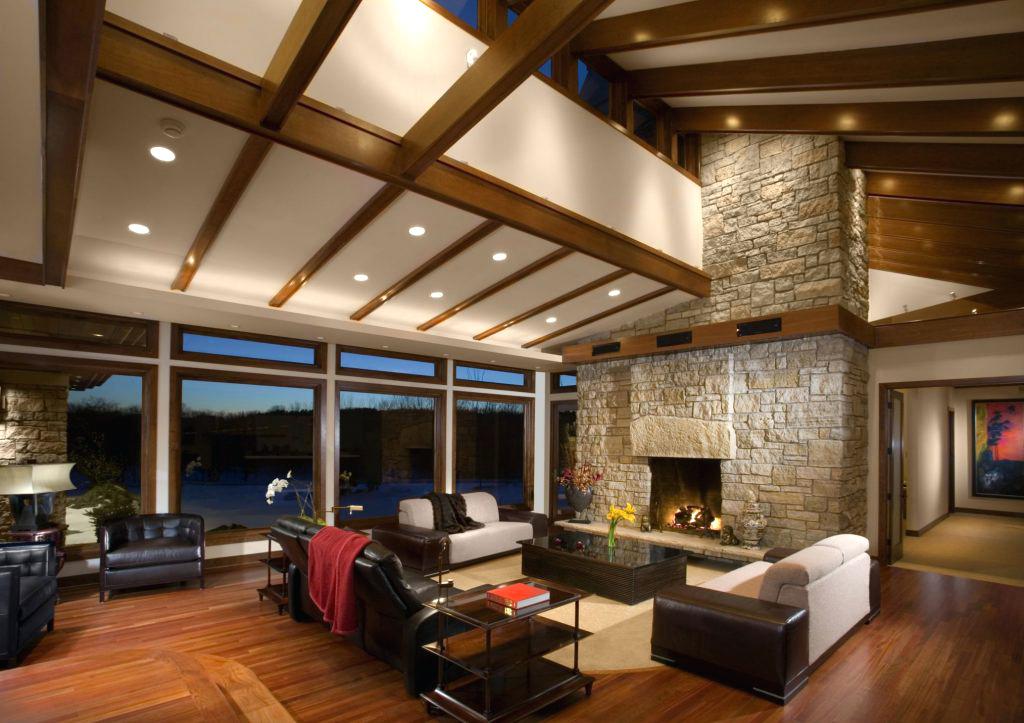
A coffered ceiling is made from a combination of wood, MDF, polyurethane, and drywall. This type of finish imitates the cells of exposed crossing beams. It is a fairly expensive option.
It is entirely feasible to finish the ceiling with stretch panels. Such designs conceal unevenness and make it possible to build a multilevel ceiling with graphic inserts and different types of lighting. The weight of stretch ceilings is negligible, and the possibilities for their design are endless.
WHAT ABOUT FURNITURE?
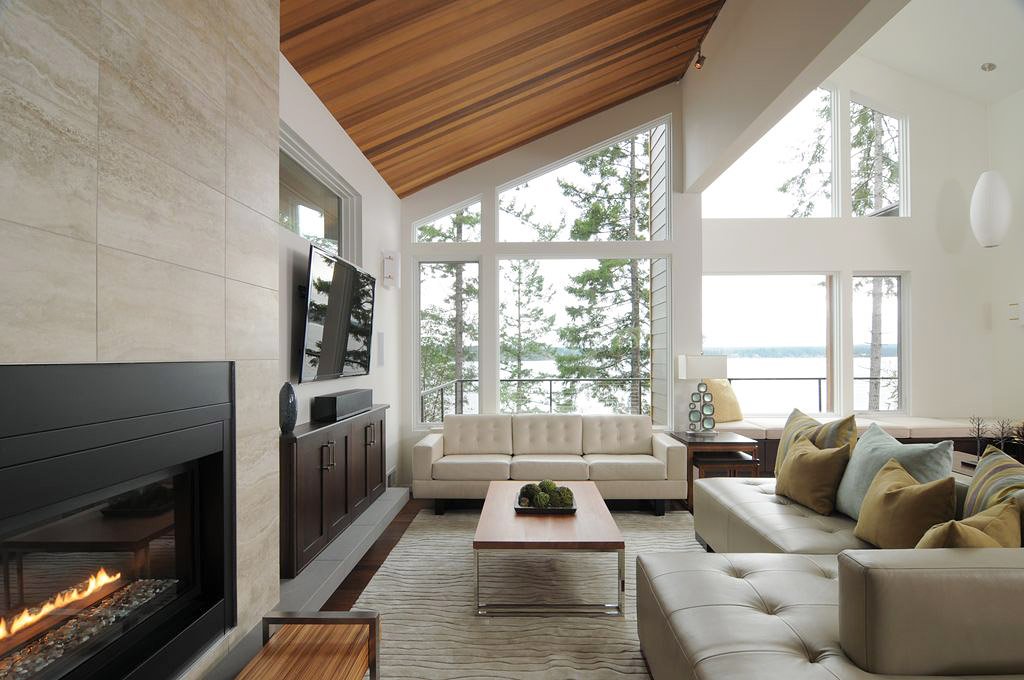
If the attic is small, it is better to decorate it in a minimalist style. In such rooms, compact wardrobes, backless sofas, convertible beds, shelves of original shapes, and open shelving units will look right at home. To visually expand the space, use mirrored surfaces, and on the walls, pictures and collages.
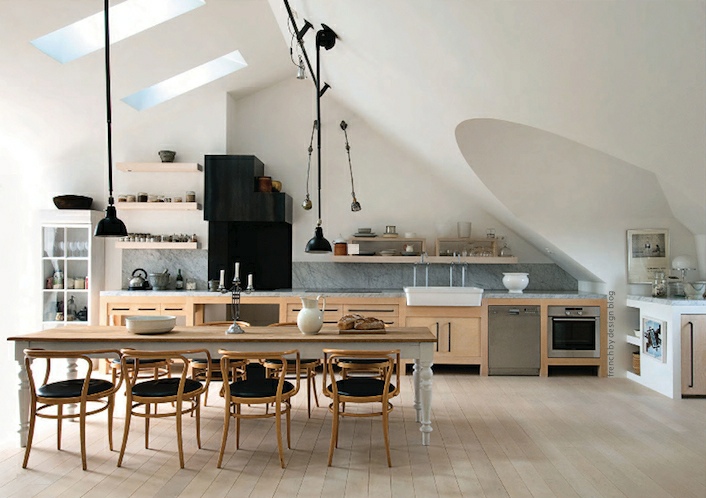
A large attic is not held back by constraints — any style works here, including Romanesque, English, Empire, and Baroque, which call for grandeur and luxury. As a rule, all the furniture in such attics is made to order for a custom design project. Custom furniture helps fill the corners with functional dressers, drawers, and cabinets.
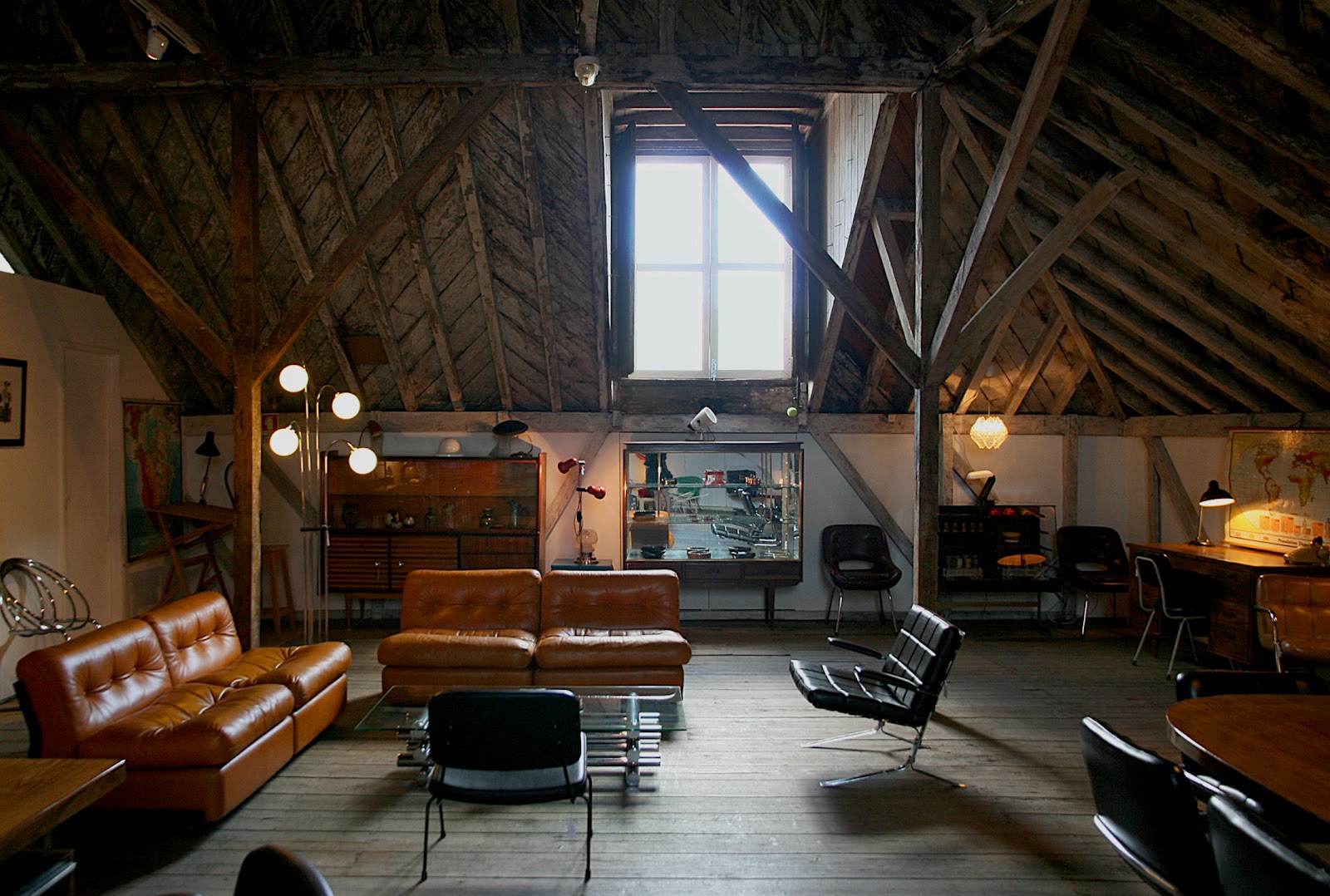
If you can find the right approach to building and designing the attic, this extra floor may become the most comfortable and beloved place for you and your family. The main thing is to think through every detail, without rushing or relying on clichés.