Hardie's 2027 color is black. The trim has to do the rest. James Hardie named Midnight Black its Color of the Year and is widening stock. The company's own before-and-after shows what a black wall does to shutters, casings and the front door, and the warranty on the color runs half as long as the one on the board.
James Hardie announced Midnight Black as its Color of the Year for 2027 on November 12. The announcement originated in Chicago, where Chief Marketing Officer Sam Toole stated that black has become an increasingly intentional choice for the entire home exterior. The company argues that black is shifting from an accent color to a primary choice for full exteriors. Historically, the color was reserved for window frames, trim, and occasional feature walls.
The company provided no survey data, sales figures, or market analysis to support this claim. It appears to be an internal reading of their own order trends. The practical update is more significant: Hardie is expanding national availability of Midnight Black across its Statement Collection styles. They have not specified a start date or targeted regions. Their website currently advises buyers to check with local dealers or contractors for regional availability.
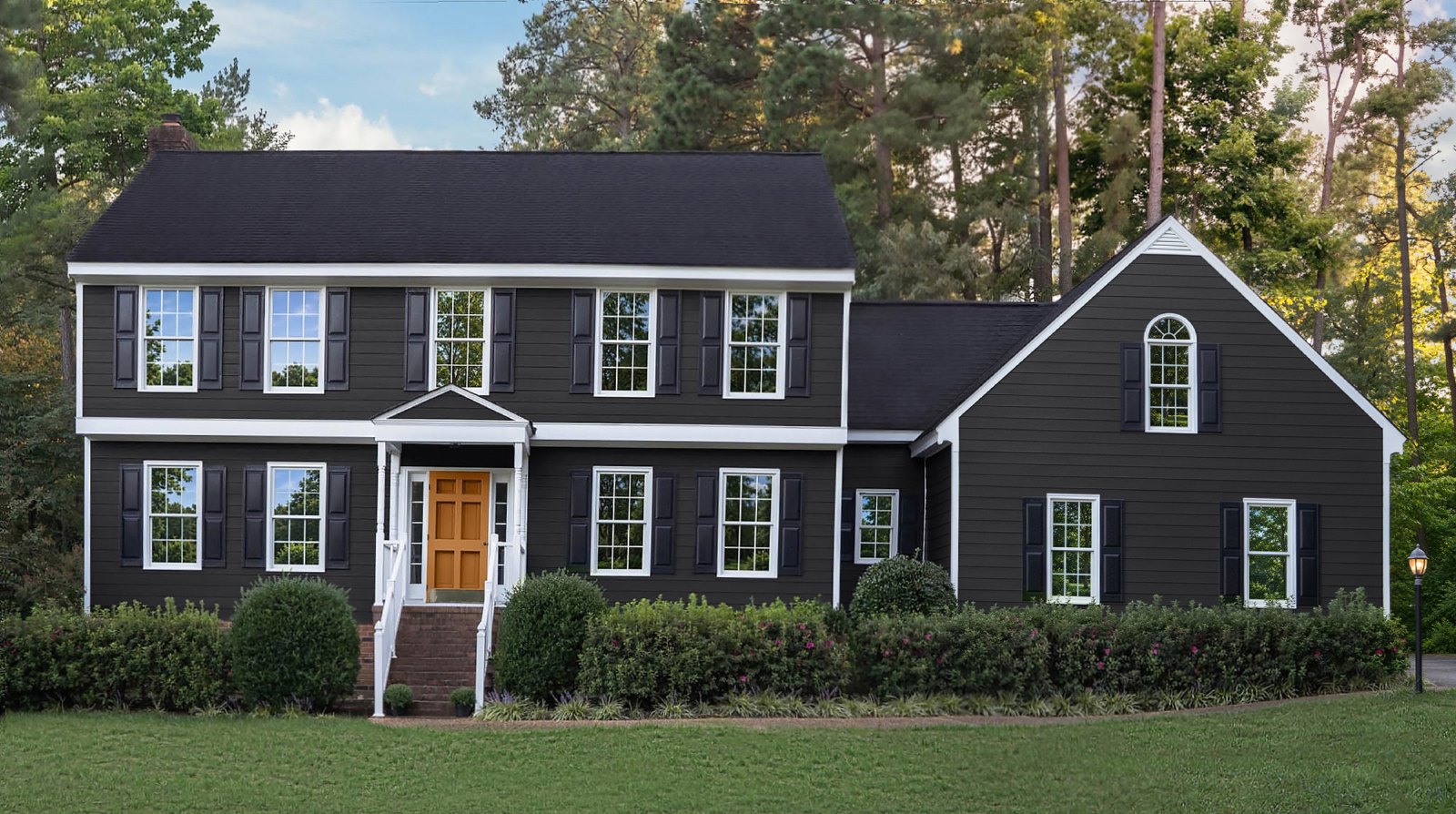
What the visual comparison reveals
Hardie’s product page features a two-story colonial before and after. The original home had greige lap siding, white trim, black shutters, and a black front door. The updated version replaces the siding with black, keeps the white trim and black shutters, and switches to a natural wood front door.
The impact on the shutters is immediate. On the lighter wall, they served as a visual accent, but against the black siding, they disappear into the background. The white casings and frieze board now define the elevation. Because a black door against a black wall would be invisible, the front door had to change. This was not a simple color swap; the designer reworked the entry point and abandoned the shutters as a distinct feature.
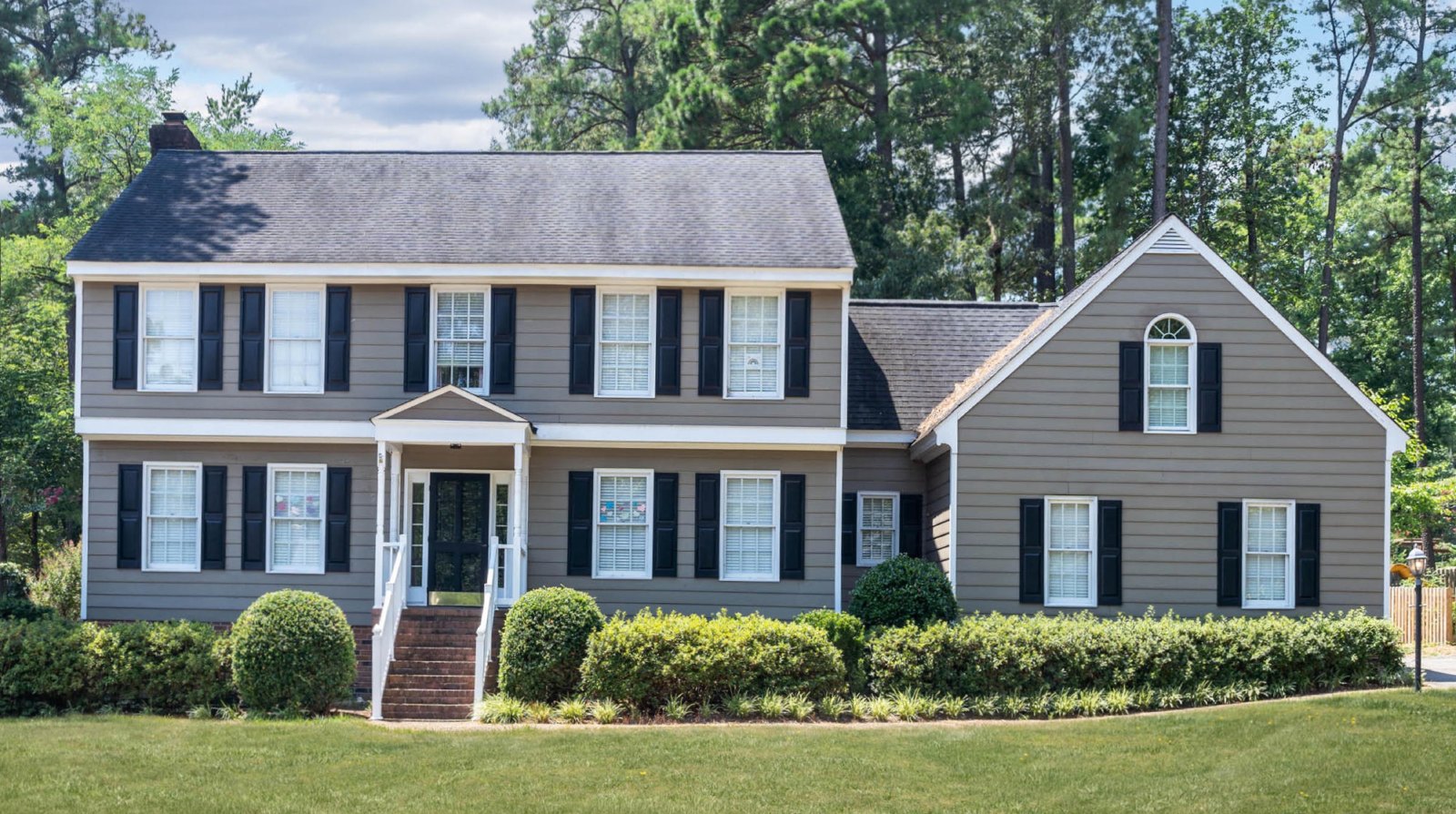
This detail matters for any homeowner working on a two story house front elevation design with more than a dozen windows facing the street. We evaluate elevations by their openings. Black siding turns every window into a white-outlined shape, making straight, uniform casings look sharp while irregular casings or misaligned second-floor rows become obvious from across the street.
Suitability and limitations
The release suggests Midnight Black suits contemporary homes with clean lines, as well as transitional and traditional styles. We agree only partially. Transitional home exterior design relies on specific details like deep porches, brackets, and board-and-batten gables, where black works well when trim provides contrast but fails when everything is dark. Lap siding gets its look from the shadow line under each board, and on a black board that shadow is barely visible at noon.
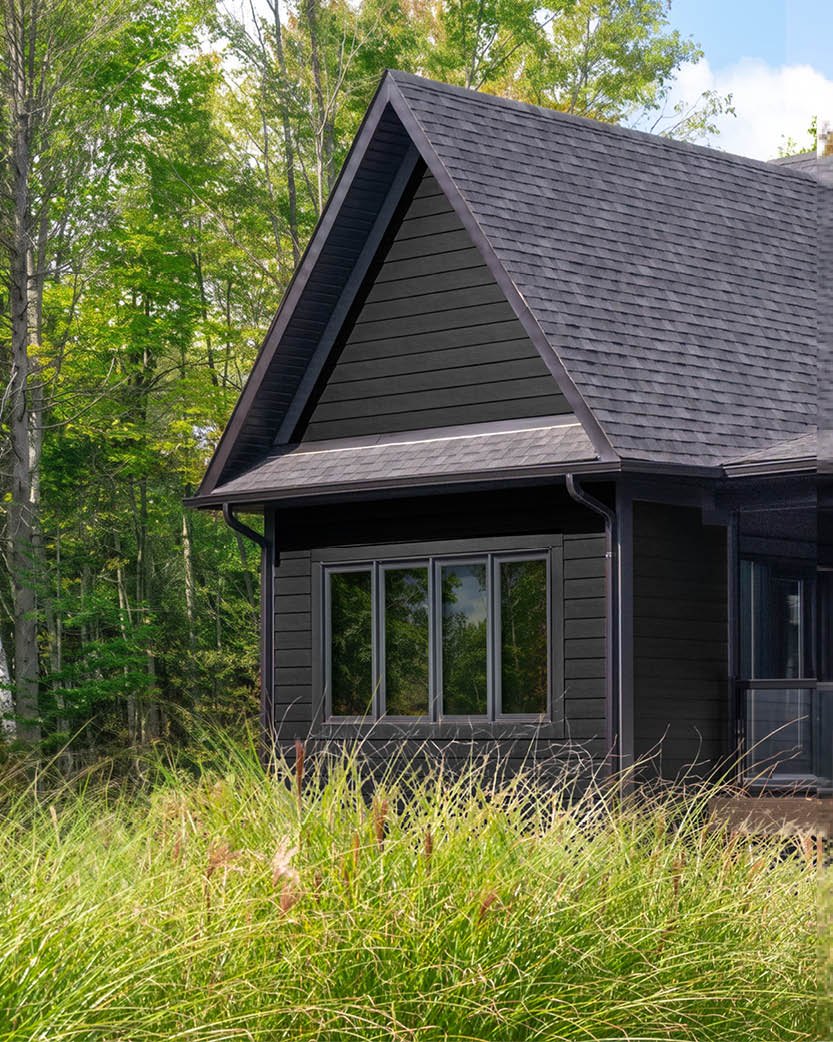
Hardie’s second image shows a gable end with dark trim, gutters, and roof, which works because the house sits in tall grass at the edge of a wooded area. We do not recommend it on a standard lot between two beige neighbors. In that setting, it becomes a silhouette.
Hardie recommends pairing the color with crisp whites, warm neutrals, natural stone, and rich wood tones. They also suggest TimberTech decking in English Walnut. Since TimberTech is a James Hardie brand, this is effectively a catalog cross-reference. The advice on wood is sound. A single warm surface at the entry does more for a black house than extensive white trim.
Warranty terms and heat considerations
Midnight Black includes ColorPlus, a factory-applied baked finish that carries a 15-year limited warranty against fading, chipping, peeling, and cracking. The board (substrate) has a 30-year non-prorated limited warranty, while the color is guaranteed for half the duration of the siding. Fading is the failure you notice first on black. We did not find a definition on Hardie’s public pages regarding how much color change constitutes fading. Request the warranty document before signing a contract.
Heat is another concern. A black wall absorbs more sun than a pale one. The release claims the finish is built for extreme heat but provides no specific data for dark colors. We have not measured this product ourselves. If your south or west wall lacks shade, ask installers what they have observed on similar jobs after several summers.
Two additional checks are free. If you live in an HOA, get color approval in writing first, as many associations maintain a restricted palette. If you already installed black window frames, reconsider applying black fiber cement siding to the walls. Those frames provided your contrast.
A Color of the Year is a marketing tool. We do not recommend planning a house around it. Wider availability of factory-finished black is real news if you wanted this color and were quoted a long wait. For everyone else, our dark facades library offers a better test than a swatch. Find a house shaped like yours and observe where the eye goes. If you need this analysis for your specific plans, our facade design service handles that.