#413. Stone Tudor Revival: Asymmetrical Facade with Dual Gables and Expressive Brick Chimney
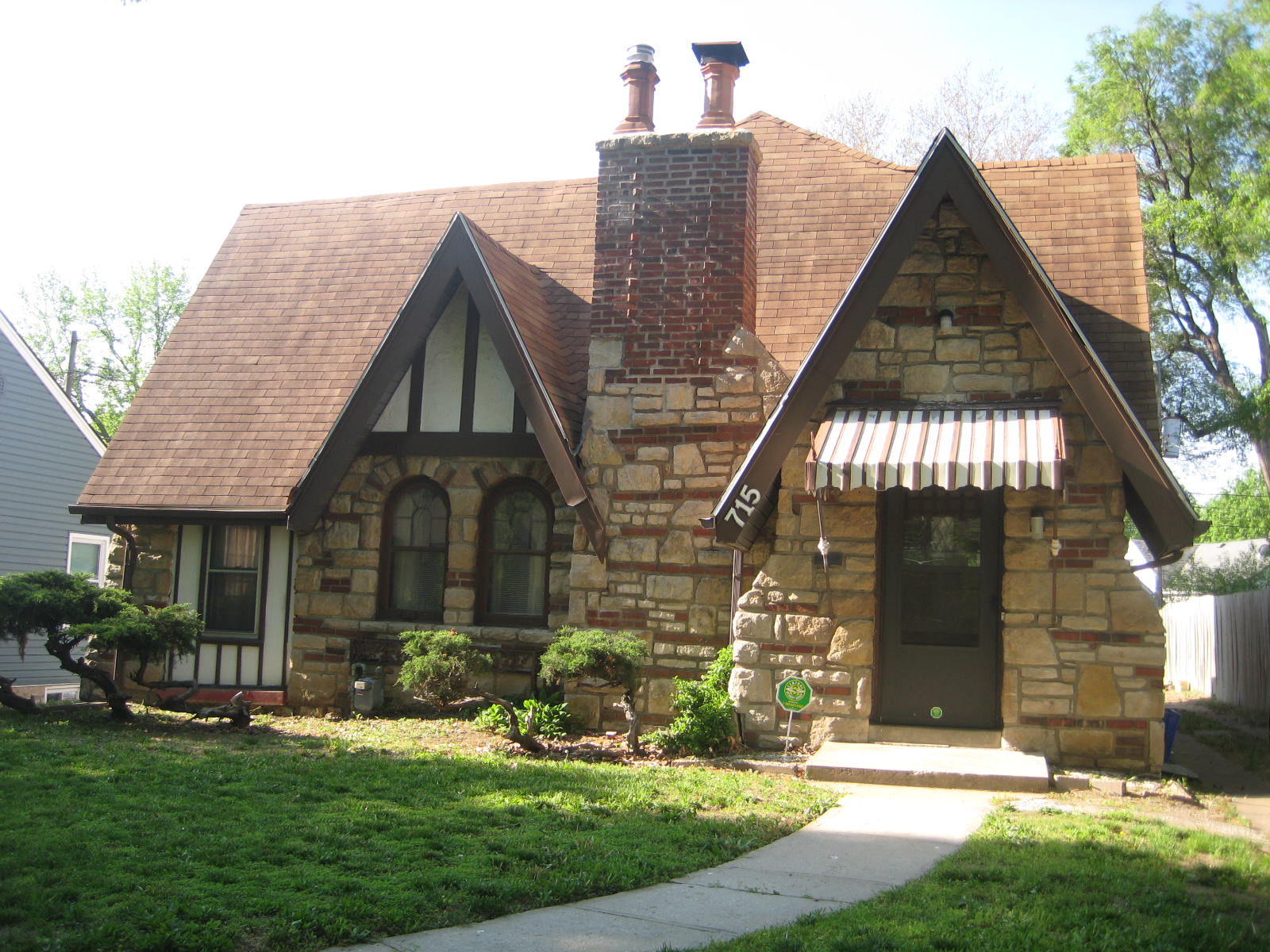
Before us stands a charming example of cottage architecture in the Tudor Revival style, popular in America during the 1920s-30s. The facade demonstrates classic elements of this style: an asymmetrical composition with two expressive gables of different shapes and heights, natural stone cladding, and characteristic decorative half-timbering elements on the left portion of the facade.
The central element of the composition is a massive brick chimney that visually divides the facade into two parts while simultaneously serving as a structural dominant. Note the elegant ceramic chimney pots with decorative caps that give the house's silhouette a sense of completeness.
The right portion of the facade features an arched entrance with a small striped awning that adds lightness and coziness to the building. The stonework is executed with great craftsmanship, combining blocks of various sizes and textures to create a picturesque wall texture. The pitched roof with brown shingles has a fairly steep slope, typical for the style, ensuring efficient drainage of water and snow.
The window openings also deserve attention: they are relatively small, with arched tops in the left section of the facade, and framed with dark trim that creates an expressive contrast with the light-colored stone walls. The house number "715" is placed next to the entrance door, and a small, neat landscape composition with trimmed shrubs complements the overall picture of a well-maintained dwelling.