ARCHIWOOD 2024. The best projects in the «Country House» category
Current trends among the nominees for the ARCHIWOOD 2024 Award in the Country House category reflect a preference for designs that blend contemporary architectural elements with an emphasis on natural materials and sustainability. Many projects feature large glass panels, flat roofs and linear layouts that optimize views and interaction with the natural surroundings. There is a clear trend toward single-story buildings that keep a low profile to blend into their environment.
The spatial layout of these homes often prioritizes openness and flow, with large open-plan living areas that connect directly to outdoor terraces and gardens, enhancing the experience of living both inside and out. This approach is popular not only for its aesthetic and practical benefits, but also because it suits lifestyles that value relaxation and a connection to nature.
Overall, the nominees in the Country House category continue a tradition of innovative residential design, emphasizing sustainability, modernity and deep integration with the natural landscape.
By the way, the popular vote is still open, and you can cast your vote for one of the projects in each category.
Now, more about the shortlisted homes.
«White Tower». Saratov. Spirin Architects / Evgeny and Marina Spirin.
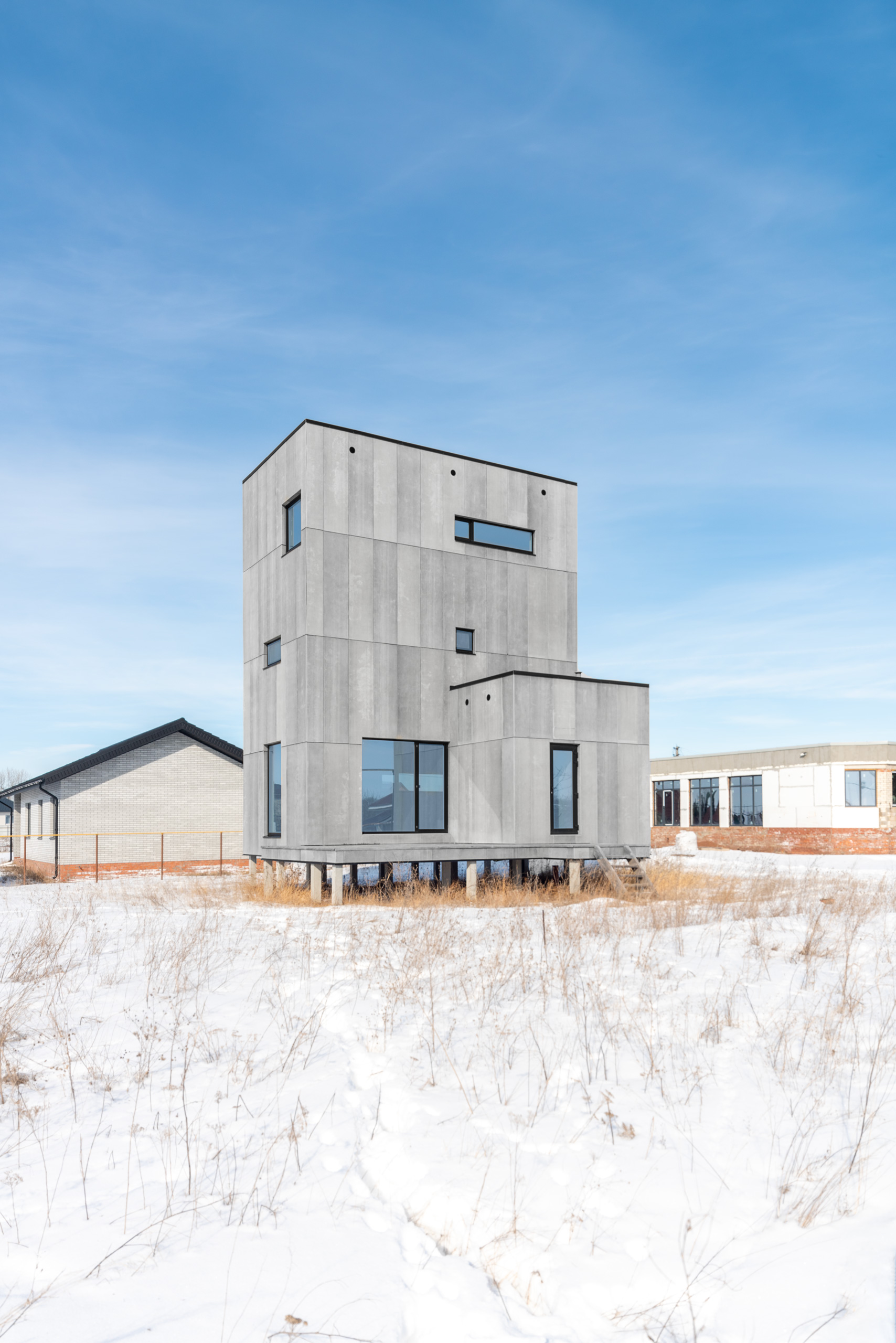
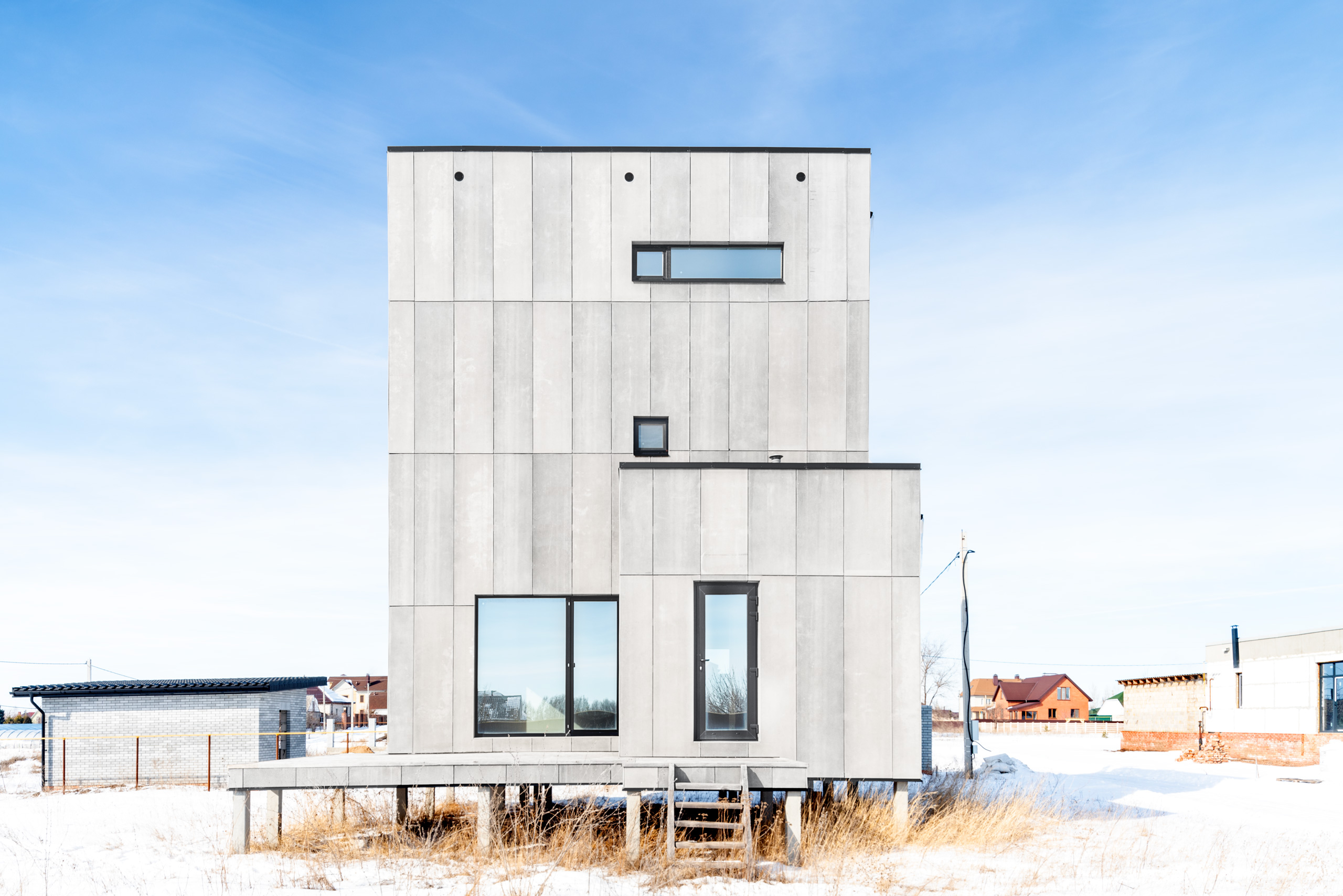
This compact house has an area of 89 square meters and a height of 11 meters. Its defining quality is its experimental nature, both for the architects and for its occupants. The style of the building can be described as a mix of constructivism with elements of the Russian avant-garde. The house was built using SIP technology (structural insulated panels), which helped speed up construction and reduce its cost.
The exterior finish is made of cement-bonded particle boards mounted on a subframe, which gives the building a modern look and makes it resemble a concrete structure despite its wooden base. The facade and terrace are left untreated to let the material change its appearance naturally over time.
Birdland House. Tver Region. Roman Leonidov Architectural Bureau.
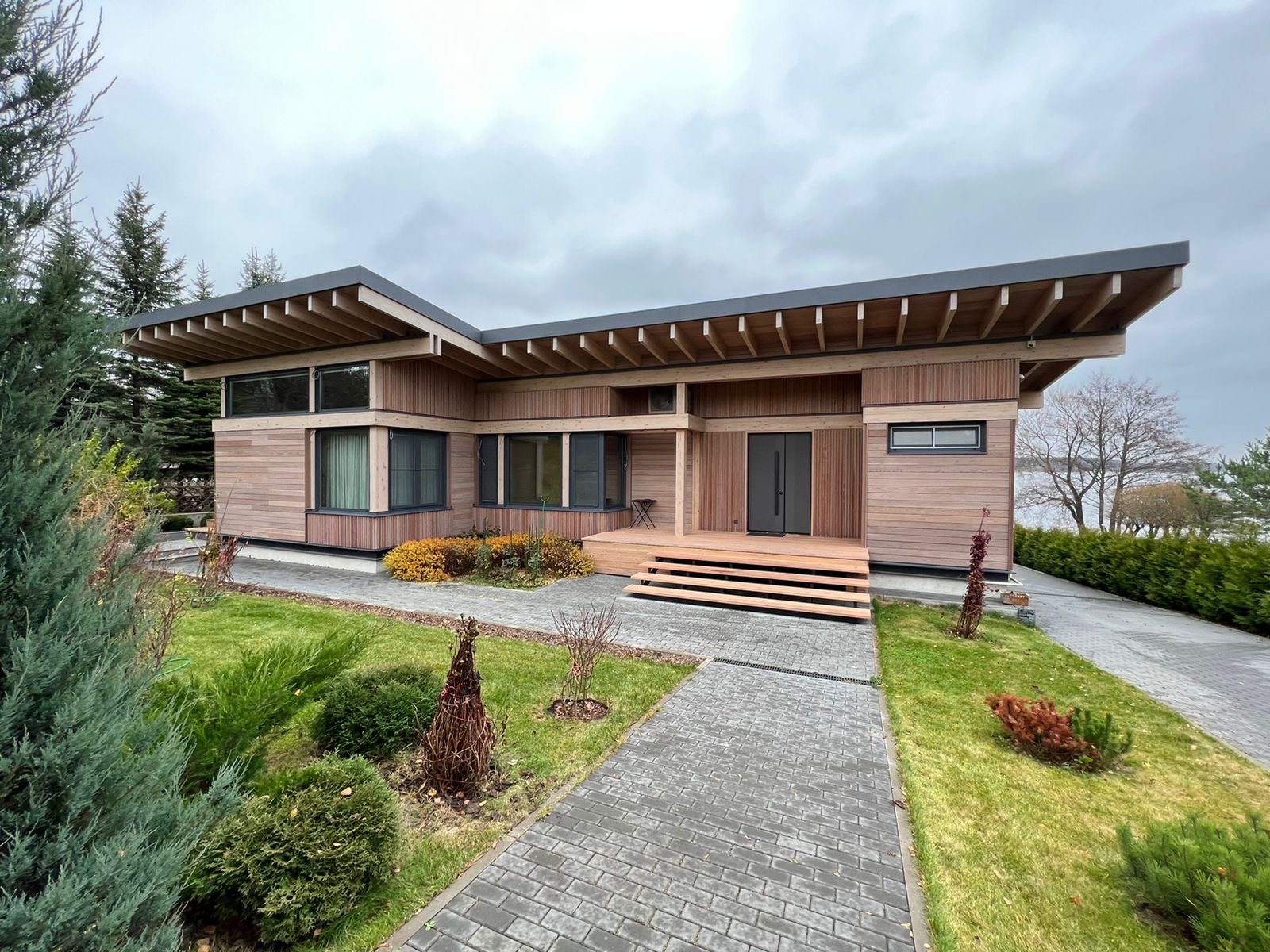
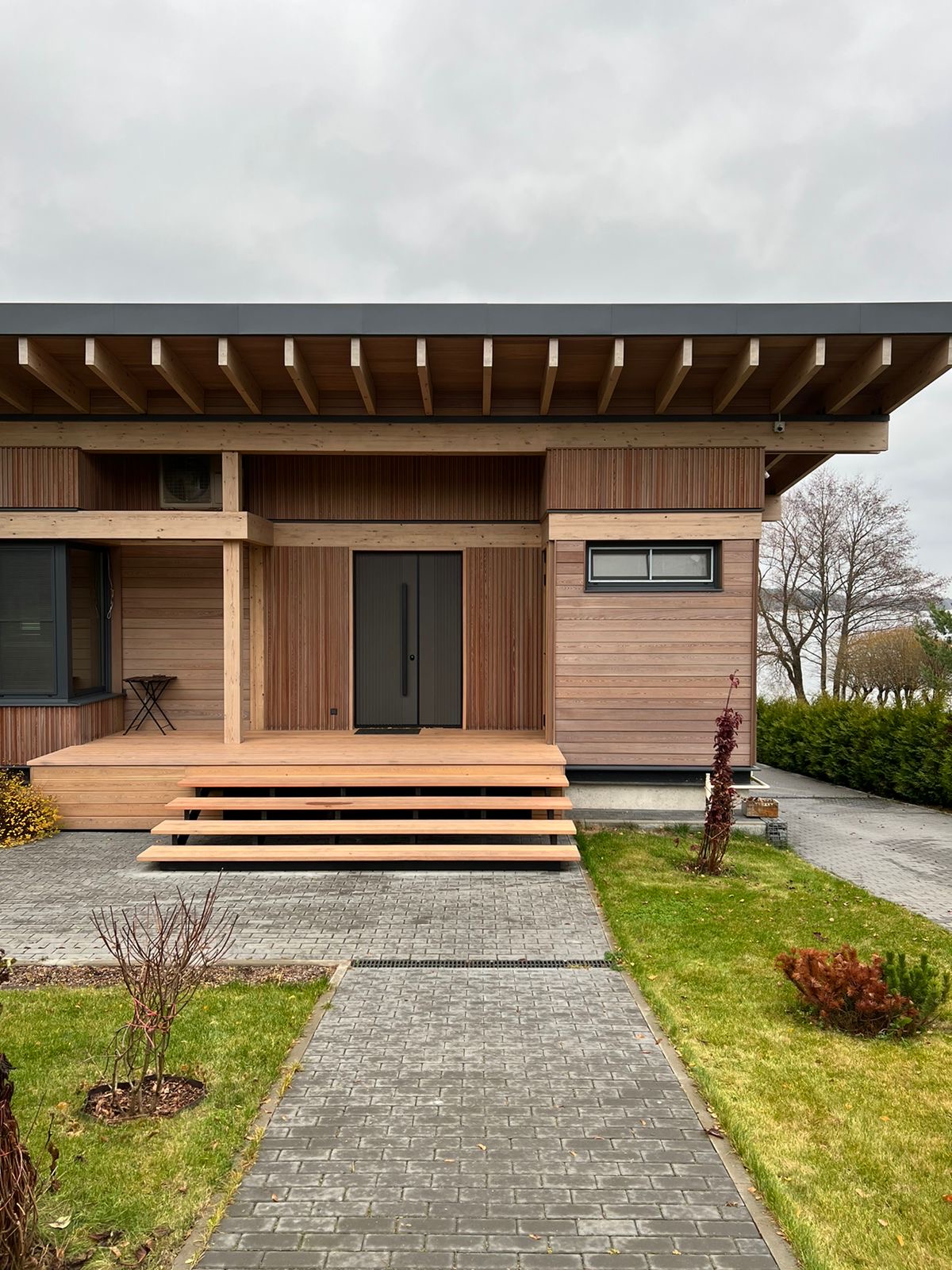
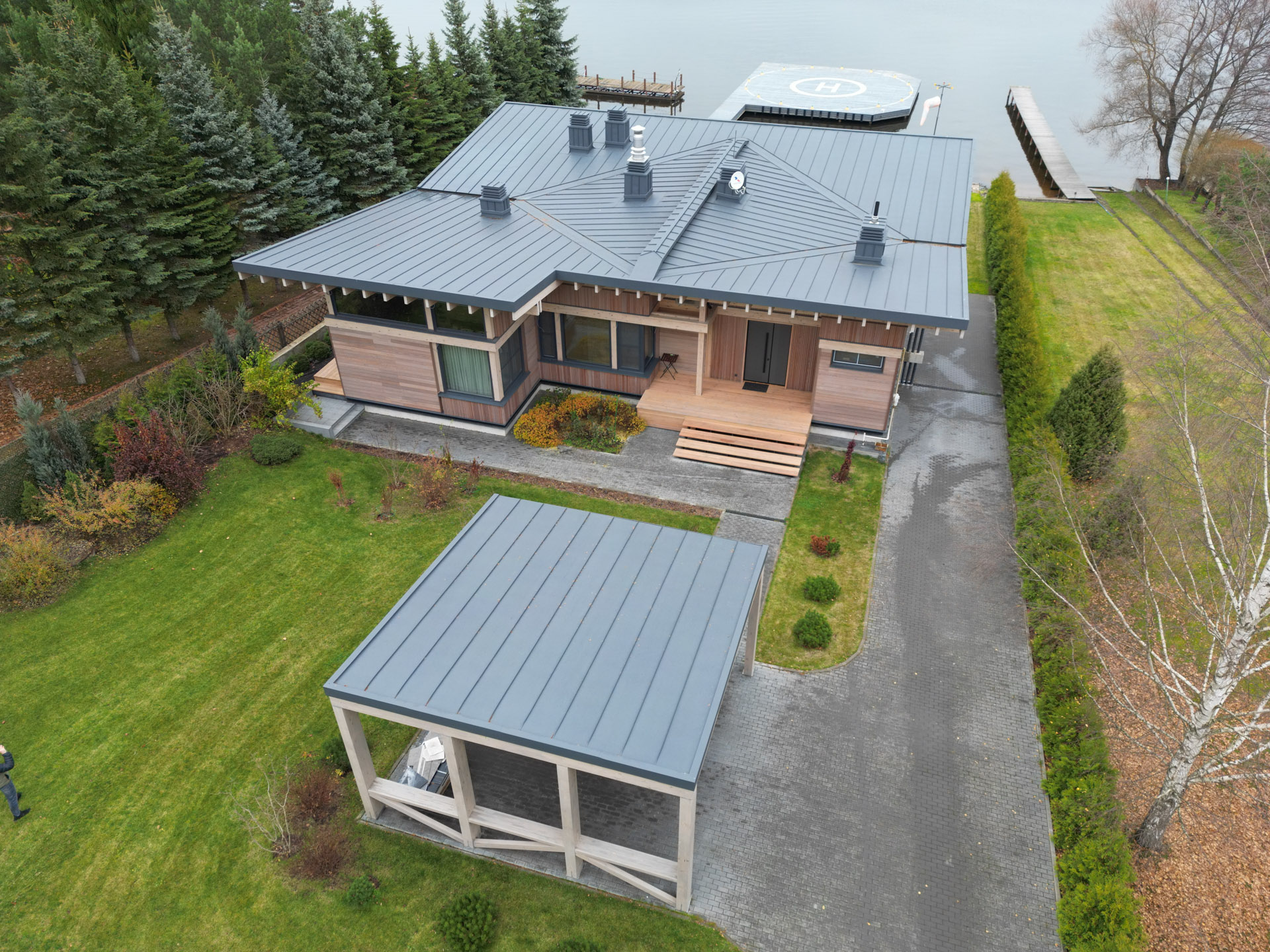
«Birdland House» stands out for its open floor plan and large panoramic windows that create a sense of unity with nature, opening up views of the forest and the river. This approach not only maximizes natural light inside the house, but also lets its inhabitants feel part of the surrounding world, as if the walls between interior and exterior space have been erased.
The design is complemented by the skillful use of natural materials such as wood and stone, which are not only eco-friendly but also add texture and warmth to the interior, making the space genuinely cozy. The design is also marked by exquisite attention to detail, making every interior element part of the overall architectural concept.
DOM70. Moscow Region, Beketovo Park. WOODBOX.
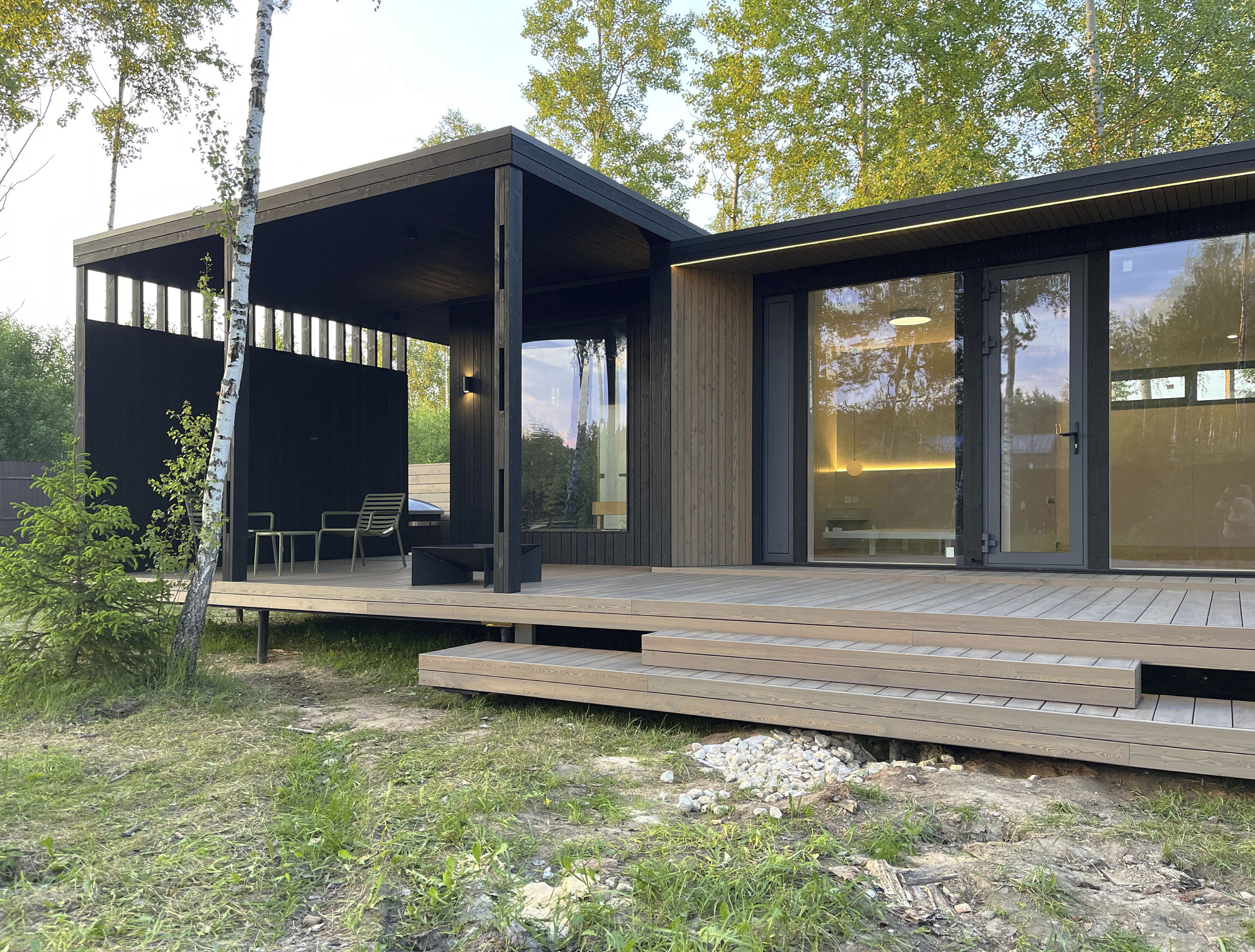
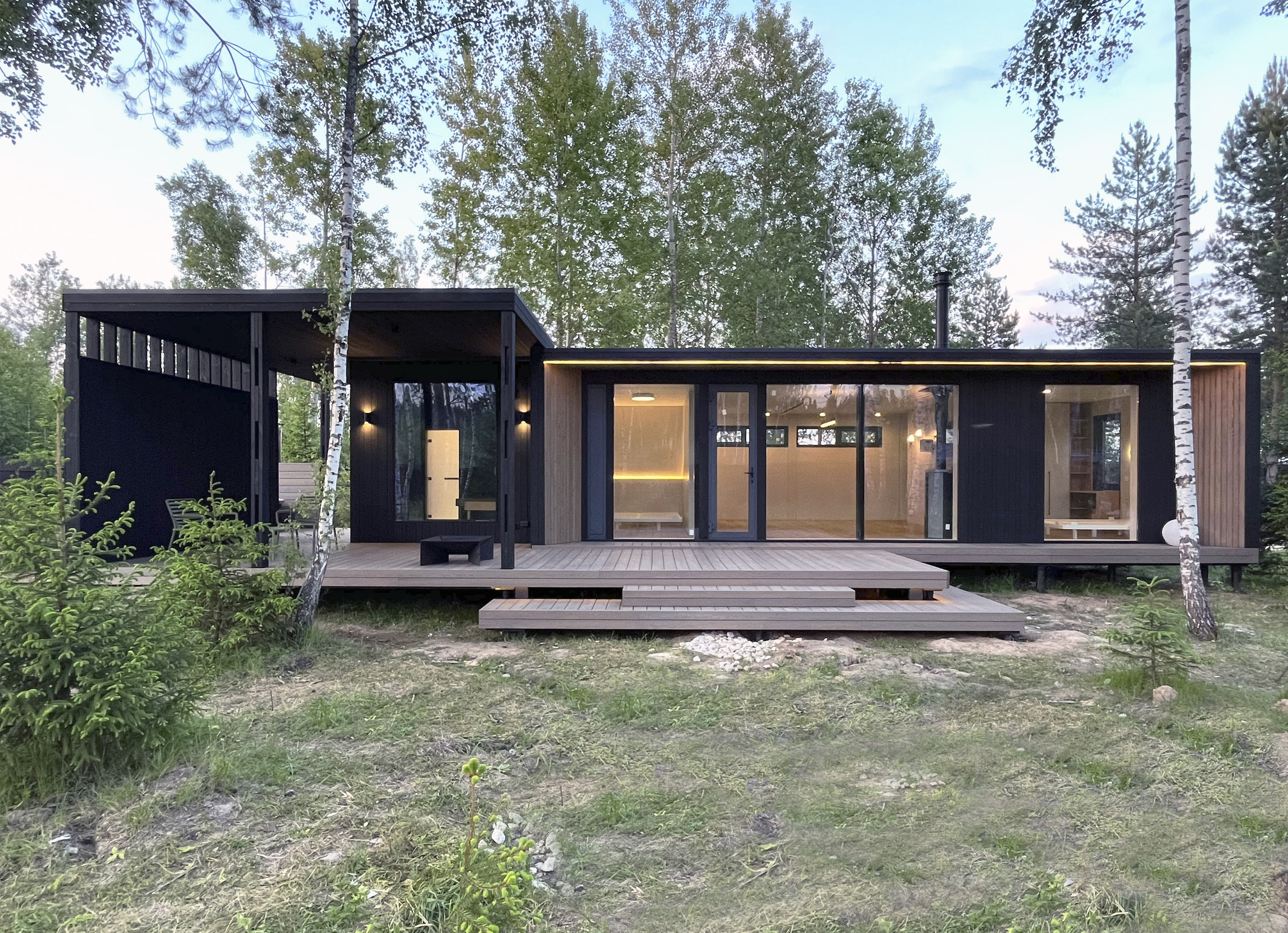
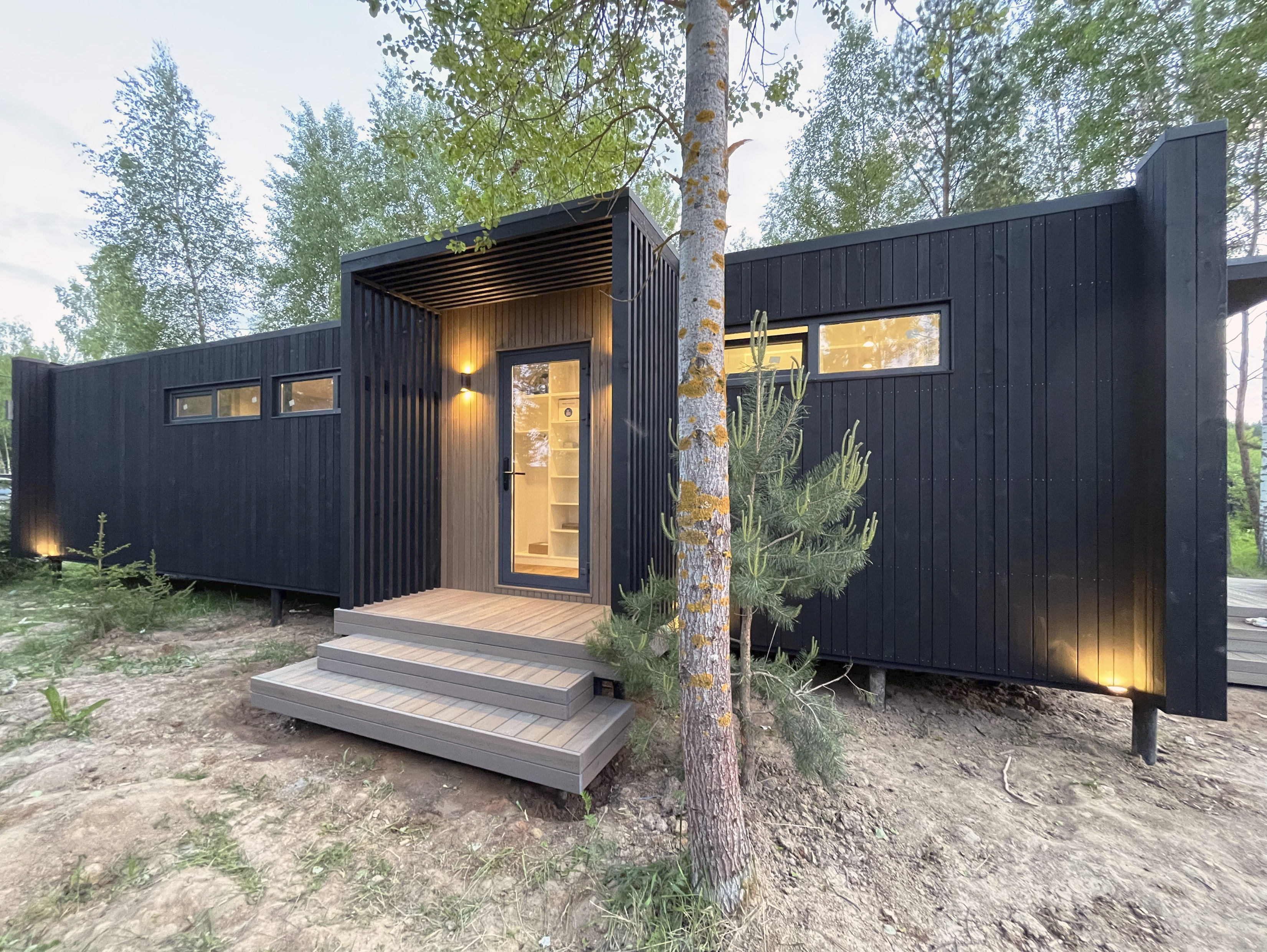
The "DOM70" project includes several unique features, such as the option to expand the house in modules, which lets the space adapt to a family's growing needs. The house has no hallways, which increases usable space, and the use of large panoramic windows maximizes natural light while emphasizing the connection with nature. The facade and interior materials are eco-friendly and help maintain a healthy indoor climate.
Residential House in Rumyantsevo. Moscow, Rumyantsevo village. Ppershin.com.
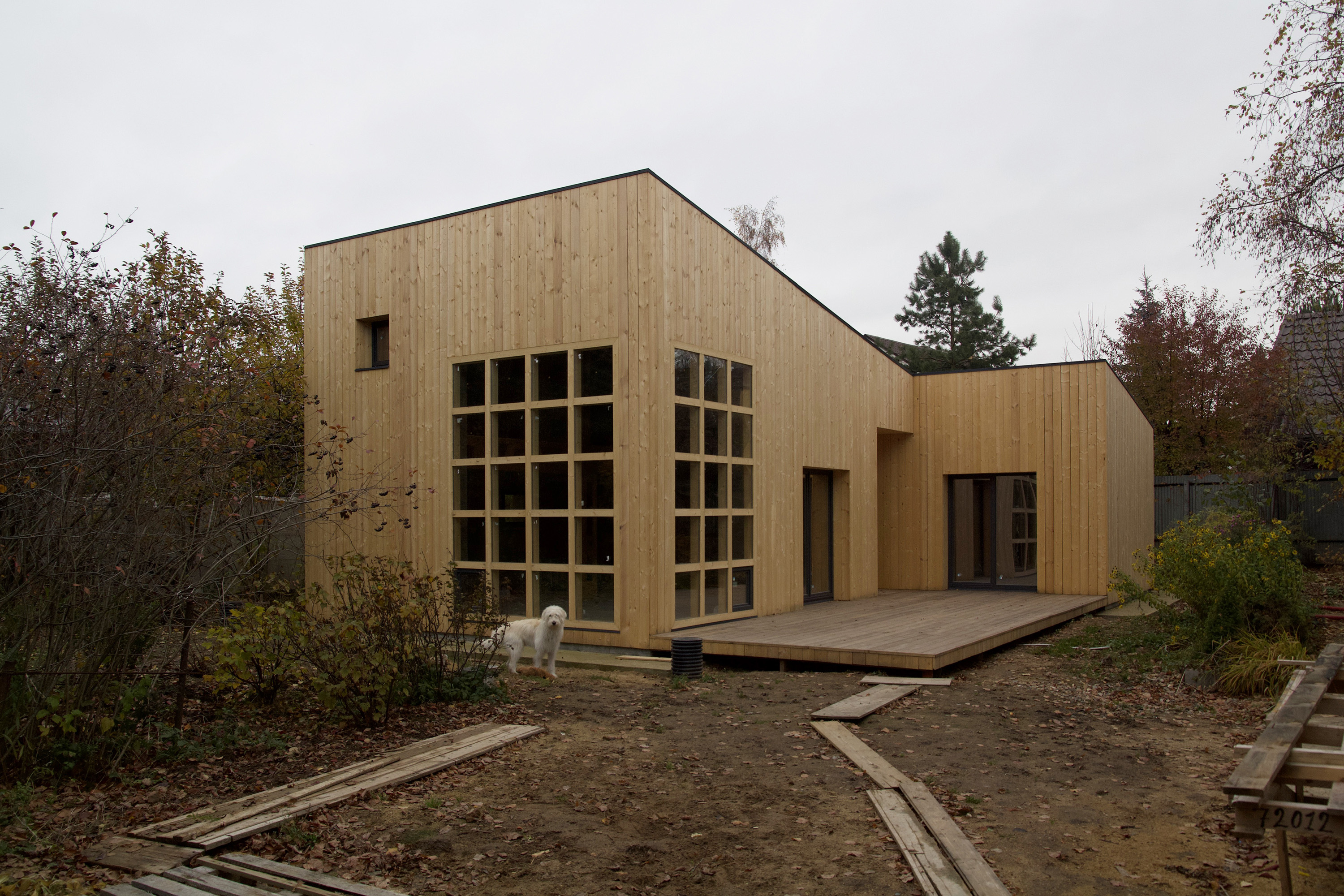
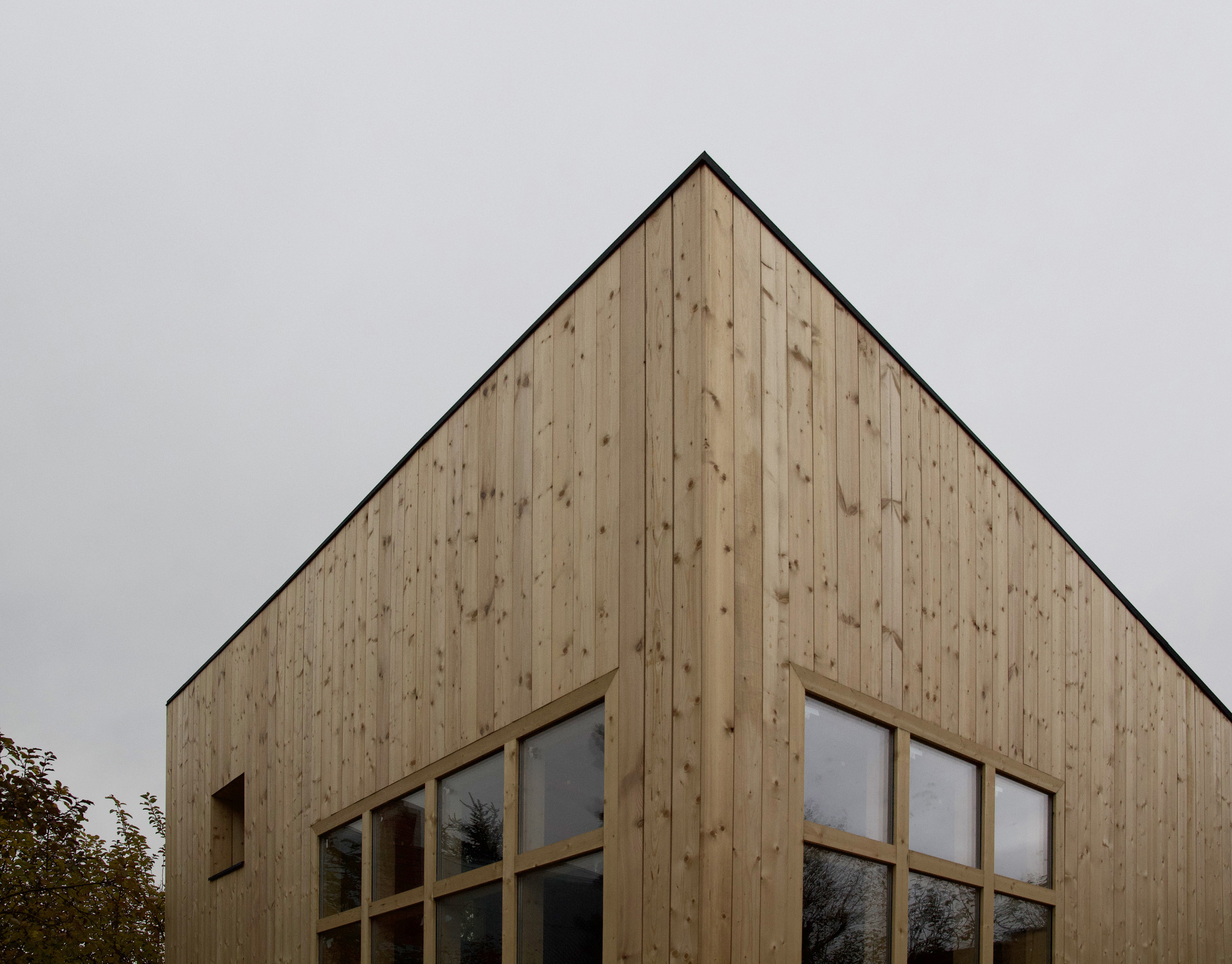
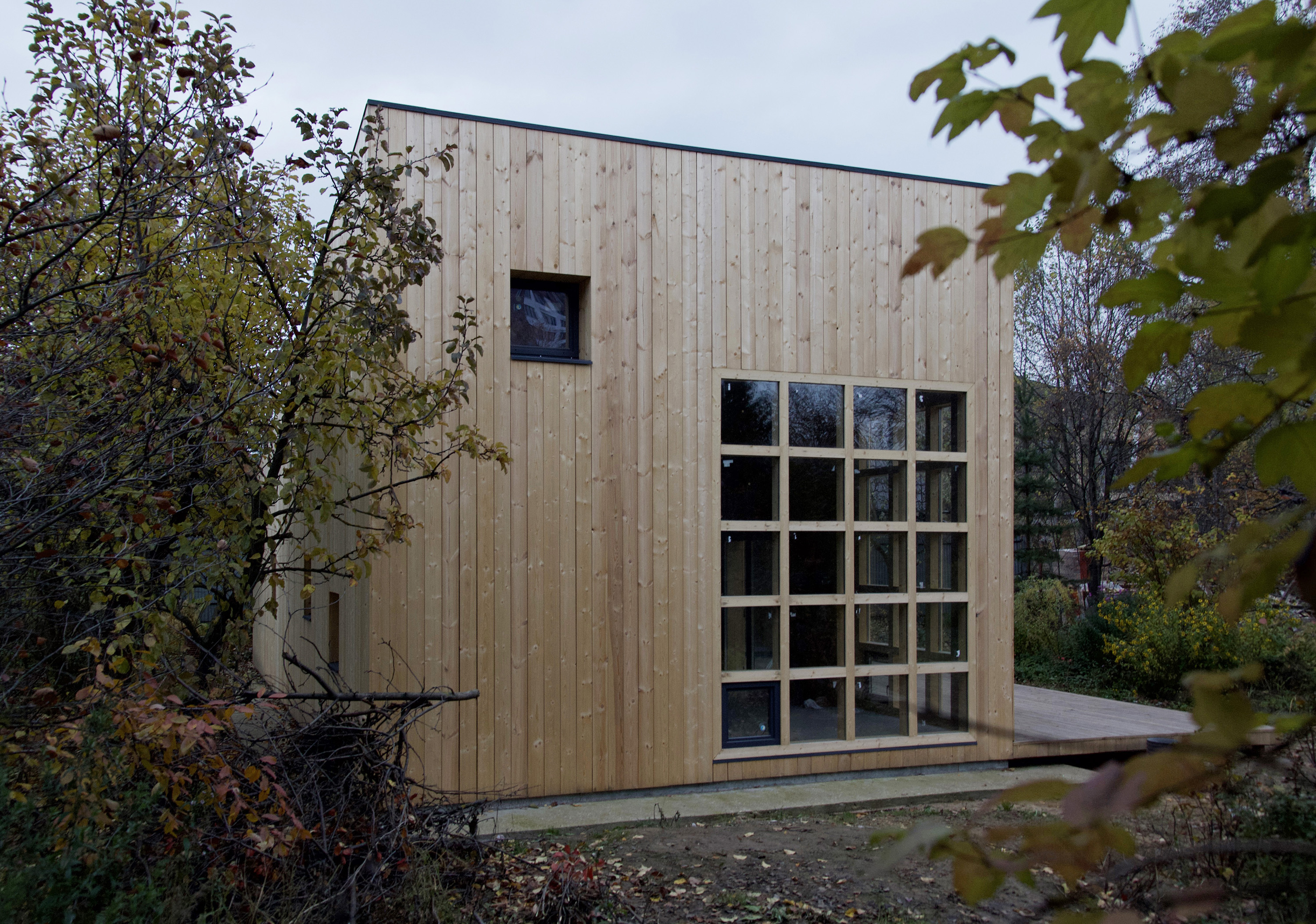
The house in Rumyantsevo is a one-and-a-half-story minimalist building with a total area of 99.9 square meters. Set in a green area, its architecture harmonizes with the surrounding landscape. Its features include two large floor-to-ceiling windows facing southeast and southwest, and a mezzanine with spaces for various uses. The interior and facade materials are left untreated and meant to age naturally.
House Deck. Moscow Region, "Azurny Bereg" settlement. Anton Litovsky Architectural Studio.
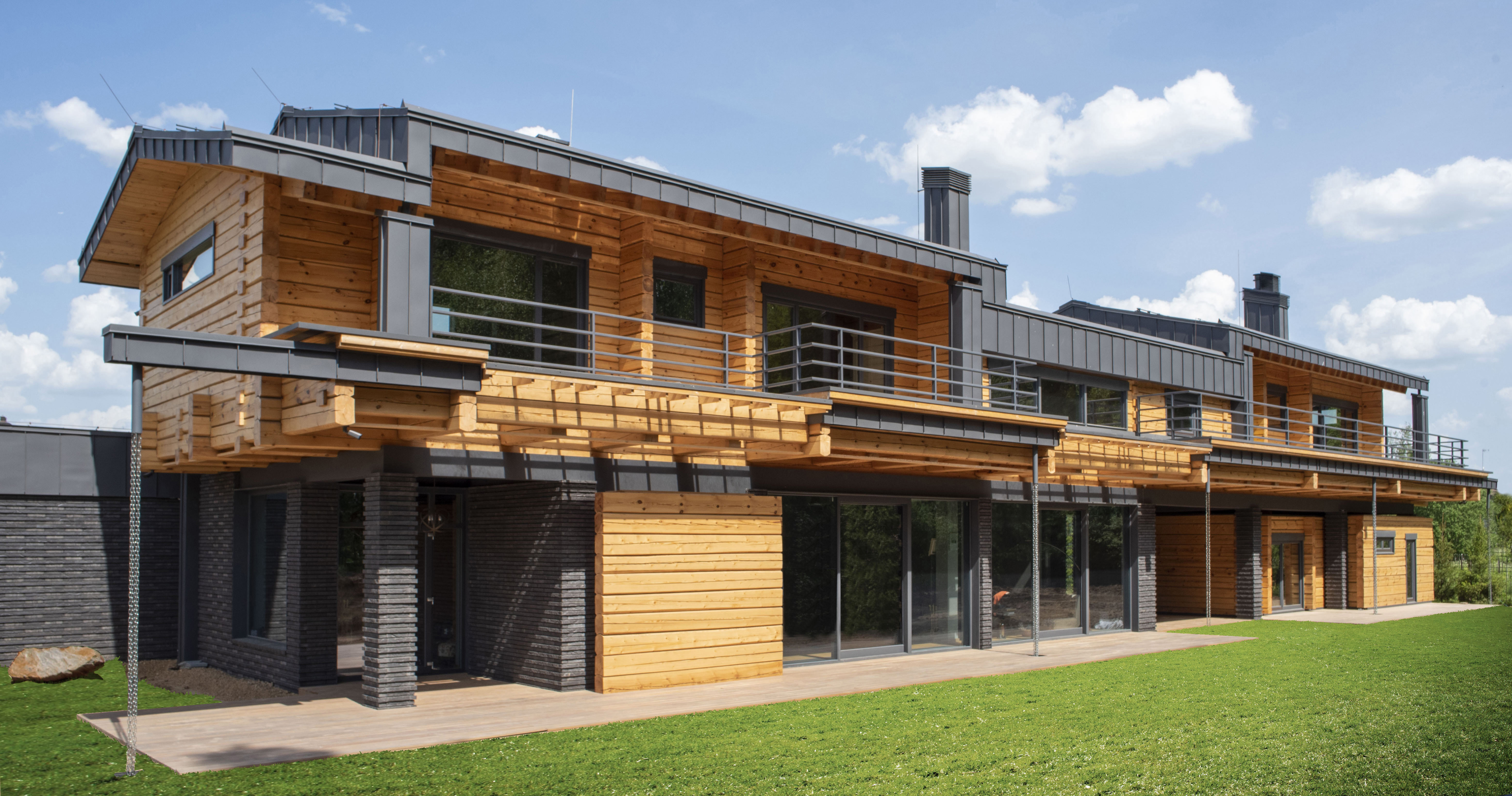
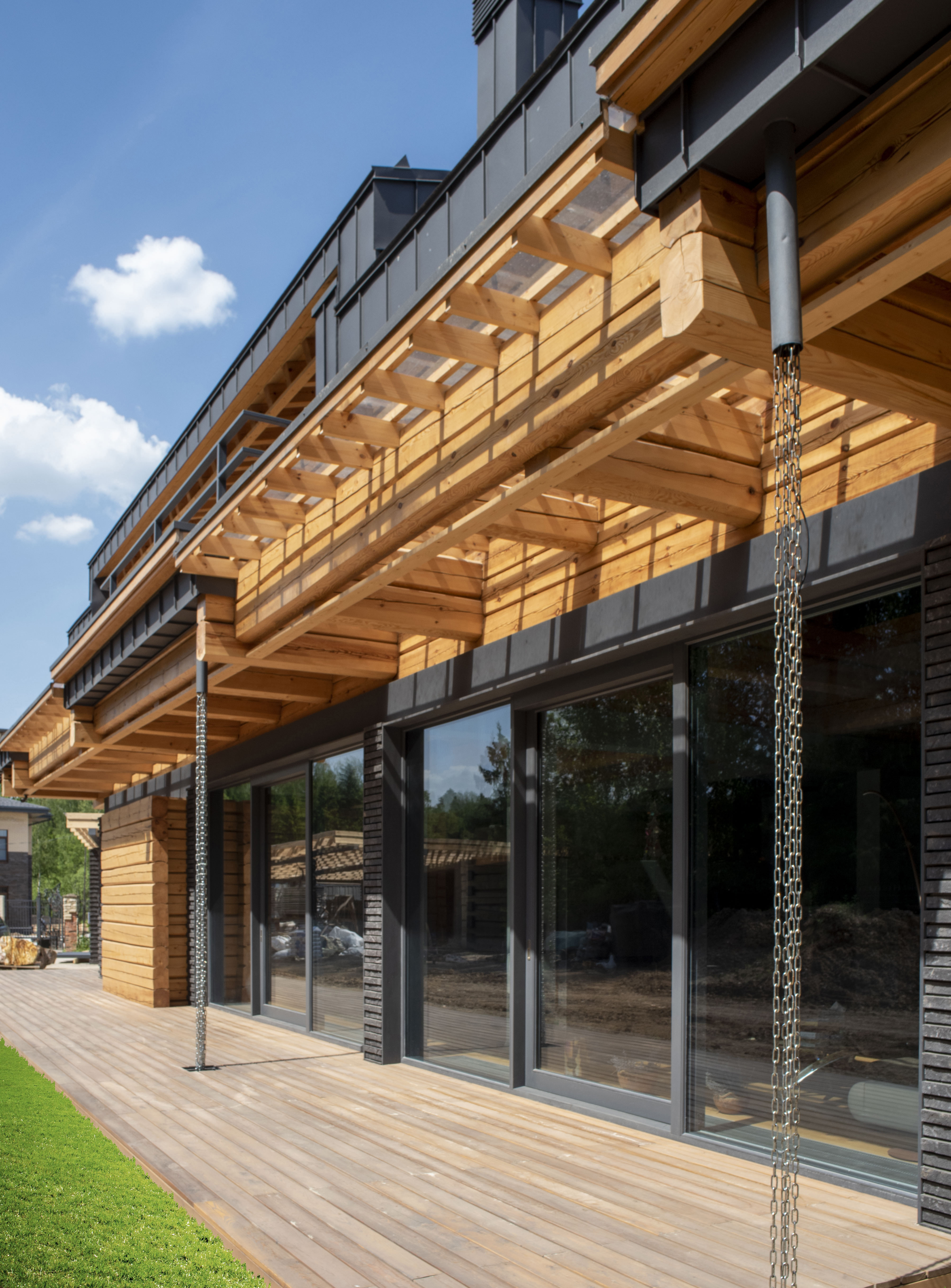
This cozy house sits on the edge of an upscale village, bordering a forest, making it ideal for those who value privacy. The building is laid out along the lot, creating natural separation from the neighbors. The first floor features open and enclosed areas with panoramic windows and a coffered ceiling, creating a sense of space and light. The second floor, clad in lapboard, includes bedrooms with access to a spacious terrace that runs the length of the house.
The Summer House of a Successful Muscovite. Moscow Region, "Green Lounge" cottage village.
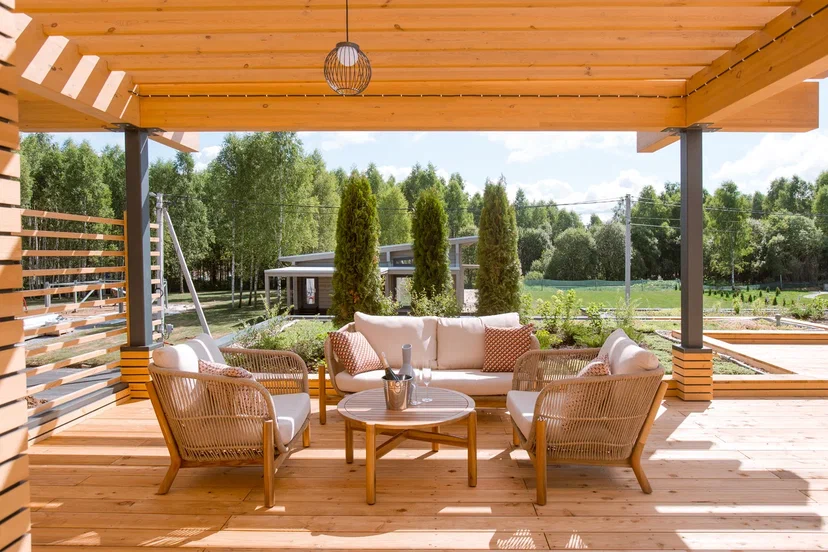
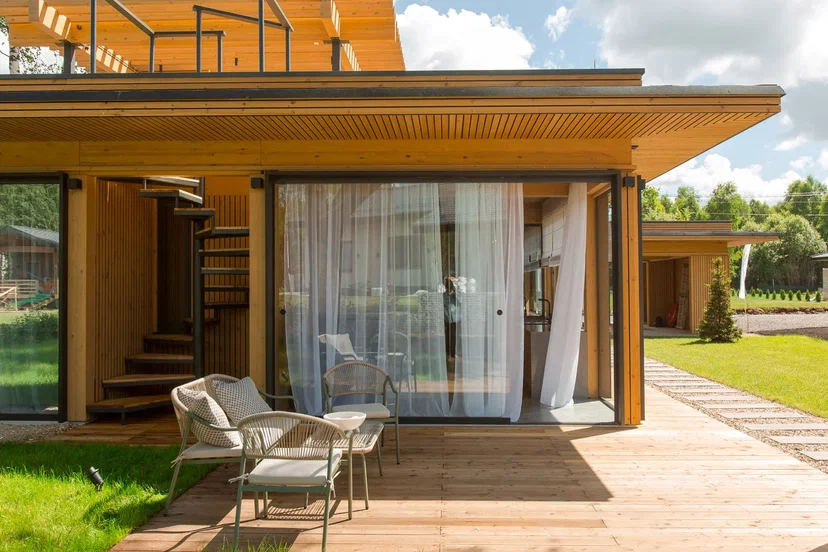
A compact house on 6 hectares that makes skillful use of every square meter. The living room links the living and utility areas and provides access to both sides of the house. The kitchen flows seamlessly into the summer kitchen, perfect for seasonal gatherings.
The house is accessible from all four sides, and the roof serves as a landscaped recreation area. The absence of traditional fences maximizes the space and opens up the views.
Obelisk House. Kaluga Region, Nikola-Lenivets village. KATARSIS ab.
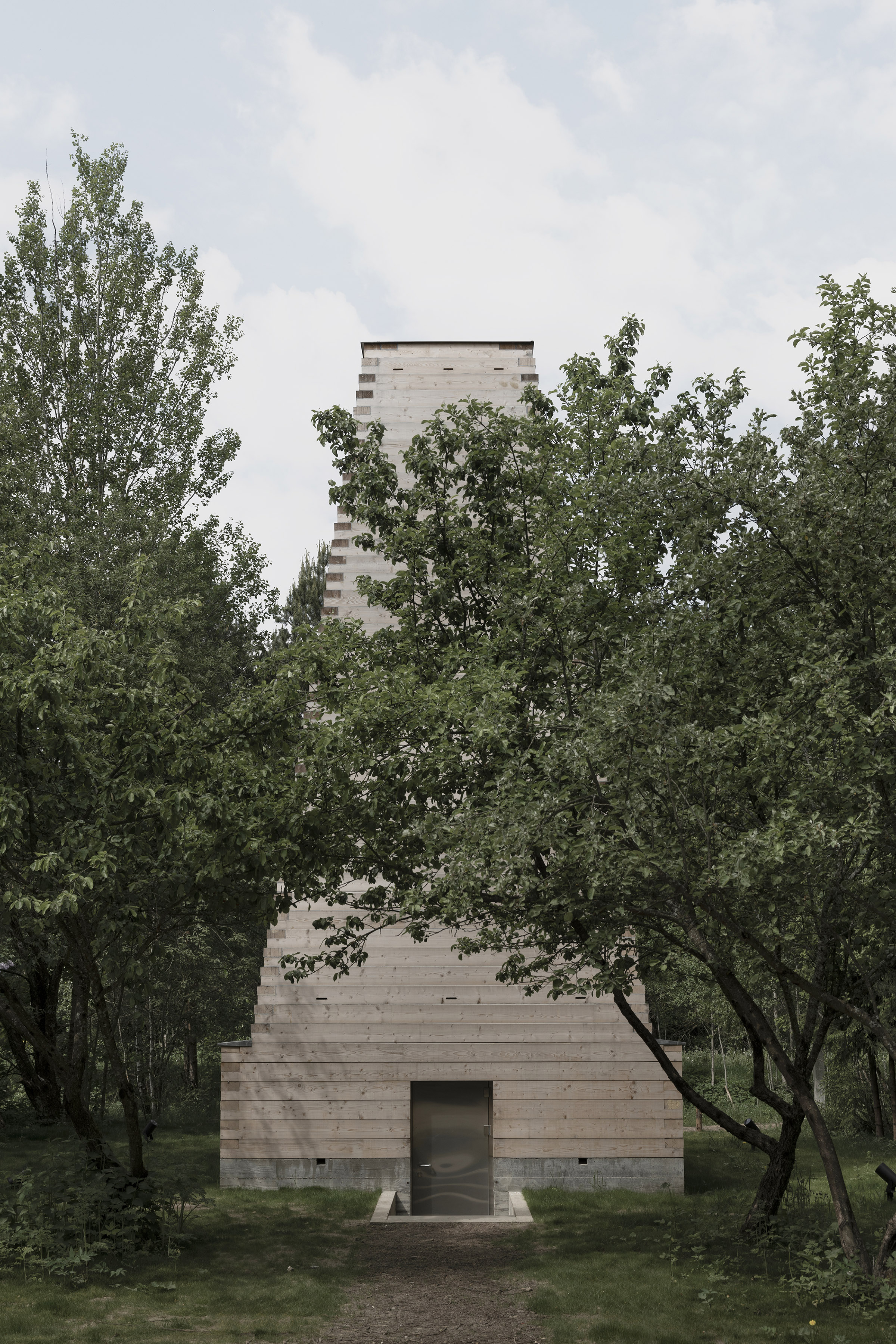
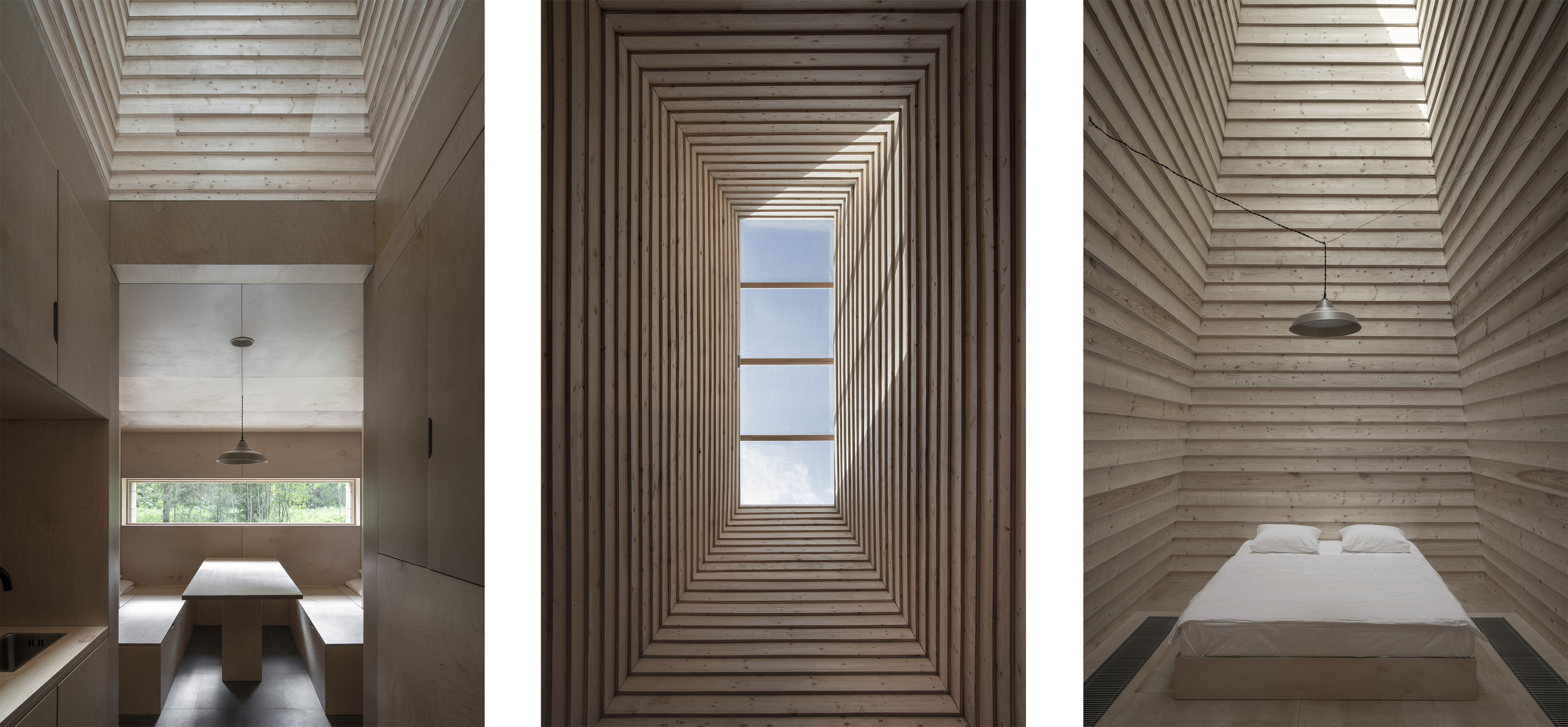
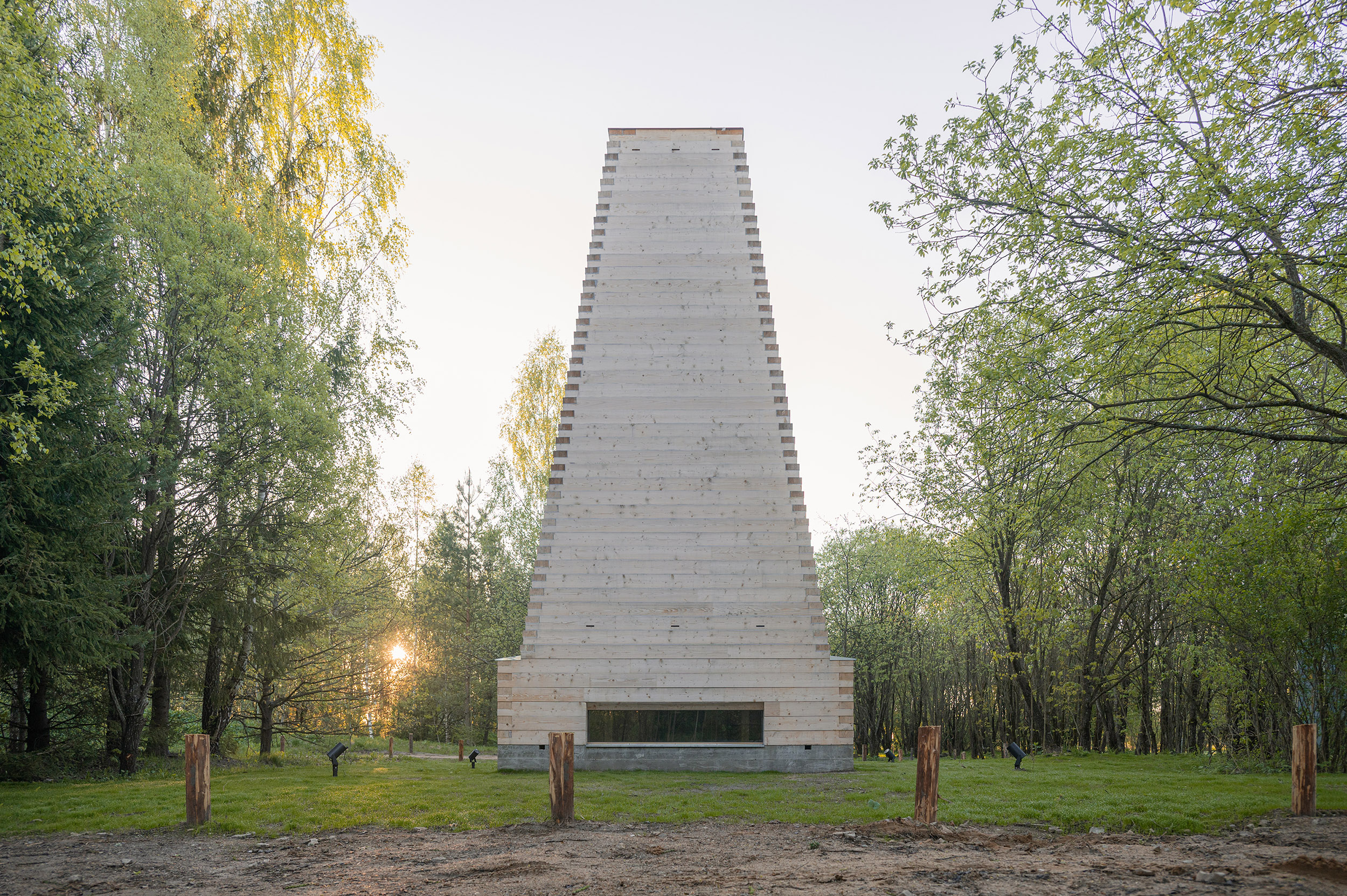
The Obelisk House, located in the Kaluga Region, is a two-story country house with a distinctive design. Its main volume is built of solid timber set on a reinforced concrete base. The interior space is notable for its uneven distribution between floors, and the single panoramic window creates a visual expansion of the space while providing daylight through an overhead skylight. The house is a metaphor for the inevitable repetition of life, emphasizing the connection between past and present in architecture.
It is easily the most original project of all the contenders.
Palenki. Lipetsk Region, Yurievo village. Ismatulaeva and Partners.
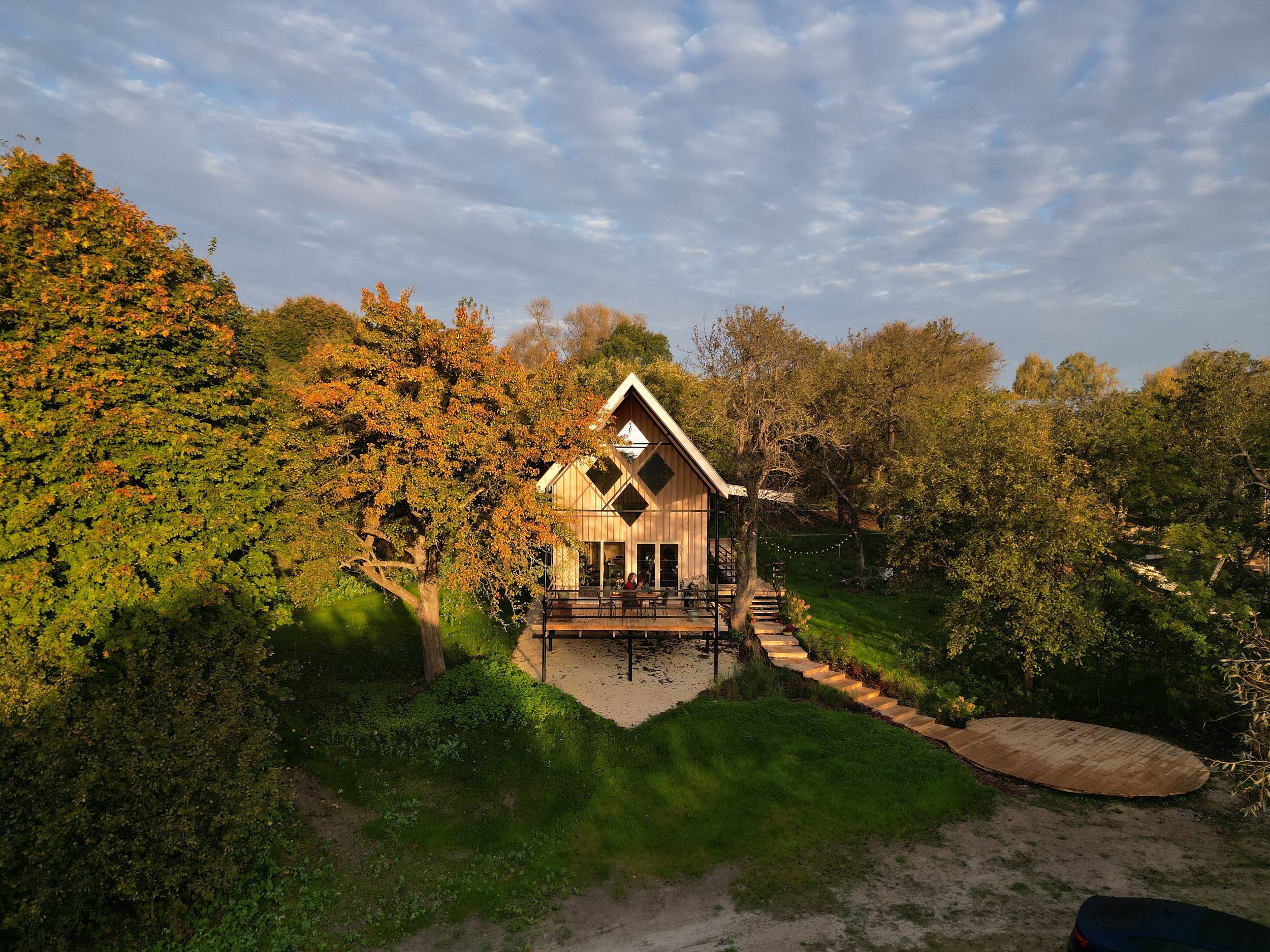
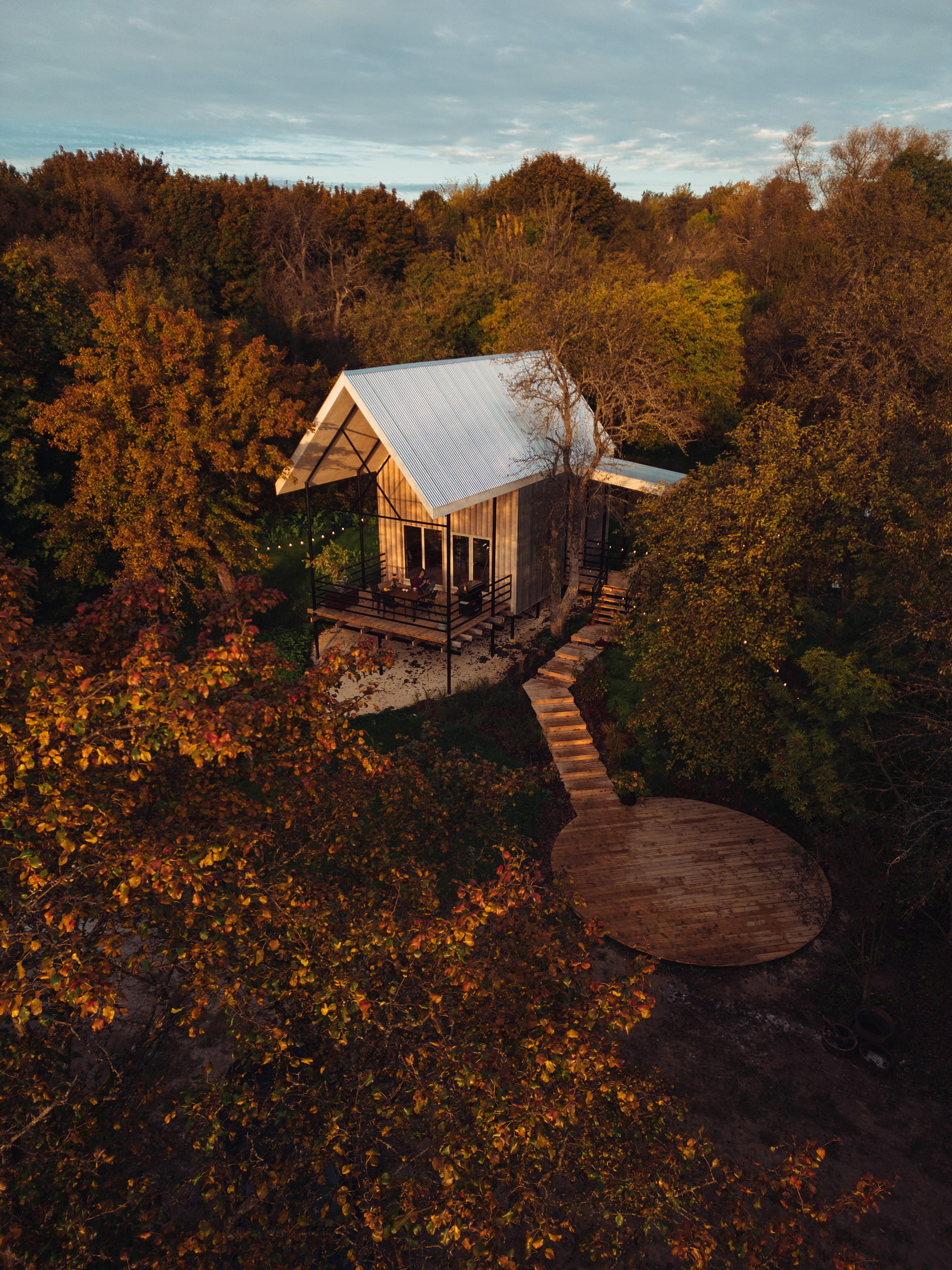
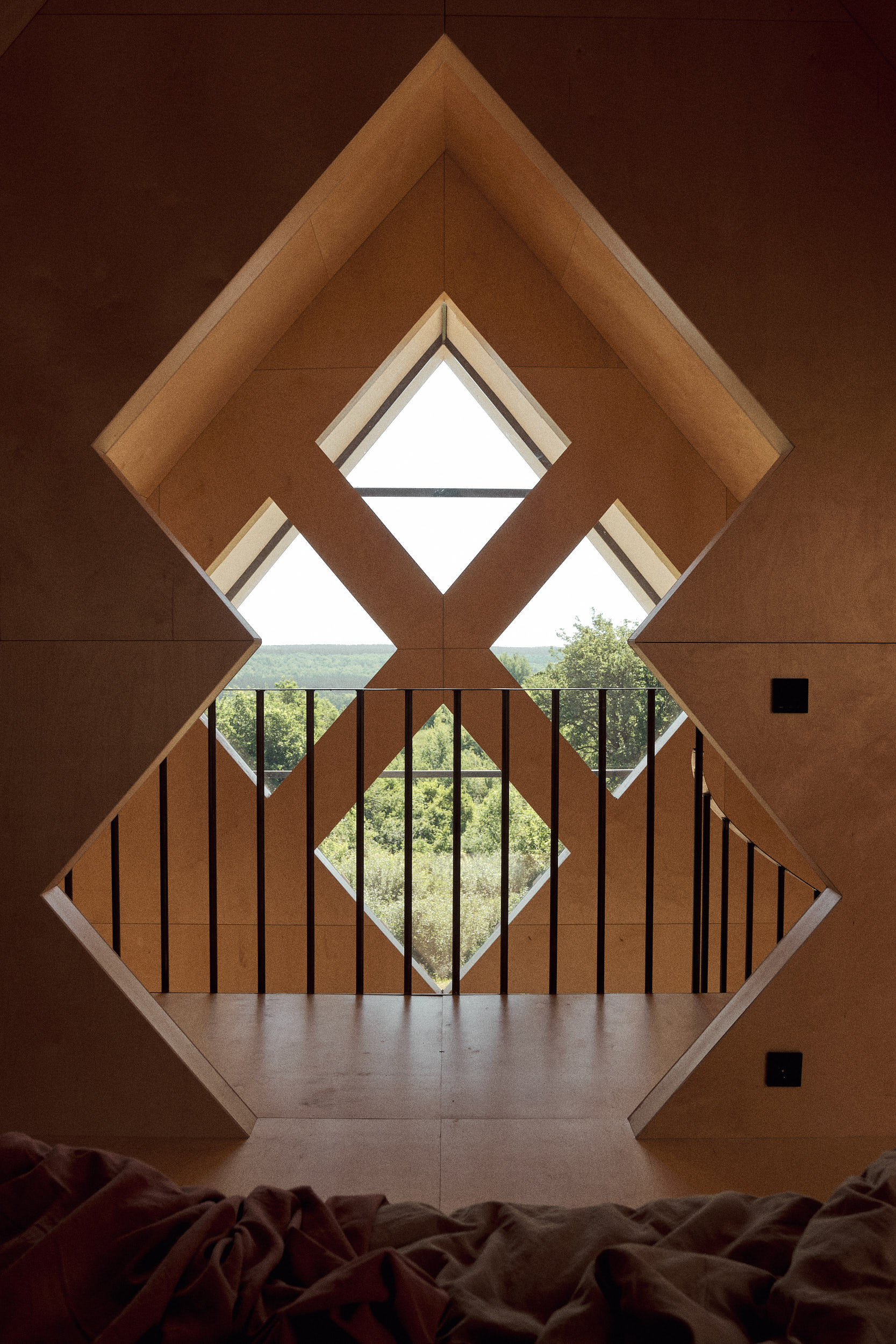
The Palenki house is a small two-level home with a terrace, located in the Lipetsk Region. It is notable for its harmonious integration into the surrounding landscape and its combination of traditional and modern building materials such as wood, plywood, iron and glass. The house respects the historical context of the place while meeting modern architectural requirements. Its design includes diamond-shaped windows inspired by Russian country dachas of the 1950s. The interior is arranged to combine public and private areas, providing comfort for both relaxation and seclusion. Large windows and open terraces provide excellent natural light and offer views of nature.
Spoiler alert: Palenki is our favorite. Small, cozy and with a clever twist — memorable windows that leave no one indifferent.
Scout 130. Moscow Region, Istra, Open Village exhibition of country houses. ScoutHouse.
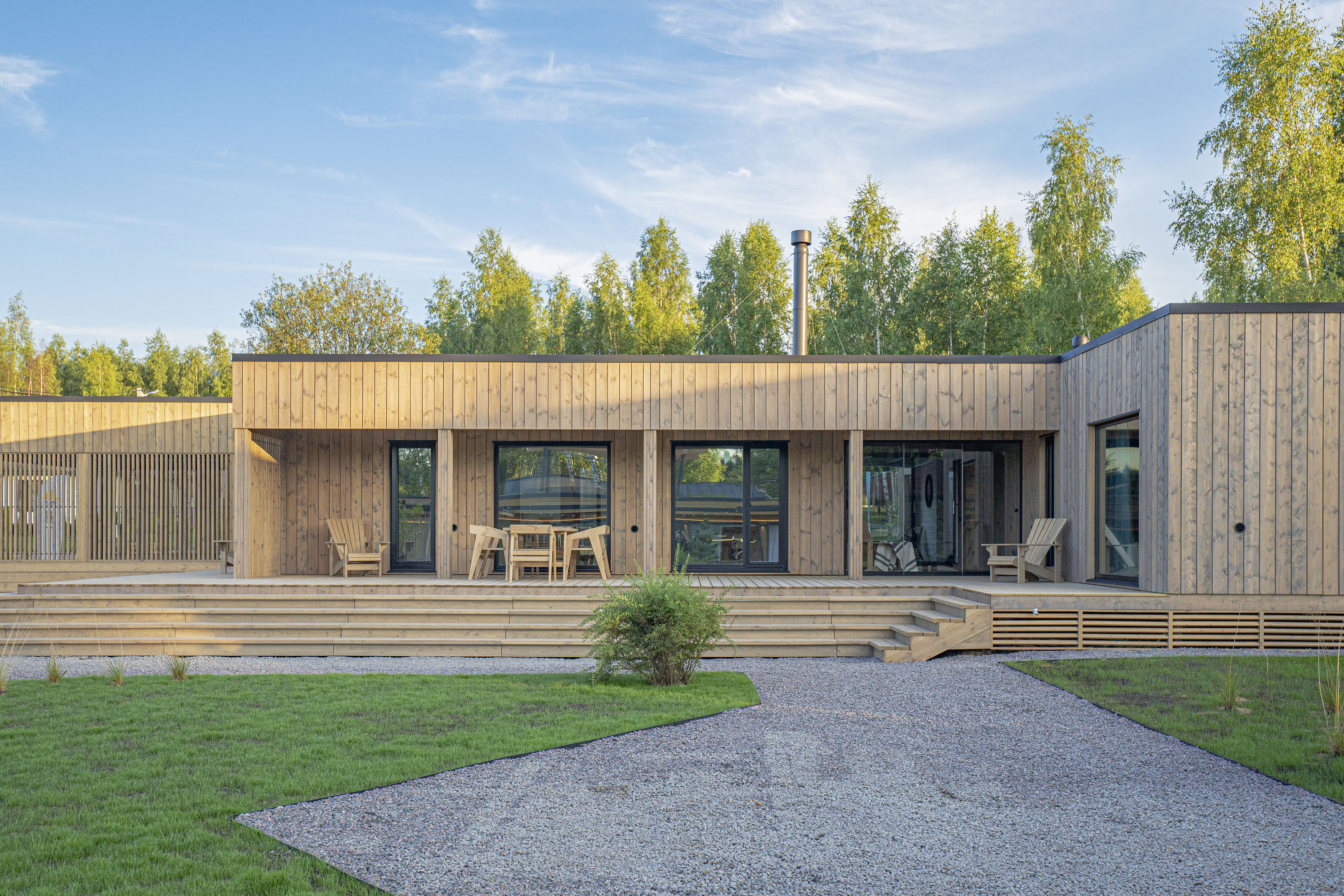
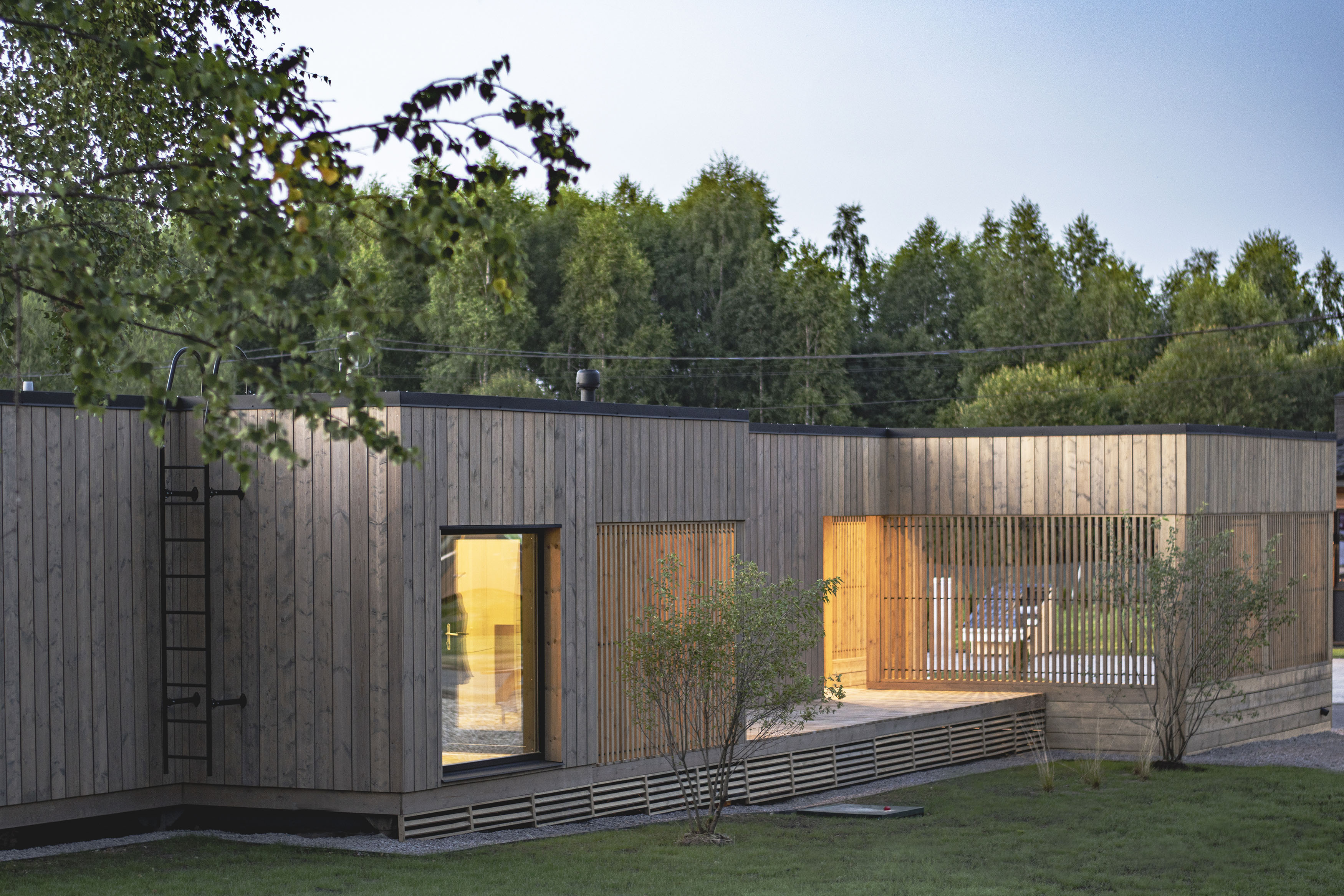
The "Scout 130" house offers the option of expanding the living space from 70 to 130 square meters, allowing the house to "grow" with a family's needs. A special feature is its panoramic windows, oriented to maximize the view of the surrounding nature.
This house is also noted for its ergonomic design: no hallways, and large glass facades that, when opened, blur the line between interior and exterior spaces. The interior finish uses eco-friendly three-layer pine wall panels treated with natural Finnish compounds, underscoring the care taken for the residents' health and comfort.
ROTE HOUSE. Kaliningrad Region. Nord Domos Ltd.
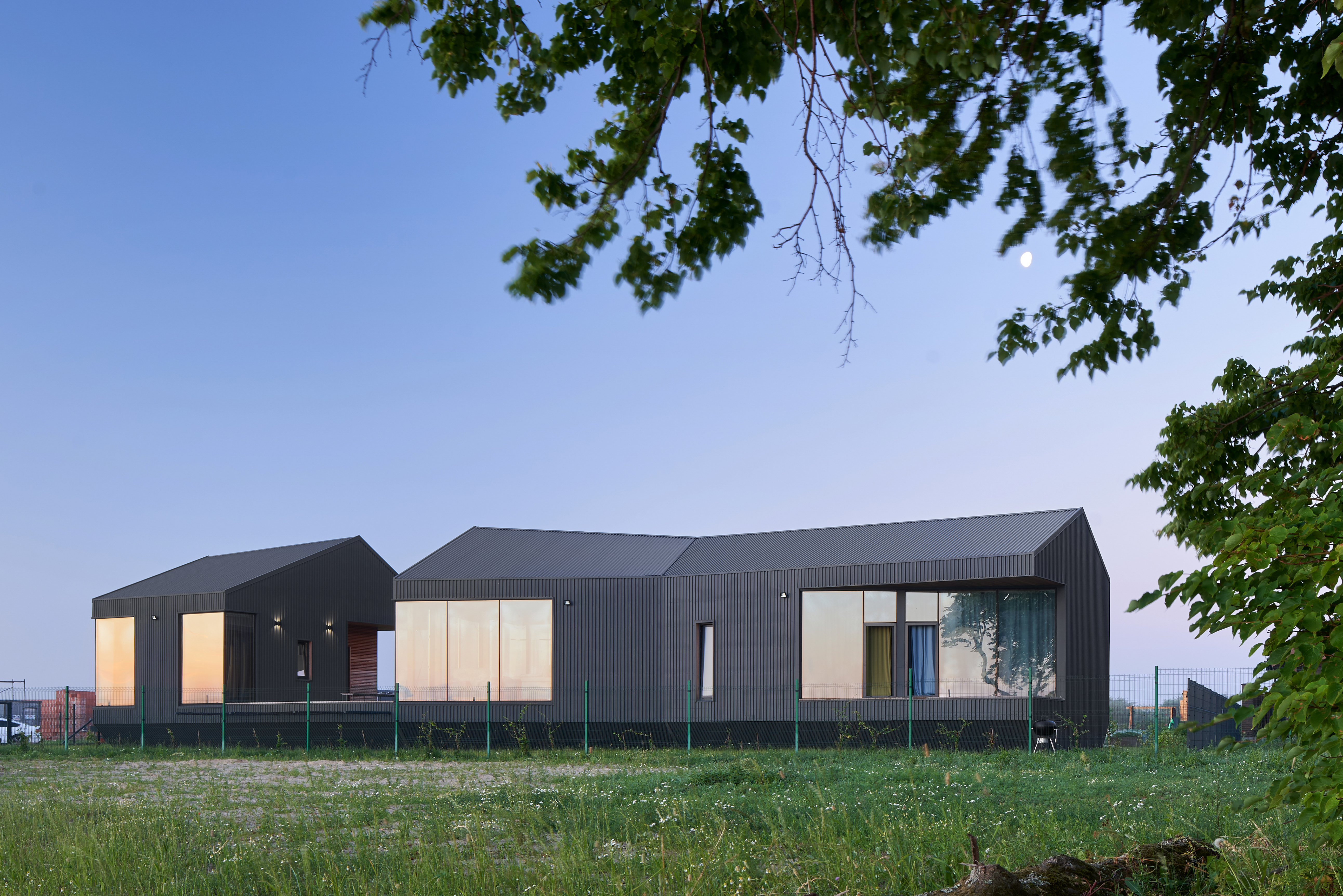
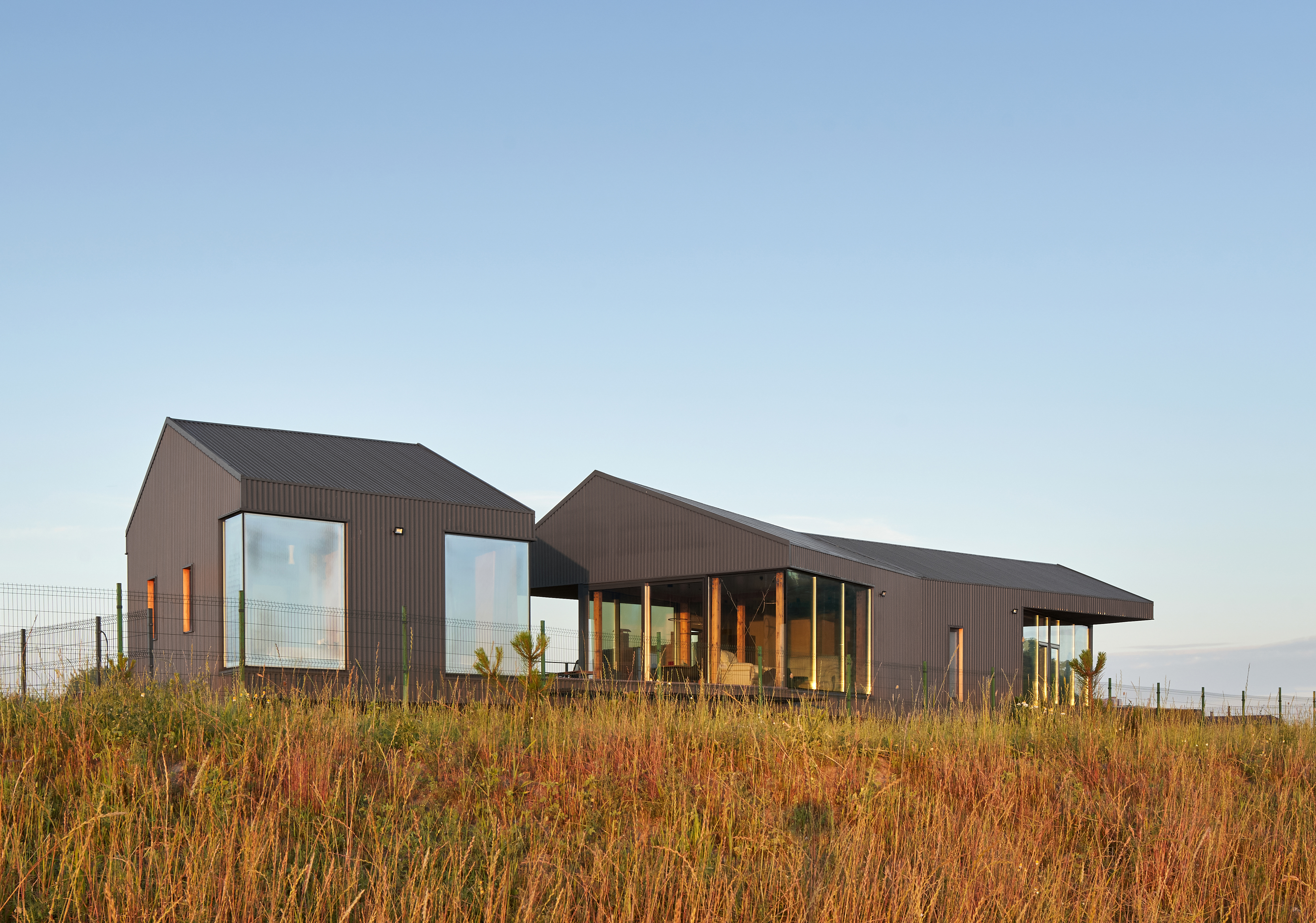
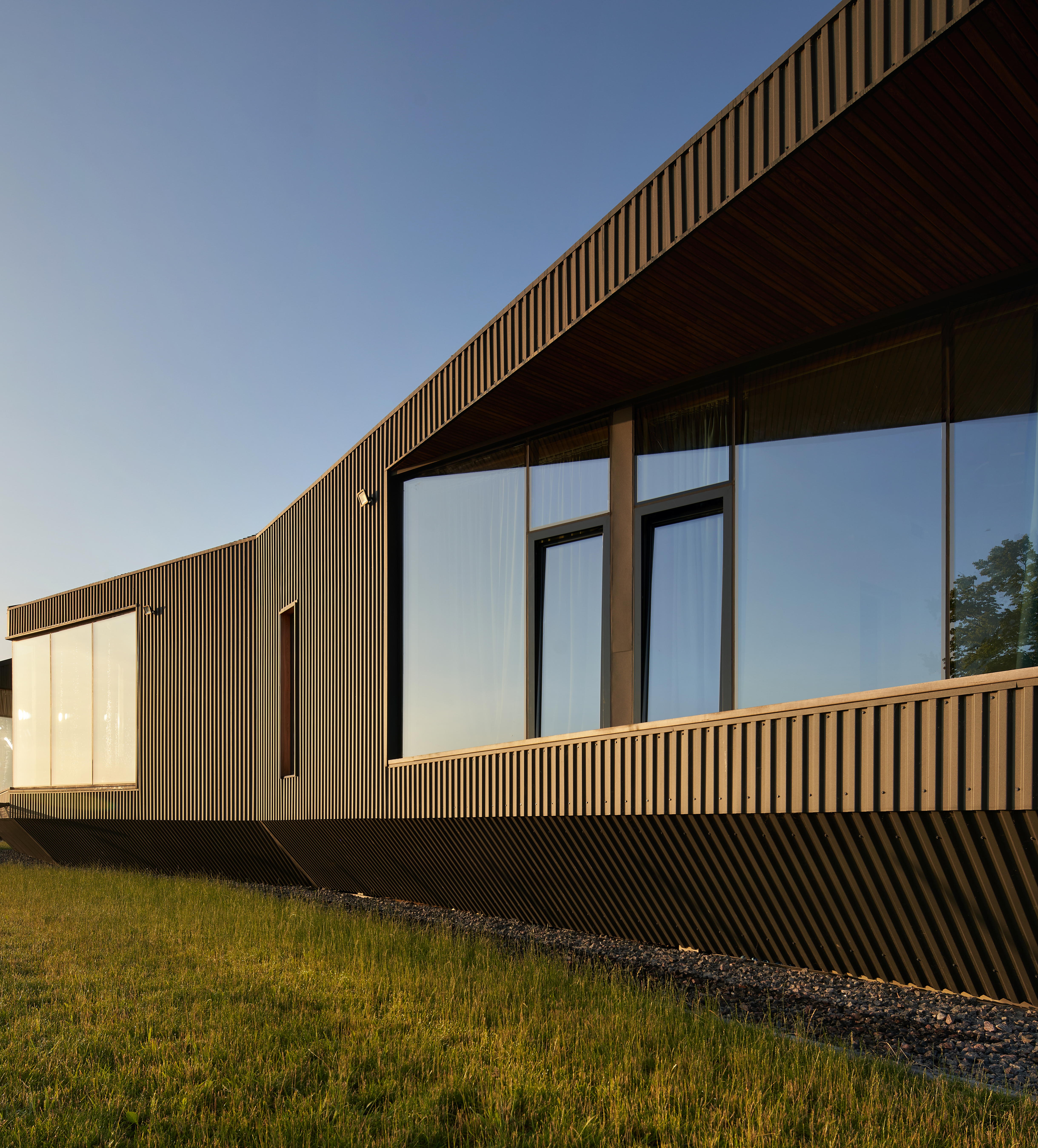
This project was made for a young family that appreciates a European lifestyle. The house consists of two buildings connected by a wooden terrace. The main building includes two bedrooms and a kitchen-living room with a striking fireplace, while the guest building offers bedrooms with a sea view. A special feature of the design is its elevation by 1.5 meters for a better panoramic view through the large picture windows.
Yachtsman's House. Moscow Region, Pirogovo Yacht Club. Greenberg Architectural Studio.
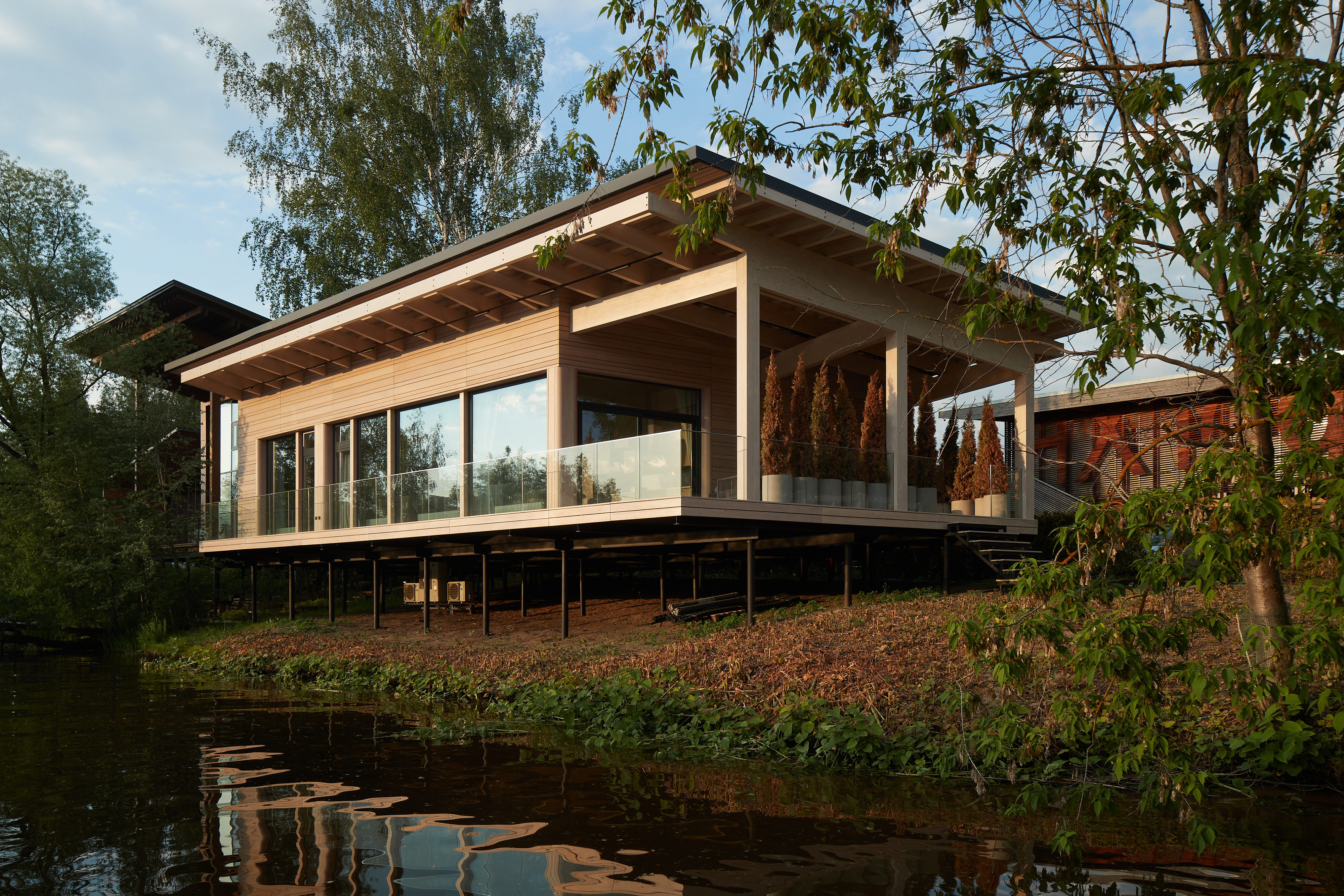
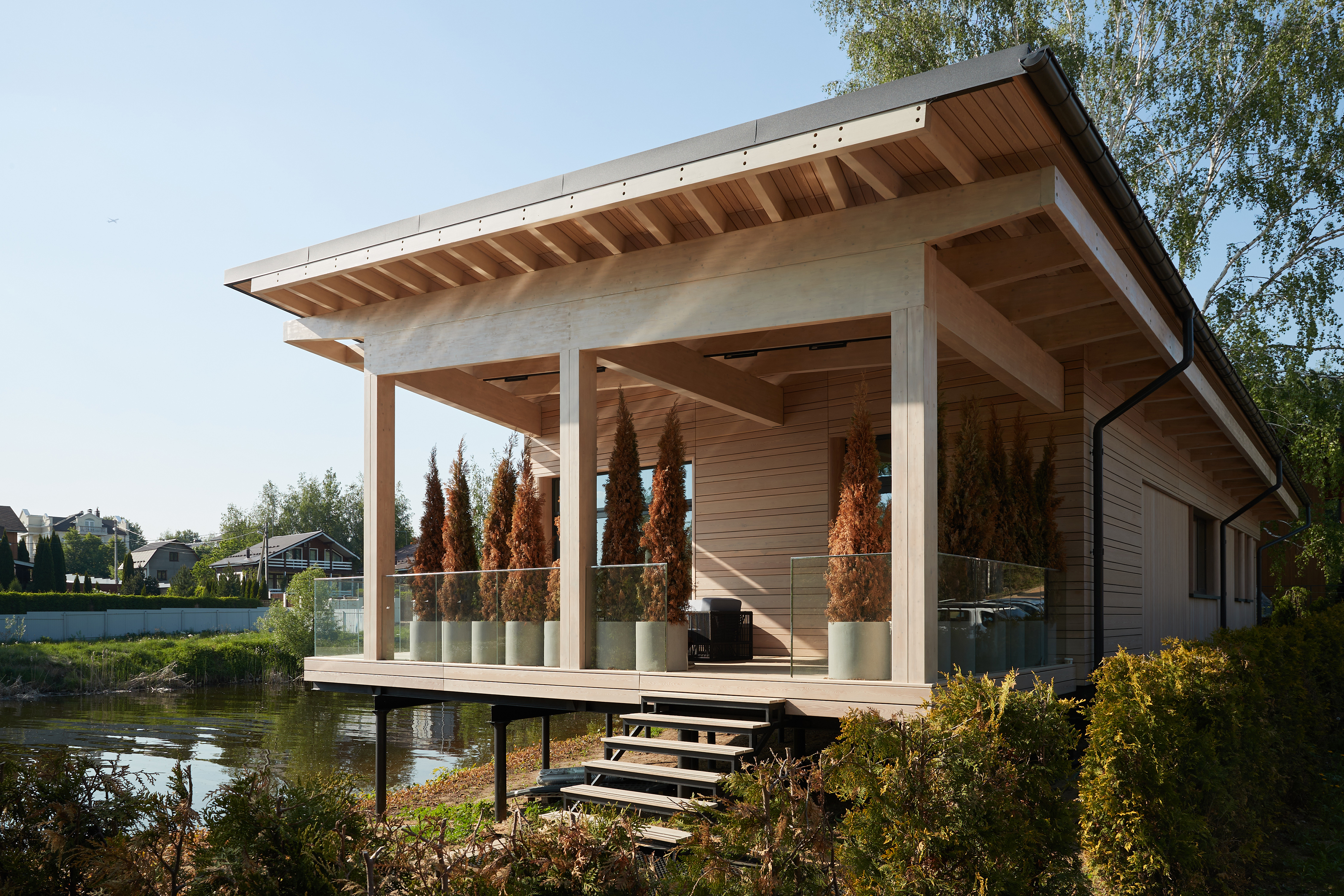
This project stands out for the way it harmoniously combines modern building technologies with classic architectural forms. It is built of light-colored wood with interesting facade details, including rounded window casings. The trapezoidal shape of the lot shaped the siting and construction of the house, adding to its uniqueness.
A distinctive feature is its terrace, which offers a picturesque view of the pond, creating the perfect space for relaxation and seclusion. The interior reflects an ascetic approach, using light colors that emphasize the spaciousness and brightness of the rooms.
Villa Elementis. Bali, Indonesia. Elementis Development.
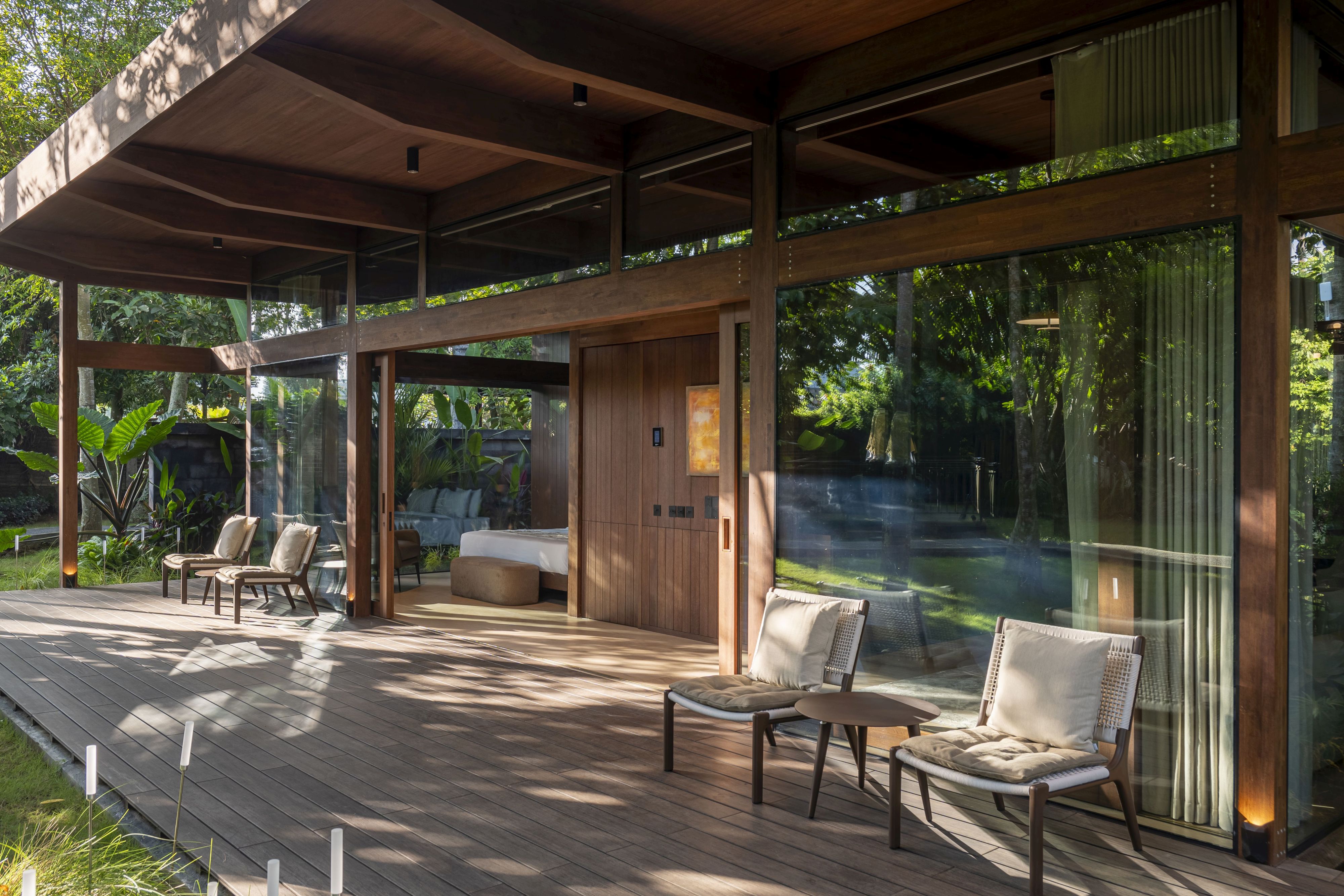
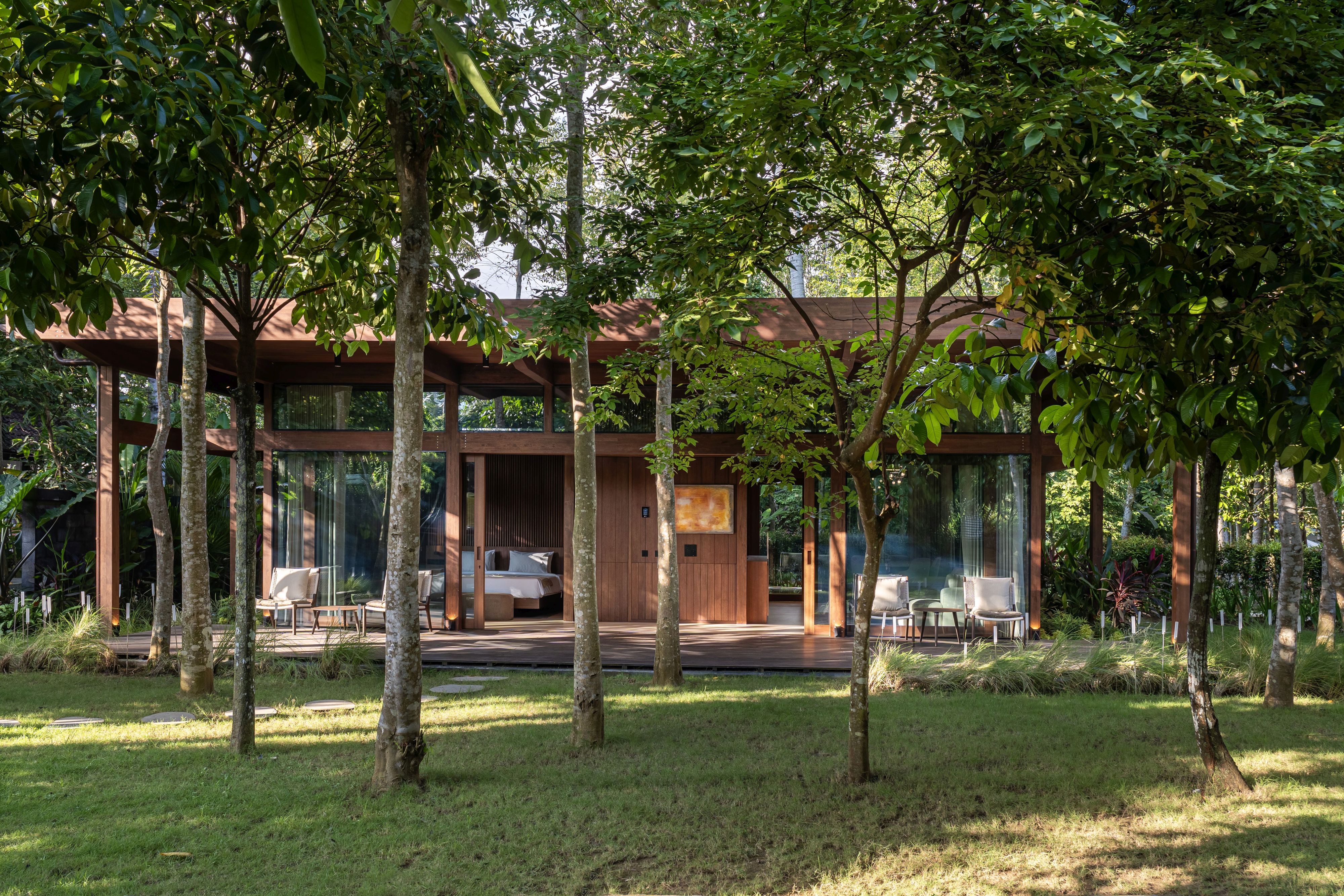
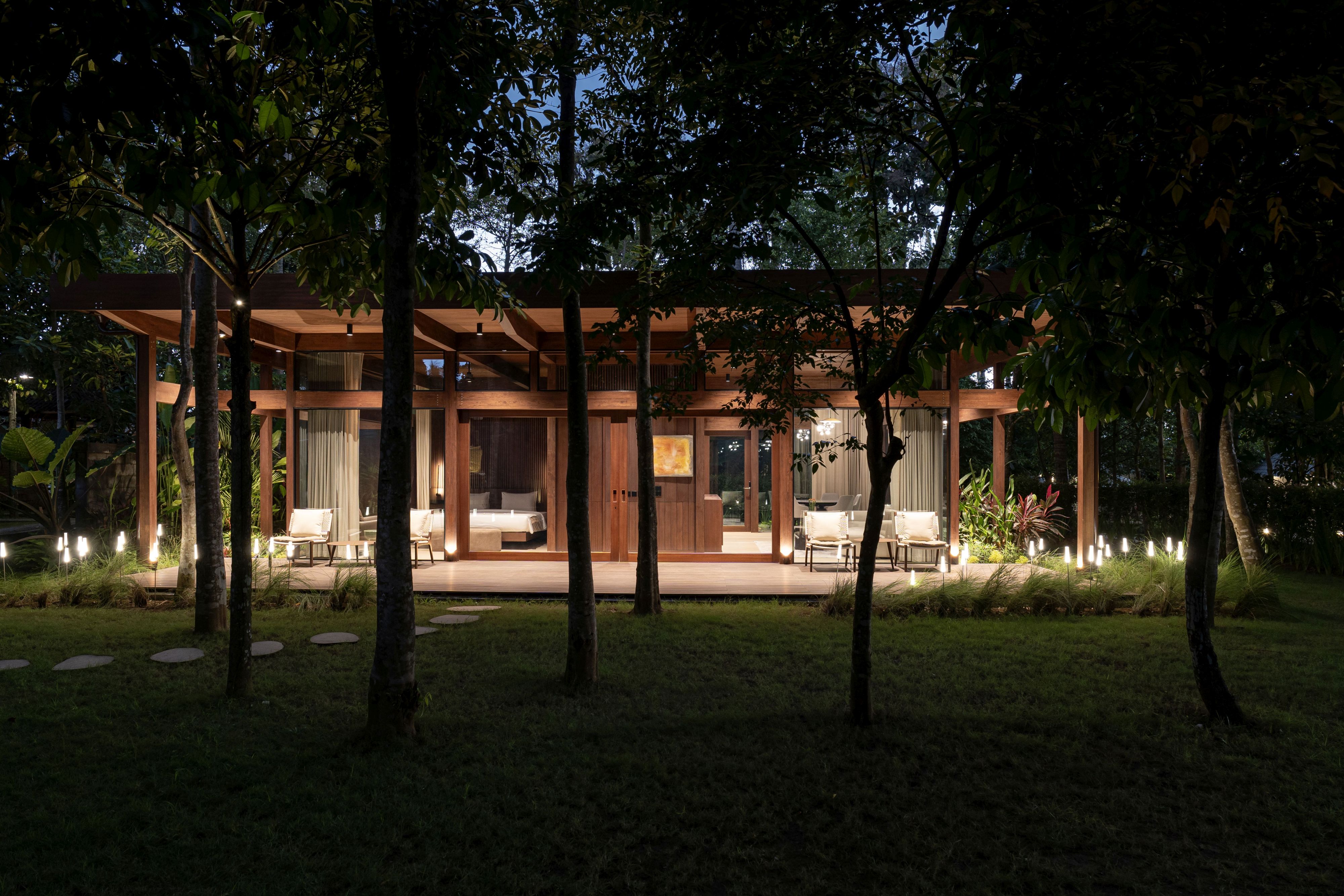
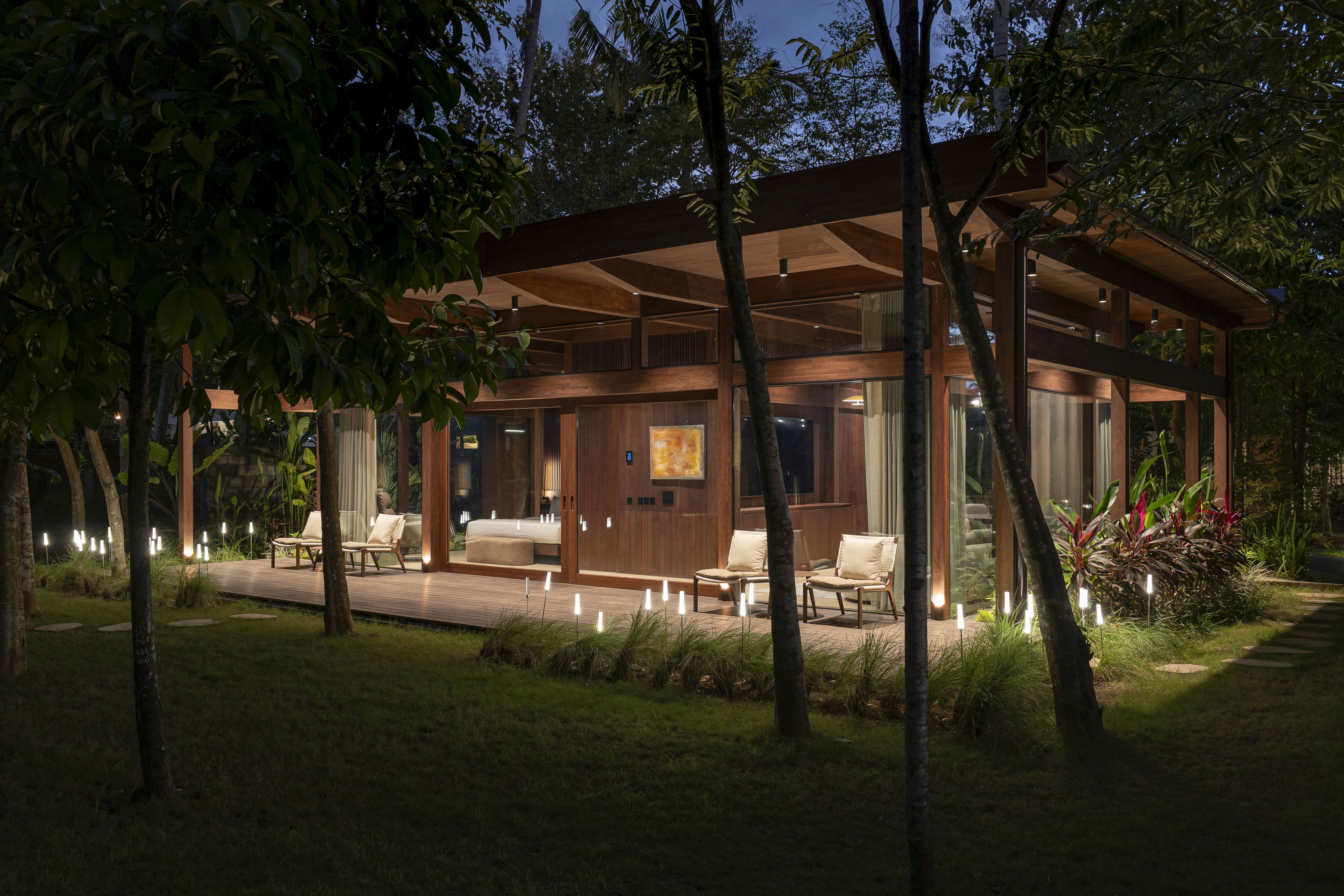
Villa Elementis, located on the island of Bali, Indonesia, is an example of modern architecture using half-timbered construction. The project makes use of tropical laminated timber and 360-degree glazing for abundant natural light. The building's architecture and interiors are designed with strict geometric lines using dark brown wood.